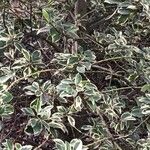
Cotoneaster bullatus
كوتونيستر بولاتوس (ARZ) · Hollyberry cotoneaster · Bullate Cotoneaster · Holly-berry cotoneaster
Description
Source: leafsnapCotoneaster bullatus, the hollyberry cotoneaster, is a species of shrub in the genus Cotoneaster within the rose family. Its natural range is in Western China (provinces of Hubei, Sichuan, Xizang, and Yunnan), where it is found in a range of woodland and shrub biotopes from 900 to 3200 m above sea level. The plant was introduced into cultivation 1898, and is widely naturalised in Europe, New Zealand and possibly British Columbia in North America (although this is now considered to be the closely related C. rehderi, which was formerly treated as a variety of this species, C. bullatus var macrophylla).
Care Guide
💧 Water Every 7 days
Holly-berry cotoneaster, a plant native to moderate climates, thrives in slightly dry soil between waterings, demonstrating its drought tolerance. Ideally, it should be watered weekly, with less frequent watering during the cold season when the plant is dormant. As a robust outdoor plant, holly-berry cotoneaster does well in various climate zones and adds decorative appeal to landscapes.
☀️ Light Full sun
Holly-berry cotoneaster comes from open habitats, such as sunny meadows and forest edges, where light is abundant. It performs best in Full Sun but can also tolerate Partial Sun, adapting well to various sunlight conditions.
What are the sunlight requirements for Holly-berry cotoneaster (Cotoneaster bullatus)?
Holly-berry cotoneaster, botanically known as Cotoneaster bullatus, thrives in locations that receive full sun, defined as areas that get above 6 hours of sunlight daily. It's important to observe how sunlight moves through your garden throughout the day. Selecting spots that offer a perfect balance of light and shade will ensure your plants grow happily. This watchful selection is crucial for the well-being and growth of your Holly-berry cotoneaster.
🌡️ Temperature 5–32.2°C
Holly-berry cotoneaster is very adaptable to a range of climates, from scorching summers to chilly winters. Nonetheless, it has an optimal temperature range for growth. If temperatures become excessively high, the plant is susceptible to heat and humidity stress, which can lead to its death. In areas where temperatures approach the lower limit of its cold tolerance, it is important to provide insulation to protect the plant.
💨 Humidity
🪴 Soil 6-8
🌱 Fertilizer
Timing is important when fertilizing Holly-berry cotoneaster. Apply fertilizer in early spring and repeat monthly until early summer. Fertilizer encourages attractive blooms and supplies energy during both dormant and active growth phases.
🪴 Pot & Repot
✂️ Pruning
To help holly-berry cotoneaster thrive, it's important to prune it during the winter, ideally between early and late winter. Proper winter pruning removes dead branches, improves air circulation, reduces the risk of disease, and encourages growth in the spring. Pruning also helps maintain the plant's shape and prevents it from becoming overgrown. Always use clean, sharp tools for the best results.
🌿 Propagating
🐛 Diseases & pets
☠️ Toxicity
Characteristics
- Plant Type
- Shrub
- Life Cycle
- Perennial
- Genus
- Cotoneaster
- Family
- Rosaceae
- Hardiness Zone
- 5-8
- Mature Height
- 3.96 m
- Mature Spread
- 3.96 m
- Leaf Color
- Red, Green, Orange
- Leaf Type
- Evergreen
- Flower Color
- White, Pink
- Flower Size
- 0.76 cm to 1.02 cm
- Bloom Time
- Late spring, Early summer
- Planting Time
- Spring, Summer, Autumn
- Harvest Time
- Late summer, Early fall, Mid fall
- Native Area
- China