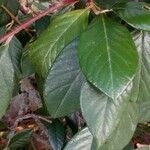
Cotoneaster glaucophyllus
Glaucous cotoneaster · Bright-bead cotoneaster · Brightbead Cotoneaster · Gray cotoneaster · Gray-leaf cotoneaster
Description
Source: leafsnapCotoneaster glaucophyllus is a small, evergreen shrub belonging to the Rosaceae family. Native to China, this plant is cherished worldwide for its attractive foliage and berries, making it a popular choice for ornamental gardening. It typically grows to a height of 1-2 meters and features a spreading habit with arching branches. The leaves of Cotoneaster glaucophyllus are small, glossy, and dark green, with a distinctive bluish tint on the underside. In late spring or early summer, the plant produces small, pink or white flowers that cluster together. The fruits are bright red berries that remain on the plant throughout the winter, providing ongoing visual appeal. Cotoneaster glaucophyllus prefers well-drained soil but is adaptable to various soil types as long as they are not waterlogged. It thrives in full sun or partial shade but may experience leaf scorch if exposed to excessive sunlight during very hot weather. The plant requires minimal maintenance once established. However, occasional pruning may be beneficial to maintain its shape or remove dead wood. Because of its low-growing habit, Cotoneaster glaucophyllus is an excellent choice for borders, hedges, rock gardens, or ground cover. Overall, Cotoneaster glaucophyllus is an attractive evergreen shrub that provides year-round interest with its glossy foliage and bright red berries. This makes it a favored plant among gardeners globally for ornamental purposes.
Care Guide
💧 Water Every 7 days
The large-leaf cotoneaster, native to moderate climates, effectively maintains its water balance and prefers consistent moisture, although it is drought-resistant. For optimal growth, it should be watered every 1-2 weeks. Typically grown outdoors, this plant thrives in well-draining soil, which supports its growth by preventing waterlogging.
How should I water my Large-leaf cotoneaster?
Your Large-leaf cotoneaster is not fussy about how you water it. You can use any common watering tool, such as watering cans, hoses, or cups. When watering, it's best to apply the water directly to the soil and make sure all soil areas are evenly moistened. Using filtered water is helpful to avoid harmful particles in tap water, and using water at or slightly above room temperature is preferred as extremely hot or cold water can be too harsh for the plant. However, the Large-leaf cotoneaster generally tolerates different types of water well.
What if I give my Large-leaf cotoneaster too much or too little water?
When it comes to outdoor plants, especially newly planted ones or seedlings, they can easily suffer from lack of watering. It's important to remember to water them enough for a few months while they are still small or newly planted. Once the roots are established, the Large-leaf cotoneaster can rely on rainwater most of the time. When the Large-leaf cotoneaster is planted in pots, overwatering is a common problem. If you accidentally overwater your plant, it's important to act quickly. First, stop watering the plant to minimize the negative effects of overwatering. Then, remove the plant from its pot to check the roots. If there are no signs of root rot, you can return the plant to its container. However, if there are signs of root rot, trim away any affected roots and consider applying a fungicide to prevent further damage. Lastly, make sure to repot the Large-leaf cotoneaster in well-draining soil. On the other hand, underwatering is often a simpler issue to fix. If you notice that the plant's leaves are drooping, drying out, or falling off, it's a sign of underwatering. Simply water the plant more frequently and the leaves will quickly regain their fullness. Make sure to adjust your watering frequency as soon as underwatering occurs.
How much should I water my Large-leaf cotoneaster?
Most outdoor plants can rely on rainfall for their water needs. If your area doesn't get much rain, you should water your plants every 2 weeks in spring and fall, and more often in the summer. In winter, when plants grow slower and need less water, you can water them less frequently or even not at all. However, if your Large-leaf cotoneaster is young or newly planted, you should water it more often to help it establish and grow. For potted plants like the Large-leaf cotoneaster, there are two main ways to determine watering frequency. The first is to stick to a predetermined schedule, such as watering every week or every other week. However, this method may not be reliable as it doesn't consider the specific conditions of your plant's environment. Another approach is to gauge watering needs based on soil moisture. Generally, it's best to wait until the top two to four inches of soil, about ⅓ to ½ of the depth of the pot, have completely dried out before watering again. This method allows for adjusting the watering frequency according to the season, as the plant's water needs are highest in summer.
How much water does my Large-leaf cotoneaster plant need?
When watering your Large-leaf cotoneaster, you may be surprised to find that it doesn't always need a lot of water. If only a few inches of soil have dried since your last watering, you can support healthy growth by giving it about five to ten ounces of water each time. You can also consider the soil moisture to determine the water volume. Pay attention to how many inches of soil have dried out between waterings. To ensure your Large-leaf cotoneaster gets enough moisture, water until all the dry soil layers are moistened. If over half of the soil is dry, give more water. Keep adding water until excess water drains from the pot's holes. If your Large-leaf cotoneaster is in an area that receives ample rain, it may not need additional watering. For young or newly established plants, provide 1-2 inches of rain per week. As the plant grows and establishes, it can rely on rainwater alone. Only when there is no rainfall for 2-3 weeks during hot weather, consider giving it a thorough watering to prevent stress.
How do I know if I'm giving enough water to my Large-leaf cotoneaster?
The Large-leaf cotoneaster is more commonly affected by overwatering, and there are specific signs to watch for. A plant that is overwatered will typically have yellowing leaves and may even lose some leaves. Overwatering can also cause the plant to shrivel and promote root rot. On the other hand, an underwatered plant will also start to wilt and may have brown or brittle leaves. Regardless of whether you observe signs of overwatering or underwatering, it is important to take action and restore the health of your Large-leaf cotoneaster.
☀️ Light Full sun
Large-leaf cotoneaster does best in locations with plentiful sunlight throughout the day. It also fares well in sites that receive moderate morning or afternoon sun. Excessive exposure can cause leaf scorch, while too little light limits growth and undermines its lush appearance. Originally found in bright environments, it requires ample light at every life stage for strong health.
How many hours of sunlight does Large-leaf cotoneaster need each day to grow well?
To promote healthy growth, Large-leaf cotoneaster needs a minimum of 3-6 hours of sunlight daily. Most plants that can tolerate partial sunlight can also do well in full sun. However, since they require less light for photosynthesis, they are more adaptable compared to plants that specifically require full sun or partial shade.
What kind of sunlight does the Large-leaf cotoneaster plant require?
Large-leaf cotoneaster thrives in full or part sun, but does particularly well with direct morning light. However, during summer, it is important to shield them from the intense afternoon sun. Excessive hot afternoon sun in temperate environments can scorch the leaves, leading to unsightly damage and negatively impacting the plant's overall health.
Can too much sunlight harm Large-leaf cotoneaster? How can I keep Large-leaf cotoneaster safe from sun and heat damage?
Moving pots gradually from a shaded area to a brighter spot is the best way to prevent sunburns on large-leaf cotoneaster plants when they are moved outdoors. However, even plants that are used to the summer sun can still be damaged by extreme heat. During a heatwave, it is crucial to keep the soil consistently moist to help plants withstand the excessive heat. To protect sensitive large-leaf cotoneaster during extreme weather events, consider moving container plants to areas with afternoon shade or using a shade cloth.
Should I shield the Large-leaf cotoneaster from sunlight?
Large-leaf cotoneaster benefits from bright morning sun and some full sun exposure. However, it cannot handle the harsh, hot midday sun of summer. If you plant it in the ground, it will gradually adapt to the increasing intensity of the summer sun. However, if the plant has been indoors or in a protected location, it may suffer damage when suddenly exposed to direct afternoon sun during the hottest part of the day. To protect the plant from this intense sun, it should be planted or placed in a shaded area at midday. This can be achieved by positioning it under taller trees, plants, a building, or a landscape feature.
What will happen if Large-leaf cotoneaster doesn't get enough sunlight?
If a Large-leaf cotoneaster doesn't get enough sunlight, it may turn pale green or its leaves may start to droop and turn yellow. It's normal for some leaves to fall off, but if no new leaves are growing back, there may be a problem. In cases where the cotoneaster is able to grow despite lack of light, the new growth will often be thin, light in color, and susceptible to insects. By paying attention to these signs and adjusting the lighting conditions, you can make a big difference for the plant.
🌡️ Temperature 10–35°C
Large-leaf cotoneaster comes from temperate areas and prefers temperatures of 50 to 95 °F (10 to 35 °C). In colder or hotter climates, seasonal temperature adjustments may be needed to reproduce its native conditions.
What temperature is best for Large-leaf cotoneaster?
The ideal temperature for Large-leaf cotoneaster to thrive is between 65 and 80℉ (18-27℃). During the main growing season, it can tolerate temperatures as high as 95℉ (35℃) and as low as 15℉ (-10℃). This species is able to withstand freezing winters and tolerate low temperatures. The recommended temperature ranges are as follows: - Ideal: 65-80℉ (18-27℃) - Highest: 85-95℉ (30-35℃) - Lowest: -5 to 15℉ (-20 to -10℃) or below.
Should I change the temperature for Large-leaf cotoneaster at different growth stages?
Research has shown that Large-leaf cotoneaster may experience stunted growth when exposed to prolonged periods of higher temperatures. This effect is particularly noticeable during the development of axillary buds and the growth of main shoots. To encourage robust growth following germination or transplanting, it is advisable to maintain consistent and cooler temperatures, around 65℉(18℃).
How do I keep Large-leaf cotoneaster warm when it's cold outside?
Large-leaf cotoneaster is generally tolerant of freezing temperatures, as long as it is planted in the ground in areas that do not drop below 15℉ (-10℃) during winter. However, if you choose to plant it in pots or containers, it is important to protect its roots from the cold. This can be done by covering the container with a blanket or bringing it indoors where it will be shielded from harsh winter conditions.
If the temperature gets too hot or too cold, how will Large-leaf cotoneaster be affected?
Large-leaf cotoneaster is more likely to experience greater harm if the temperature consistently rises too high rather than dropping too low. When the plant becomes too hot, hormone triggers caused by heat stress can reduce seed germination and photosynthesis efficiency. This can be observed through wilting, leaf browning, and potentially even plant death. On the other hand, if the Large-leaf cotoneaster becomes too cold, crucial plant functions like nutrient uptake and photosynthesis will halt, potentially leading to the plant's demise. In the event of a freezing incident during the growing season, there is a chance of membrane phase transition, which can also cause the cessation of plant functions and subsequent death.
What should I know about temperature for Large-leaf cotoneaster?
To keep Large-leaf cotoneaster healthy and promote budding, flowering, and new growth, it is crucial to maintain a consistent soil temperature. This can be achieved by implementing a few strategies including regular watering, applying mulch to bare soil, and planting in shaded areas.
💨 Humidity
🪴 Soil 6-7
🌱 Fertilizer
The timing of fertilizing Large-leaf cotoneaster is important. Apply fertilizer in early spring and continue monthly through early summer. Fertilizer encourages lovely blooms and supplies energy both during dormancy and in periods of active growth.
Why do I have to add nutrients to my Large-leaf cotoneaster plant?
No matter which type of Large-leaf cotoneaster you have, regularly fertilizing it will improve overall health. Providing the proper nutrients promotes stronger growth and enhances the plant's ability to withstand challenging conditions, diseases, and pests. Maintaining the beautiful foliage of your Large-leaf cotoneaster should be a priority, so remember to follow a specific fertilization schedule. By doing so, you will encourage the growth of vibrant, lush leaves with a deep color.
When should I fertilize my Large-leaf cotoneaster to make it grow best?
The best time to fertilize your Large-leaf cotoneaster is in late winter or early spring, as it provides the necessary nutrients for healthy growth in warmer weather. Additionally, if you live in a warm climate region, it can be beneficial to fertilize your cotoneaster again in early fall. Fertilizing in the fall not only adds nutrients for the next growing season, but also helps the plant withstand the winter cold without foliage damage. Doing this earlier ensures that the new branches have enough time to grow and withstand the winter.
When is the best time to not give fertilizer to my Large-leaf cotoneaster?
There are a few specific times throughout the year when it is best to avoid fertilizing your Large-leaf cotoneaster. The first occasion is during the winter months, specifically the early and mid-winter, when the plant is dormant and does not require any additional nutrients. It is also not recommended to fertilize the cotoneaster during the late spring and throughout the entirety of summer. This is because the weather during these months is typically hotter and drier, which can lead to negative consequences if the plant is fertilized. To prevent any potential issues, it is advised to establish a fertilization schedule that only includes feeding in early spring and early fall.
Which kind of fertilizer does my Large-leaf cotoneaster require?
Large-leaf cotoneasters require nitrogen as their primary nutrient, but phosphorus and potassium should not be disregarded. It is recommended to provide a balanced fertilizer, like a 10-10-10, since all three main nutrients are needed in decent amounts. However, for optimal growth, a more specific nutrient ratio is often better. Typically, fertilizers with slightly higher nitrogen content, such as a 10-6-4 ratio, yield favorable results. Granular or liquid-based fertilizers can both be used for this purpose.
How should I fertilize my Large-leaf cotoneaster?
To fertilize your Large-leaf cotoneaster, you have two options: granular fertilizer or liquid fertilizer. If you choose granular fertilizer, simply sprinkle it on the soil at the correct time. The slow-release nature of granular fertilizer will gradually release nutrients into the soil. Before applying any fertilizer, it's generally best to lightly water your Large-leaf cotoneaster. However, if you prefer using liquid fertilizer, mix it with water and pour the mixture around the base of your plant. Keep in mind that liquid fertilizer is less commonly used. Additionally, it can be helpful to perform a soil test before fertilizing to determine if any pH adjustments are needed.
🪴 Pot & Repot
✂️ Pruning
The large-leaf cotoneaster is a robust evergreen shrub known for its glossy leaves and vibrant red berries. To keep it in good shape, improve its vigor, and increase berry production, prune the shrub from early to late winter. Use clean, sharp tools for the best results, and focus on removing dead branches. This pruning will help improve airflow and reduce plant stress during its dormant period.
🌿 Propagating
🐛 Diseases & pets
☠️ Toxicity
Characteristics
- Plant Type
- Shrub
- Life Cycle
- Perennial
- Genus
- Cotoneaster
- Family
- Rosaceae
- Hardiness Zone
- 6-9
- Mature Height
- 4.88 m
- Mature Spread
- 3.05 m
- Leaf Color
- Green, Gray
- Leaf Type
- Evergreen
- Flower Color
- White
- Flower Size
- 0.76 cm
- Bloom Time
- Early summer, Mid summer
- Planting Time
- Spring, Summer, Autumn
- Harvest Time
- Late summer, Early fall, Mid fall
- Native Area
- Vietnam, China