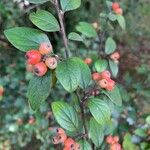
Cotoneaster sternianus
Stern's Cotoneaster
Description
Source: leafsnapCotoneaster sternianus is a small evergreen shrub belonging to the Rosaceae family. Native to China, it can reach a height of up to 1.5 meters and spread out to 2 meters in width. The plant features glossy, dark green, oval-shaped leaves with pointed tips. In the spring, it blooms with small white flowers, followed by bright red berries in the autumn. Due to its appealing foliage, flowers, and berries, Cotoneaster sternianus is often used as an ornamental plant. It can serve as a hedge or ground cover, thanks to its spreading habit. The plant thrives in well-drained soil and prefers full sun or partial shade. It requires moderate watering during dry periods but can tolerate drought conditions once established. While Cotoneaster sternianus generally has no major pest or disease issues, it may be susceptible to fire blight if grown under stressful conditions, such as poor soil quality or inadequate watering. In summary, Cotoneaster sternianus is an excellent choice for gardeners seeking an attractive evergreen shrub that demands minimal maintenance while offering year-round interest with its striking foliage, flowers, and berries.
Care Guide
💧 Water Every 7 days
☀️ Light Full sun
Stern's cotoneaster is native to open habitats, like sunny meadows and forest margins, where light is abundant. It does best in full sun but can also tolerate partial sun, adjusting well to different sunlight conditions.
🌡️ Temperature 5–35°C
Stern's cotoneaster is highly adaptable to a variety of climates, including very hot summers and cold winters. However, it still has an optimal temperature range for growth. If temperatures become excessively high, the plant is susceptible to heat and humidity stress, which can lead to its death. In areas where temperatures approach the lower limit of its cold tolerance, it is important to take insulating measures to protect the plant.
💨 Humidity
🪴 Soil 6-8
🌱 Fertilizer
The timing of fertilizing Stern's cotoneaster is important. Begin fertilizing in early spring and continue once a month until early summer. Fertilizer encourages lovely blooms and supplies energy during both dormant and active growth phases.
🪴 Pot & Repot
✂️ Pruning
Stern's cotoneaster features densely packed, arching branches adorned with small, glossy leaves. To maintain its health and appearance, prune the plant between early and late winter. Remove any dead wood and thin out overcrowded areas to improve air circulation. For best results, use clean, sharp tools to make precise cuts, which will encourage healthier growth and enhance the plant's ornamental appeal.
🌿 Propagating
🐛 Diseases & pets
☠️ Toxicity
Characteristics
- Plant Type
- Shrub
- Life Cycle
- Perennial
- Genus
- Cotoneaster
- Family
- Rosaceae
- Hardiness Zone
- 5-9
- Mature Height
- 3.96 m
- Mature Spread
- 3.96 m
- Leaf Color
- Green, Gray, Silver
- Leaf Type
- Evergreen, Semi-evergreen, Deciduous
- Flower Color
- White
- Flower Size
- 0.51 cm to 0.76 cm
- Bloom Time
- Late spring, Early summer
- Planting Time
- Spring, Summer, Autumn
- Harvest Time
- Late summer, Early fall, Mid fall