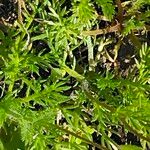
Cotula turbinata
Goose daisy · Funnel Weed
Description
Source: leafsnapCotula turbinata (common name ganskos in South Africa, funnel weed in Western Australia) is a herb in the Asteraceae family native to the Cape Province, but found in India and in AustraliaCotula turbinata is an annual herb, growing to heights of 5 cm to 40 cm, and has hairy stems. In Western Australia, it grows on sandy soils, in lawns and on road verges, where its white and yellow flowers may be seen from July to October.It was first described by Carl Linnaeus in 1753. The genus name, Cotula, comes from the Greek kotule meaning "small cup" and refers to the cupped area at the base of the leaves, while the specific epithet, turbinata, is a botanical Latin adjective, which describes the flower as having the shape of a top.
Care Guide
💧 Water
☀️ Light Full sun
Turban button comes from bright, open habitats where it does best in full sun. It can tolerate partial sun but favors direct sunlight for optimal growth. This plant, which may be annual or biennial, is recognized for its sun-loving nature.
What are the sunlight requirements for the Turban button (Cotula turbinata)?
The Turban button (Cotula turbinata) requires specific sunlight conditions to thrive. For areas receiving 'Full sun,' plants should get above 6 hours of sunlight, whereas 'Partial sun' conditions mean about 3-6 hours of sunlight. It's crucial to observe the patterns of sunlight in your garden to ensure plants are positioned in spots where they can enjoy the ideal balance of light and shade, thus promoting their well-being.
🌡️ Temperature 20–37.8°C
Turban button can endure a wide range of temperatures, but its distribution may still be limited by different combinations of moisture and heat. It does best in warm summer climates with adequate rainfall or watering. Extended periods of cloudy, rainy weather or prolonged high temperatures can raise the risk of Turban button dying. In winter, suitable protection from cold can increase the plant's survival chances.
💨 Humidity
🪴 Soil 6-7
🌱 Fertilizer
Turban button responds well to regular, low-strength fertilizer applications to encourage healthy leaf development. You should fertilize Turban button about once a month during the summer months. Nitrogen is essential for foliage, and providing nitrogen-rich sources helps the Turban button thrive.
🪴 Pot & Repot
✂️ Pruning
The Turban Button is a low-growing perennial known for its distinctive, button-like flowers. To maintain its shape and promote healthier, denser growth and more vibrant blooms, prune the plant in early spring. Regular deadheading will extend the flowering period and keep the plant looking its best. Be sure to use clean tools when pruning to prevent damage and to reduce the risk of transmitting diseases.
🌿 Propagating
🐛 Diseases & pets
☠️ Toxicity
Characteristics
- Plant Type
- Herb
- Life Cycle
- Annual
- Genus
- Cotula
- Family
- Asteraceae
- Hardiness Zone
- 9-11
- Mature Height
- 10 cm to 30 cm
- Mature Spread
- 15 cm to 25 cm
- Leaf Color
- Green, Dark Green
- Leaf Type
- Deciduous
- Flower Color
- Yellow
- Flower Size
- 0.51 cm to 1.02 cm
- Bloom Time
- Spring
- Planting Time
- Spring, Autumn
- Harvest Time
- Late spring, Early summer, Mid summer
- Native Area
- South Africa