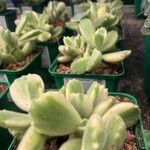
Cotyledon tomentosa
پنجه خرس · Bear paw · Bear's paw · Crassula congesta · South African Bear's Paw
Description
Source: leafsnapCotyledon tomentosa, commonly known as the bear's paw plant, is a succulent native to South Africa. This plant is slow-growing and typically reaches up to 12 inches in height and 18 inches in width. The leaves of Cotyledon tomentosa are thick, fleshy, and have a velvety texture reminiscent of a bear's paw. The leaves are arranged in rosettes at the ends of short stems and feature an attractive silver-grey color with reddish-brown tips. During late winter or early spring, the plant produces small tubular flowers on tall stems. Cotyledon tomentosa is an easy-to-care-for houseplant, requiring bright but indirect sunlight and well-draining soil. While it can tolerate drought conditions, it should be watered sparingly during its dormant period. The bear's paw plant has gained popularity among succulent enthusiasts due to its unique appearance and low-maintenance requirements. It makes an excellent indoor or outdoor ornamental plant for those who appreciate striking visual appeal with minimal care.
🌳 Bear's paw is not commonly used for industrial purposes such as producing spices or making furniture, but its distinctive appearance makes it highly prized in the ornamental plant market. The fleshy, hairy leaves that resemble a bear's paw give it a unique place in plant collections and make it appealing to hobbyists seeking unusual houseplants. The interest in bear's paw reflects a niche market centered on aesthetic and novelty qualities rather than practical, utilitarian uses.
🎭 Tower-like, gentle, untidy
Care Guide
💧 Water Every 7 days
Bear's paw is well-suited for arid environments due to its drought tolerance. It should be watered sparingly, usually once every 2 to 3 weeks, ensuring the soil has completely dried out between waterings. This plant is ideal for indoor cultivation, but it's important to use well-draining soil to prevent root rot, which often occurs with overwatering.
How should I water my Bear's paw plant?
To properly water Bear's paw, there are a few steps to follow. First, wait until spring when new leaves begin to grow. Then, make sure the soil inside the pot is completely dry before adding water. You can use tap water or distilled water when watering, but avoid watering from overhead. Instead, water at the base of the plant, slowly and evenly across the soil's surface. This method will keep the soil moist without dampening the plant's above-ground parts. Lastly, water until you see a light stream of excess water draining from the pot's hole.
What should I do if I give my Bear's paw too much or too little water?
An overwatered Bear's paw is more common than an underwatered one, and overwatering can be very harmful to the plant's health, even causing it to die quickly. To avoid overwatering, it is recommended to let the soil dry completely before watering, especially when the plant goes into dormancy. Now, let's focus on solving the problem of overwatering. If your Bear's paw shows signs of overwatering, it's best to remove it from its current pot and examine the roots for rot or moisture-related diseases. Some roots may need to be removed, while others can be cleaned and will recover. Afterward, repot the plant in well-draining soil to decrease the chances of future overwatering. Although less common, underwatering can also occur. In that case, simply water your plant slightly more often, being careful not to overcompensate and overwater it.
How often should I water my Bear's paw plant?
The Bear's paw plant is a succulent, which means it doesn't need a lot of water like other plants. This is because it comes from a hot and dry region. To take care of this plant, you should let the soil completely dry out before watering it again. This usually takes around two weeks to a month. The frequency of watering depends on the season. During spring and summer, the plant is growing, so it may take 2-3 weeks for the soil to dry out completely. In the summer, the soil may dry out faster. However, when the temperature is below 60 degrees or above 85 degrees Fahrenheit, the plant will be dormant and doesn't need any watering. During this time, you should keep the soil dry until the temperature is suitable for the Bear's paw to grow again, and then you can start watering it again.
How much water does my Bear's paw require?
Bear's paw does not require frequent watering because it can go for a while without water. However, when it does need to be watered, it requires a generous amount. There isn't a specific measurement, but you should continue watering until the soil is completely moist. If you have the plant in a pot, a good way to ensure this is by watering until you see water trickling out of the drainage holes at the bottom. Another method is to insert a pencil or similar object into the soil and if it comes out moist, then it has been watered enough.
How can I know if I'm giving enough water to my Bear's Paw plant?
Overwatering is a bigger problem than underwatering in general. If you overwater, you will see immediate signs such as leaves losing their form, becoming mushy, and changing colors. This is very different from healthy living stone leaves, which should be firm and maintain their shape. Underwatering is extremely rare for Bear's paw plants, as they can often survive without any water. However, if underwatering does happen, you will usually notice that the leaves become discolored and dry.
☀️ Light Full sun
Bear's paw does well with prolonged sunlight exposure, resembling its native environment where daylight is abundant. It can tolerate moderate light by reducing exposure to stronger rays, although this may slightly affect the plant's health. Too much or too little light can impede its growth or cause sunburn.
What are the sunlight requirements for Bear's Paw (Cotyledon tomentosa)?
Bear's Paw requires extensive exposure to sunlight, reflecting its natural habitat conditions where daylight is abundant. To thrive, this plant should be placed in locations where it can receive a significant amount of sunshine. Specifically, 'Full sun' meaning the plant benefits from more than 6 hours of sunlight per day, while 'Partial sun' equates to about 3-6 hours of sunlight daily. However, it's important to watch how the sunlight moves through the garden to find an ideal balance of light and shade, ensuring the plants remain happy and healthy.
What essential care does Bear's Paw need when it comes to light?
Proper illumination is crucial for Bear's Paw, simulating its native, sunny environment for optimal growth. Although it can endure moderate light, extreme deviations from its preferred brightness—either too much or too scant—could impair its development or cause sunburn. In scenarios where natural sunlight is inadequate, particularly during winter or in less illuminated spaces, the use of artificial lighting becomes essential. Here, LED lights present a popular solution, offering the required wavelengths for plant growth. They should provide 30-50W/sq ft for full sun plants, 20-30W/sq ft for partial sun plants, and 10-20W/sq ft for full shade plants. The placement of the light source should be 12-36 inches above the plant, mimicking natural solar exposure, and it should be kept on for 8-12 hours daily to simulate natural daylight hours.
What symptoms indicate insufficient light exposure for Bear's Paw?
Bear's Paw exhibits several symptoms when light exposure is insufficient, including lighter-colored or pale new leaves due to a lack of chlorophyll, leggy or sparse growth as a result of elongated spaces between leaves or stems, and faster leaf drop as a means of conserving resources. It can also develop chlorosis, where leaves lose their green pigment and turn yellow; sunscald, characterized by pale or necrotic areas on the plant tissue due to intense light exposure; leaf curling as a defense against excessive sunlight; wilting from increased water loss; and leaf scorching, observable by brown, dry edges or patches on leaves caused by too much sun. These symptoms underscore the plant's need for an optimal light balance.
What are the recommended solutions for addressing light-related issues in Bear's Paw?
To address light-related issues in Bear's Paw, a gradual approach to increasing sunlight exposure is recommended. For indoor plants, this could involve moving them closer to a south-facing window each week until the desired amount of sunlight (at least 6 hours daily) is achieved. Using artificial light, like grow lights or keeping a lamp on for a minimum of 8 hours per day, can also supplement light intake. For outdoor and ground-planted specimens, relocating the plants to sunnier spots gradually is advised to prevent sunburn. It's also beneficial to identify and reduce obstructions blocking the sun, such as by pruning trees or relocating the plants to a better-lit location. These steps are crucial for reviving the plants, although it's important to note that parts of the plant already damaged by poor light may not recover, but new growth should be healthy with improved light conditions.
🌡️ Temperature 20–37.8°C
Bear's paw is native to areas with warm temperatures, typically between 20 and 38 ℃ (68 and 100 ℉). It favors warmth and grows best in sunny, dry conditions. In winter, it's advisable to give the plant a slight drop in temperature, around 18 ℃ (64 ℉), to encourage dormancy.
What is the ideal temperature range for Bear's paw?
Bear's paw thrives in regions with warm temperatures, ideally between 20°C to 38°C (68°F to 100°F). It prefers sunny, dry climates and does best with a slight decrease in temperature, around 18°C (64°F), during winter to encourage dormancy. The plant has a growing season in winter, so maintaining temperatures above 20°C is crucial for optimal growth. When outdoor temperatures fall below 0°C, it is advisable to move the plant indoors to a well-lit area, ensuring continued growth and health.
How do you care for Bear's paw in cold temperatures?
Bear's paw is not tolerant of extreme cold and thrives best when temperatures are maintained between 20°C and 38°C. If temperatures drop below 0°C, especially below -5°C, the plant may exhibit symptoms like water-soaked necrosis and wilting of leaves. In mild frost damage cases, leaves may wilt and fall off after a week. To mitigate these effects, trim off frostbitten areas and move the plant into a warm indoor environment or set up a makeshift greenhouse for protection. Ensure the indoor environment is near a south-facing window for ample sunlight, and if using a greenhouse, maintain proper ventilation to prevent decay from poor airflow.
What should you do if Bear's paw experiences high temperatures?
During the summer, it is important to prevent Bear's paw from being exposed to temperatures above 38°C. Exposure to temperatures exceeding 43°C can cause the plant to enter a dormant state and increase its susceptibility to rot in humid conditions. To care for Bear's paw in high temperatures, remove any dry or rotten parts of the plant, move it to a partially shaded area to protect it from direct midday and afternoon sunlight, and stop watering until the weather cools. These steps will help in managing the plant's health during hot spells.
💨 Humidity dry (<40%)
This plant prefers dry conditions, so don't mist it. However, watering it less often can also thrive in higher humidity.
🪴 Soil 6-7
🌱 Fertilizer
For Bear's paw, light doses of fertilizer once or twice a year during the growing season are enough. Do not fertilize in winter or summer while it is dormant. Reduce fertilizer for repotted plants and wait a couple of months after repotting before fertilizing. Fertilizing supports healthy growth and encourages blooms.
Why should I add fertilizer to my Bear's paw plant?
Adding fertilizer to Bear's paw helps provide nutrients to the growing medium, while also supporting healthy growth during the growing season. Fertilizing can also promote blooming in mature specimens.
When should I put fertilizer on my Bear's paw plant?
Bear's paw plants only need a small amount of fertilizer during the growing season, about 1-2 times a year. It is best to fertilize them in the spring and autumn, avoiding the winter and summer when they are dormant. If you have recently repotted your Bear's paw plant, be cautious with fertilizer and decrease the amount you use. It is also wise to wait a couple of months after repotting before starting to apply fertilizer.
When is the best time to not fertilize my Bear's paw?
Bear's paw, like other plants, goes through a dormancy period. During this time, it is recommended to halt the application of fertilizer. In both summer and winter, the plant does not grow, making it another critical period to cease fertilization. Additionally, after spring repotting, it is advisable to refrain from fertilizing for the first couple of months.
What kind of plant food does my Bear's paw need?
When fertilizing Bear's paw, it is recommended to use a liquid plant food specifically made for succulents and cacti. Remember to dilute the fertilizer with water to half-strength to avoid excessive build-up in the soil. Apply the fertilizer to the base of the plant, making sure to water it thoroughly. This will help prevent any excess moisture from accumulating in the container or seeping into the ground.
How should I add fertilizer to my Bear's paw plant?
When fertilizing Bear's paw, using liquid plant food is easier. However, you can also use granules. Remember to follow the directions on the packaging for both options. If using liquid fertilizers, dilute them to half strength. Whether you choose granules or liquid plant food, always apply it to the soil. For granules, cover them with a thin layer of soil and water.
🪴 Pot & Repot Every 2 years
When repotting Bear's paw, choose a pot slightly bigger than the current one that has good drainage. Use a gritty, well-draining succulent or cactus mix. Gently remove the plant from its old pot, brush off excess soil, and set it at the same planting depth. Wait a few days before watering so any root injury can heal. Repot in spring or fall and place it in a brightly lit location.
✂️ Pruning
To keep a bear's paw plant looking its best, trim any excess or overly dense branches in the spring and autumn. You can use scissors or a knife for this task. To propagate the plant, cut sturdy stems that have 5 to 6 leaves. Apply sulfur powder to the cut areas to prevent infection, and allow the cuts to heal before planting. When you plant the cuttings, make sure to slightly moisten the soil.
🌿 Propagating
🐛 Diseases & pets
☠️ Toxicity
A lovely succulent that requires little maintenance is called "Bear's Paw." If you decide to plant it, keep in mind that it needs lots of light. It's a fantastic succulent variety for new gardeners. Although "Bear's Paw," Cotyledon tomentosa, is typically thought to be non-toxic, there have been some reports that it may occasionally be somewhat harmful.
Characteristics
- Plant Type
- Succulent, Herb
- Life Cycle
- Perennial
- Genus
- Cotyledon
- Family
- Crassulaceae
- Hardiness Zone
- 9-11
- Mature Height
- 11 cm
- Mature Spread
- 30 cm to 46 cm
- Leaf Color
- Green, Red
- Leaf Type
- Evergreen
- Flower Color
- Red, Yellow, Green, Orange
- Flower Size
- 1.52 cm
- Bloom Time
- Late spring, Early summer
- Planting Time
- Spring
- Harvest Time
- Early summer, Mid summer
- Native Area
- South Africa