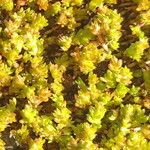
Crassula alata
Description
Source: leafsnapCrassula alata is a herb in the family Crassulaceae. It is native to the Mediterranean basin and is now also found in southern Australia and New Zealand. The succulent annual herb typically grows to a height of 5 centimetres (2.0 in). It produces white flowers in the spring time between August and October in the southern hemisphere.The species was first formally described as Crassula alata by the botanist Alwin Berger in 1930 as part of the Engler & Prantl work Die Naturlichen Pflanzenfamilien. Synonyms for the species include; Crassula tillaea as described by L.V.Lester-Garland in 1803 in the work A flora of the island of Jersey, Tillaea alata as described by Viviani in 1830 in the work Plantarum aegyptiarum and Crassula tripartita as described by N.A.Wakefield in 1957 in the work Flora of Victoria: new species and other additions published in The Victorian Naturalist.It is an alien species to Western Australia but has become naturalised in many areas. The plant is commonly found in lawns and in and around carparks in the South West, Peel and Wheatbelt regions. It is also found in other states including coastal area in South Australia and Victoria.
Care Guide
💧 Water
The three-part crassula, native to arid regions, is adept at storing water and thrives in dry conditions. As a drought-tolerant succulent, it requires minimal moisture and should be watered about twice a week, allowing the soil to dry out between waterings. Typically grown indoors, the three-part crassula flourishes in well-draining soil, which is ideal given its low water requirements.
☀️ Light Full sun
Originating from arid regions, Three-part crassula does best in full sun; its native habitat is marked by intense sunlight and very little shade. It will also tolerate partial sun, providing some flexibility in its growth.
🌡️ Temperature 20–37.8°C
Although Three-part crassula can tolerate some heat, it primarily does best and grows in the cooler months and becomes dormant in summer. In hot summer conditions, give it shade to avoid scorching from strong sunlight. Watering should be cut back or stopped during the hottest period to prevent root rot. Winter and spring are when Three-part crassula grows vigorously. If temperatures do not fall too low, it will continue to grow steadily.
💨 Humidity
🪴 Soil 6-7
🌱 Fertilizer
For Three-part crassula, apply light fertilizer 1-2 times a year during the growing season. Do not fertilize in winter and summer when the plant is dormant. Reduce fertilizer for recently repotted plants and wait a couple of months after repotting before feeding. Fertilizing helps maintain healthy growth and promotes blooming.
🪴 Pot & Repot
✂️ Pruning
The three-part Crassula has fleshy, succulent leaves and benefits from regular pruning between early and late spring. Pruning helps remove dead or diseased stems, trims leggy growth, enhances air circulation, prevents overcrowding, and encourages vigorous growth. As a result, the plant becomes healthier and more attractive.
🌿 Propagating
🐛 Diseases & pets
☠️ Toxicity
Characteristics
- Plant Type
- Herb
- Life Cycle
- Annual
- Genus
- Crassula
- Family
- Crassulaceae
- Hardiness Zone
- 9-11
- Mature Height
- 5 cm
- Mature Spread
- 15 cm to 25 cm
- Leaf Color
- Green
- Leaf Type
- Semi-evergreen
- Flower Color
- White
- Flower Size
- 0.25 cm to 0.51 cm
- Bloom Time
- All year round
- Planting Time
- Spring, Summer
- Harvest Time
- All year round