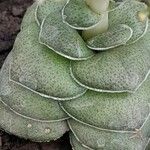
Crassula hemisphaerica
Tom thumb
Care Guide
💧 Water
Crassula hemisphaerica thrives in arid conditions due to its remarkable drought tolerance and ability to store water in its fleshy leaves. This plant should be watered every three weeks, ensuring that the soil dries out completely between waterings. Indoors, Crassula hemisphaerica flourishes in bright light, requiring only minimal watering, mirroring its natural adaptations.
What should I do if I give too much or too little water to my Crassula hemisphaerica plant?
Crassula hemisphaerica and other succulents are known for their ability to survive without water for extended periods of time. However, if you forget to water your Crassula hemisphaerica for a month or more, you may notice it looking dehydrated or damaged. Signs of underwatering include a lackluster and wrinkled appearance, dried up leaves that have turned brown and crispy or fallen from the plant, and completely dried out soil. To fix this, thoroughly water the plant by submerging the pot in water for 5-10 minutes until the soil feels moist on the surface. Overwatering is dangerous for Crassula hemisphaerica and can even be fatal if not addressed. Excess moisture leads to root rot, which prevents the roots from absorbing nutrients and water. Root rot occurs when fungi and bacteria thrive in wet conditions and feed on the roots. Symptoms of overwatering include yellow, swollen, and translucent organs that may burst open from excess water. If left untreated, the plant may turn brown or black and lose leaves easily. It is important to check the soil to confirm overwatering as the cause. Saving an overwatered plant can be challenging but not impossible. The key is to catch it early before significant damage occurs. If the roots have become rotten, the entire plant may die. To address overwatering, remove the plant from its pot and examine the roots and soil. Remove wet soil and rinse the roots with room-temperature water to eliminate any lingering fungus. If the roots are dark brown or black, soft, mushy, or slimy, root rot has developed. If most of the roots are affected by rot, it may not be possible to save the plant. In this case, it is best to propagate a new Crassula hemisphaerica using healthy stem cuttings. However, if some roots are healthy, there is a chance to save the plant. Trim away unhealthy roots with a sterilized cutting tool and dip the remaining pale roots in fungicide. Then, repot the Crassula hemisphaerica in fresh, well-draining soil. While this method does not always work, in most cases, the plant can recover and produce new growth in the following growing season.
How frequently do I need to water my Crassula hemisphaerica?
To determine how often to water Crassula hemisphaerica, the best approach is to check the soil and only water when it is completely dry. You can use either your finger or a moisture meter to check the soil beneath the surface. If you plant it in a deep pot, you can use a stick or chopstick to check for moisture. If the soil feels even slightly moist, wait a few days and check again. Generally, most people will need to water Crassula hemisphaerica every two weeks in summer and once a month in winter. However, there are various factors that can affect the watering frequency. The section below provides some considerations to help determine how often to water.
What should I think about when watering my Crassula hemisphaerica?
The watering needs of your Crassula hemisphaerica are influenced by various environmental factors, such as the size of the container, type of soil, temperature, and humidity. Firstly, the container and soil determine how frequently and how much water should be used. It is important to use a container with drainage holes to prevent excessive water retention. A smaller container holds less soil and moisture, requiring more frequent watering, whereas a larger pot retains moisture for longer and needs less frequent watering. Avoid using an oversized pot, as this can lead to overwatering. When repotting, choose a container just slightly larger than the current one, and opt for a shallow container to accommodate the plant's shallow root system. In winter, Crassula hemisphaerica requires less frequent watering due to slower growth and reduced water loss through evaporation. The cooler air ensures soil stays wet for a longer duration. Your local climate also factors in, with humid and rainy areas requiring less frequent watering compared to dry and arid regions. Keep in mind that conditions can change within the same location, depending on the season and indoor heating or air conditioning usage. If you have planted Crassula hemisphaerica in the ground, it generally doesn't require additional watering once its root system is established, relying on precipitation and dew for moisture. However, during extended dry periods, occasional watering may be necessary. For areas where growing the plant in a container is necessary, it can be moved outdoors during appropriate temperatures in spring and summer, and brought indoors as temperatures decrease. Outdoor potted Crassula hemisphaerica typically needs more watering due to increased sun exposure, even if kept on a shaded porch.
How should I water Crassula hemisphaerica?
To effectively water Crassula hemisphaerica, it is best to give it a thorough soaking and then let it dry out before watering again. This plant can tolerate some drought, so it is okay to let it become quite dry before watering. It is generally better to underwater than overwater this type of plant. When you water, make sure to thoroughly soak the soil throughout the entire pot. Avoid pouring water in just one spot, but instead try to water around the whole rim of the planter to ensure all sides of the plant get wet. The amount of water needed will depend on the size of your container and how well the soil absorbs water. Give enough water so that it drains out from the drainage holes. Afterward, ideally let the drained water sit in the saucer for 20-30 minutes to be absorbed into dry pockets of soil. Then, discard any excess water in the saucer to prevent waterlogging the soil. Another effective method is bottom-watering, which ensures the soil is thoroughly moistened. This involves placing the pot in a saucer of water and allowing the soil to absorb moisture through the drainage holes. You can tell that the soil has absorbed enough water when the top layer feels moist. Although this method takes more time than top-watering, it is reliable for evenly distributing water throughout the pot. In its natural environment, Crassula hemisphaerica experiences relatively dry conditions with infrequent rain. When it does rain, the soil becomes thoroughly moistened. To mimic this, you can bottom-water your plant when the soil is completely dry. This deep soil bathing is better than frequently watering lightly for Crassula hemisphaerica.
☀️ Light Partial sun
Crassula hemisphaerica comes from habitats with dappled light, such as the understory of forests or shaded rocky areas. It favors partial sun but can also tolerate full sun.
🌡️ Temperature 20–37.8°C
Although Crassula hemisphaerica can tolerate some heat, it primarily performs best and grows in cooler seasons and goes dormant in summer. In hot summer conditions, provide shade to prevent scorching from strong sunlight. Watering should be reduced or stopped during the hottest period to avoid root rot. Winter and spring are when Crassula hemisphaerica shows vigorous growth. As long as temperatures do not fall too low, it will continue to grow steadily.
What are the general care requirements for Crassula hemisphaerica?
Crassula hemisphaerica thrives best in warm environments and needs higher temperatures during its growing season to enhance its growth and metabolism. It benefits from ample sunlight, proper moisture levels, and good air circulation. Care should be taken to avoid damage from very low temperatures and overwatering. The plant prefers to avoid extremely high temperatures and overly dry conditions too. During winter, it enters a dormant state and should be moved indoors if temperatures drop below 5°C, ideally near a south-facing window to maximize sunlight exposure. Supplemental lighting can be used if natural light is insufficient. Watering should be reduced or stopped altogether when the temperature falls below 20°C to prevent root rot, especially for those cultivated outdoors.
How should I care for Crassula hemisphaerica in low temperatures?
Crassula hemisphaerica is sensitive to low temperatures and thrives best above 20°C. During winter, ensure it's kept above 5°C. Exposure to temperatures below 1°C can result in weakening, wilting, and susceptibility to root rot. In cases of mild frost damage, symptoms might not appear immediately but will show within a week as gradual withering. To manage frost damage, trim off frostbitten areas, check for and remove any rotted roots, and propagate through cuttings if necessary. Move the plant indoors to a warmer environment, preferably near a south-facing window for more sunlight, and consider supplemental lighting if natural light is inadequate.
How do I protect Crassula hemisphaerica from high temperatures?
During the hotter months, it's crucial to keep Crassula hemisphaerica in conditions below 41°C to prevent growth cessation, water loss, wilting, and vulnerability to sunburn, especially when temperatures soar above 45°C. In the event of sunburn or root rot, it's advised to remove the damaged parts of the plant. Shield the plant from direct afternoon sunlight until it begins to recover and shows signs of new growth. For plants suffering from root rot, withhold watering until evidence of new root growth appears.
💨 Humidity dry (<40%)
This plant prefers dry conditions, so don't mist it. However, watering it less often can also thrive in higher humidity.
🪴 Soil 0-0
🌱 Fertilizer
For Crassula hemisphaerica, light applications of fertilizer once or twice a year during the growing season are sufficient. Do not fertilize in winter or in summer when the plant is dormant. Cut back on fertilizer for repotted plants and wait a couple of months after repotting before you start feeding. Fertilizing helps support healthy growth and encourages flowering.
🪴 Pot & Repot Every 12 months
✂️ Pruning
To keep your Crassula hemisphaerica in optimal shape, prune any excess or dense branches during the spring and autumn. Use tools such as knives and apply sulfur powder to treat any cuts. For propagation, select sturdy stems with 5 to 6 leaves, apply sulfur powder to the cut surfaces, and allow the wounds to heal before planting. Once planted, keep the soil lightly moistened.
🌿 Propagating
🐛 Diseases & pets
☠️ Toxicity
Characteristics
- Plant Type
- Succulent
- Life Cycle
- Annual
- Genus
- Crassula
- Family
- Crassulaceae
- Hardiness Zone
- 9-11
- Mature Height
- 61 cm
- Mature Spread
- 61 cm
- Leaf Color
- Light Green, Pale Green
- Leaf Type
- Evergreen
- Flower Color
- White
- Flower Size
- 0.25 cm to 0.51 cm
- Bloom Time
- Mid spring, Late spring
- Planting Time
- Summer, Autumn
- Harvest Time
- Early summer, Mid summer
- Native Area
- South Africa