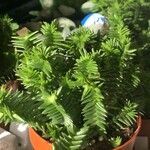
Crassula tetragona
Karkai · Pygmyweed · Miniature pine tree · Miniture pine trees · Four-angled Crassula
Description
Source: leafsnapCrassula tetragona is a succulent plant belonging to the Crassulaceae family. Native to South Africa, it is commonly known as the Miniature Pine Tree due to its resemblance to a small coniferous tree. The plant features a woody stem that can grow up to 60 cm tall, with small, green, needle-like leaves arranged in whorls of four around the stem. These fleshy leaves can turn red or bronze when exposed to bright sunlight. During late summer, Crassula tetragona produces small white or pink flowers in clusters. Easy to care for, Crassula tetragona requires minimal watering and can thrive both indoors and outdoors. It prefers well-draining soil, bright sunlight, and moderate temperatures. The Miniature Pine Tree succulent can be propagated through stem cuttings or by planting seeds in the springtime. Due to its unique appearance and minimal maintenance requirements, it makes an excellent ornamental houseplant, perfect for beginners seeking low-maintenance plants for their homes or gardens.
💡 This plant is easy to cultivate as a bonsai, featuring sparse leaves and a compact shape. It grows quickly and is popular for use in dish gardens and container plantings. You can grow it indoors or outdoors, but it thrives best in sandy, well-drained soil. Be sure to provide ample sunlight or bright indoor light for optimal growth.
🌳 A miniature pine tree is commonly used in miniaturized landscapes and fairy gardens to mimic the appearance of pine trees. Despite its small size, it can change the atmosphere of compact spaces and impart a sense of enchantment. Although a miniature pine tree is not widely known for uses beyond ornamentation, its succulent nature suggests potential for water-conserving landscaping practices, which could be explored for xeriscaping in arid regions.
🎭 Symbolically, a flowering Jade stands for strong friendship, luck and prosperity. More precisely, the Jade’s leaves signify the energy and joy of friendship, while its flowers signify the fragrance of friendship.
Care Guide
💧 Water Every 7 days
The miniature pine tree is well-suited for arid environments, as it requires minimal water and thrives in dry climates. Watering it once every three weeks is sufficient to maintain its health. This tree is ideal for indoor cultivation and does exceptionally well in containers, where you can easily manage soil moisture to prevent root problems.
How should I water my Miniature pine tree in the best way?
To properly water a Miniature pine tree, follow these steps: 1. Wait until spring when new leaves are starting to grow before watering. 2. Water when the soil in the pot is completely dry. 3. You can use tap water or distilled water for watering. 4. Avoid watering from above; instead, water at the base of the plant. 5. Apply water slowly and evenly across the soil's surface. 6. This method ensures consistent moisture for all parts of the soil without wetting the above-ground portions of the plant. 7. Water until you see a light stream of excess water draining from the pot's hole.
What should I do if I give my little pine tree too much or too little water?
Overwatering a Miniature pine tree is a more common problem than underwatering. Overwatering is harmful to the plant and can quickly lead to its death. To avoid overwatering, it is important to let the soil completely dry before watering. Some people mistakenly water their Miniature pine tree incorrectly, especially during dormancy. In this situation, we will focus on how to solve the problem of overwatering. When signs of overwatering appear, it is best to remove the plant from its current pot and examine the roots for any signs of rot or moisture-related diseases. While some roots should be removed, others can be cleaned and will recover. Afterward, the plant should be repotted in well-draining soil to prevent future overwatering. Although rare, underwatering can also occur. In this case, simply water the plant more frequently, ensuring not to overcompensate and accidentally overwater.
How frequently should I water my small pine tree?
The water needs of the Miniature pine tree are low because it is a succulent plant from a hot and dry region. To care for this plant, allow the soil to completely dry out between waterings. It takes about two weeks to a month for the soil to dry, and during spring and summer, watering every 2-3 weeks is recommended. During summer, the soil may dry out faster. However, when the temperature is below 60 degrees or above 85 degrees Fahrenheit, the plant is dormant and doesn't need watering. Keep the soil dry until the temperature is suitable for growth, and then resume watering.
How much water does my tiny pine tree need?
Miniature pine trees require a specific watering routine. Although they can tolerate going without water for a while, when it is time to water them, it is important to give them plenty. While there is no specific measurement for how much water to give, you should continue watering until the soil is completely moist. To ensure this, if you have the plant in a pot, water it until you see water coming out of the drainage holes at the bottom. Another way to check is to insert a pencil or similar object deep into the soil and if it comes out moist, then you have watered enough.
How can I know if I'm giving my small pine tree enough water?
Overwatering is usually a bigger problem than underwatering. When plants are overwatered, you will quickly notice changes in the leaves, including loss of shape, mushiness, and color changes. In contrast, healthy living stone leaves should be sturdy and maintain their shape. Underwatering is rare for Miniature pine trees, as they can often survive with no water. However, if underwatering does happen, you will usually see leaf discoloration and dryness.
☀️ Light Full sun
The miniature pine tree prefers full sun and promotes healthy development. Too much light can scorch its leaves, while too little light may produce sparse growth. Native to sun-drenched habitats, this plant adapts to locations with somewhat reduced light. Its sunlight needs stay largely consistent throughout its growth stages.
What are the sunlight requirements for a miniature pine tree?
A miniature pine tree thrives under full sun exposure, needing more than 6 hours of sunlight daily to maintain healthy growth. Conversely, overly intense light might cause leaf scorching, while insufficient light could lead to sparse and weak growth. Originating from sun-drenched areas, this plant can adapt to slightly less light but still prefers plenty of sun during its varying stages of development. Notably, understanding your garden's light and shade patterns is crucial for positioning your plants in an environment that ensures their growth and happiness.
How do you compensate for insufficient natural light for indoor plants?
When natural sunlight is inadequate, especially during winter or in less sunny indoor locations, artificial lighting becomes essential for promoting optimal growth of indoor plants like the miniature pine tree. LED lights are recommended because they can be adjusted to provide specific light wavelengths needed by plants. Full sun plants require 30-50W/sq ft of artificial light, partial sun plants need 20-30W/sq ft, and full shade plants need 10-20W/sq ft. The artificial light source should be placed 12-36 inches above the plant to mimic natural sunlight, ensuring the plant receives 8-12 hours of light per day.
What are the symptoms of insufficient or excessive sunlight exposure in miniature pine trees?
Miniature pine trees showing signs of insufficient sunlight may exhibit lighter-colored new leaves, leggy or sparse growth, faster leaf drop, and chlorosis, where leaves lose their green color and turn yellow. Symptoms of excessive sunlight include sunscald, with pale or necrotic areas on plant tissue; leaf curling, as a defense mechanism to minimize water loss; wilting, which is a loss of turgor pressure causing leaves and stems to droop; and leaf scorching, indicated by brown, dry, crispy edges or patches on leaves. These conditions show the plant's struggle in unsuitable light environments.
What solutions can alleviate the effects of insufficient or excessive sunlight on miniature pine trees?
To remedy insufficient sunlight, gradually move plants to sunnier spots to ensure they receive at least 6 hours of direct sunlight daily. For indoor plants, use south-facing windows and consider artificial lighting if necessary, having lights on for at least 8 hours daily. For outdoor plants, the gradual relocation can help prevent sunburn. Addressing light blockages involves pruning or relocating plants for better sunlight exposure. Note that while parts of the plant damaged by insufficient light may not recover, new growth after increasing light exposure should be healthy.
🌡️ Temperature 20–37.8°C
The miniature pine tree thrives at temperatures between 68℉ and 100℉ (20℃ to 38℃) in its native habitat. It is a temperate woody plant that copes with hotter conditions by reducing watering in summer and increasing light and humidity. During cooler periods it can tolerate temperatures as low as 50℉ (10℃) provided it is kept dry.
What temperature range is optimal for the growth of a Miniature Pine Tree?
The Miniature Pine Tree, botanically named Crassula tetragona, flourishes in a temperature range of 68°F to 100°F (20°C to 38°C) in its natural habitat. It's a temperate woody plant adept at adjusting to warmer climates by modifying its care routine - less water in the summer while boosting light and humidity. During cooler months, it can handle temperatures as low as 50°F (10°C) provided it is kept dry. Winter marks its growing season, thus it's crucial to maintain temperatures above the minimum suitable growth temperature for optimal development. As the outdoor temperature falls below the tolerable growth minimum, it's advised to relocate the plant indoors to a brightly illuminated area, adjusting watering accordingly to the temperature shifts. For outdoor overwintering, position the plant in a sheltered, sunlit spot or consider a temporary greenhouse setup to ensure adequate protection and moisture.
How should I care for my Miniature Pine Tree in low temperatures?
In the face of low temperatures, the Miniature Pine Tree, which thrives best between its suitable growth temperature range, shows intolerance to extreme cold, needing care to stay above the tolerable growth temperature minimum. Exposure to temperatures below the growth limit can cause the leaves to suffer from water-soaked necrosis and wilting. Should mild frost damage occur, initial symptoms might be absent, with significant wilting and leaf drop appearing after about a week. To mitigate frost damage, trim off frostbitten sections and either move the plant to a warmer indoor setting or establish a makeshift greenhouse for cold weather protection. If opting for indoor relocation, place the tree near a south-facing window to ensure it receives sufficient sunlight. If using a greenhouse, ensure proper ventilation to prevent decay from poor air circulation.
What steps should I take if my Miniature Pine Tree experiences high temperatures?
In the event of high temperatures, especially during summer, it's imperative to keep the Miniature Pine Tree below the max suitable growth temperature range. Surpassing the tolerable high temperature threshold can trigger a dormant state in the plant, increasing its susceptibility to rot amidst high humidity. To care for your tree under these conditions, first remove any dry or rotten parts. Then, reposition the tree to a partially shaded area to shield it from direct midday and afternoon sunlight. Cease watering until the climate cools, to help the plant navigate through the high temperature period.
💨 Humidity dry (<40%)
This plant prefers dry conditions, so don't mist it. However, watering it less often can also thrive in higher humidity.
🪴 Soil 6-7
🌱 Fertilizer
For miniature pine trees, light applications of fertilizer once or twice a year during the growing season are sufficient. Avoid fertilizing in winter and in summer when the tree is dormant. Use less fertilizer for plants that have been repotted and wait a couple of months after repotting before fertilizing. Fertilizing helps maintain healthy growth and promotes blooms.
Why do I have to put plant food on my small pine tree?
Fertilizing Miniature pine trees improves the growing medium by supplying nutrients. While these trees can store water and nutrients, applying plant food during the growing season promotes healthy growth. Fertilization can also stimulate mature trees to produce blooms.
When should I fertilize my small pine tree?
Miniature pine trees benefit from added nutrients, but they only require a small amount of fertilizer during the growing season. It is recommended to fertilize them 1-2 times a year, specifically in the spring and autumn, while avoiding winter and summer when they are dormant. When repotting these trees, it is important to be cautious and decrease the amount of fertilizer used. It is also advised to wait a few months after repotting before beginning to apply fertilizer.
When is the best time to not use fertilizer on my small pine tree?
The Miniature pine tree, like other plants, goes through a dormancy period. During this period, it is best to avoid applying fertilizer. The plant stops growing in both summer and winter, so fertilizer should be withheld during these times as well. Additionally, it is advisable to refrain from fertilizing for the first few months after repotting in the spring.
What kind of plant food does my small pine tree need?
When fertilizing a Miniature pine tree, it's recommended to use a liquid plant food specifically made for succulents and cacti. Dilute the fertilizer with water to half-strength to avoid excess buildup in the soil. Apply the fertilizer to the base of the plant and water it thoroughly, making sure any extra moisture drains away.
How can I give my Miniature pine tree the nutrients it needs to grow?
When fertilizing Miniature pine trees, using liquid plant food is easier, although granules are also an option. Make sure to follow the directions on the packaging and dilute liquid fertilizers to half-strength. Whether using granules or liquid plant food, always apply it to the soil. Cover the granules with a thin layer of soil and water, regardless of the type of plant food being used.
🪴 Pot & Repot Every 2 years
When repotting a miniature pine tree, choose a pot slightly larger than the current one that provides good drainage. Use a gritty, well-draining succulent or cactus mix. Gently remove the plant from its old pot, brush off excess soil, and replant it at the same depth. Wait several days before watering to allow any root damage to heal. Repot in spring or fall, and place it in a brightly lit location.
✂️ Pruning
To keep large succulent plants in optimal condition, it’s beneficial to prune them during the spring and autumn. This includes removing any dense branches. When propagating, cut stems that have 5-6 leaves each. Apply sulfur powder to the wounds on the cut stems, and water the soil lightly to encourage healing before planting them.
🌿 Propagating
🐛 Diseases & pets
☠️ Toxicity
Given that it is non-toxic to both people and animals, Crassula Tetragona could make for a fantastic houseplant. It also adds elegance to the surroundings, particularly when planted in adorable containers. Additionally, it requires less care and upkeep. Therefore, it would be simple for you to handle.
Characteristics
- Plant Type
- Succulent, Shrub
- Life Cycle
- Perennial
- Genus
- Crassula
- Family
- Crassulaceae
- Hardiness Zone
- 9-11
- Mature Height
- 0.61 m to 1.22 m
- Mature Spread
- 30 cm to 61 cm
- Leaf Color
- Green
- Leaf Type
- Evergreen
- Flower Color
- White
- Flower Size
- 0.51 cm to 0.76 cm
- Bloom Time
- Spring
- Planting Time
- Spring, Summer, Autumn
- Harvest Time
- Spring
- Native Area
- South Africa