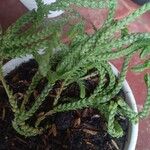
Crassula tillaea
Mossy-stonecrop · Moss Pygmyweed · Mossy tillaea · Tilliwort · Stonecrop
Description
Source: leafsnapCrassula tillaea is a succulent plant known by its common names mossy stonecrop and moss pygmyweed. It is a small fleshy plant growing only a few centimeters in height. It is green when new and gradually turns orange and then deep red when mature. It has tiny triangular pointed leaves only a few millimeters long. A tiny flower or pair of flowers grows between each oppositely-arranged pair of leaves; the flowers are about two millimeters in length and width. The fruit is a minute follicle containing one or two seeds. This plant is native to Eurasia, particularly the Mediterranean Basin, but is known in other regions as an introduced species.
Care Guide
💧 Water Every 2-3 weeks
Moss pygmyweed, native to Mediterranean climates, flourishes with occasional moisture and can withstand drought thanks to its succulent characteristics. To keep it healthy without overwatering, provide weekly watering. As an evergreen plant, moss pygmyweed benefits from consistent but minimal watering to maintain its foliage year-round, even with indoor temperature fluctuations.
How should I water my Moss pygmyweed?
There are various ways to water Moss pygmyweed, including using a garden hose with a spray nozzle, a watering can, or any other common watering tool. This plant is not too particular about the type of water it receives and can survive with rainwater, tap water, or filtered water. It is generally best to avoid watering this plant from above to prevent leaf and flower damage and potential disease. A drip irrigation system is often recommended for watering Moss pygmyweed, as it provides even and direct watering to the soil. For container-grown Moss pygmyweed, you can use a cup, watering can, or tap water to water the plant directly on the soil.
What should I do if I give my Moss pygmyweed too much or too little water?
The solution for underwatering Moss pygmyweed is simple: water the plant more regularly when you notice it lacks moisture. Overwatering, on the other hand, can be a more serious issue if not detected early. When Moss pygmyweed is overwatered, it becomes susceptible to diseases that can cause it to decline and die. To prevent this, choose a suitable location for growth with ample sunlight and good drainage to avoid waterlogged soil. If you have overwatered your Moss pygmyweed in a pot, consider changing to a new pot with better drainage. When repotting, use loose soil and a pot that drains efficiently.
How frequently should I water my Moss pygmyweed?
To successfully care for your Moss pygmyweed, it's important to provide regular water throughout the growing season. In the beginning of spring, aim to water the plant once a week. As the weather gets warmer, you may need to increase watering to two or three times per week, but be careful not to exceed this rate as it can harm the plant. Regardless of the frequency, it's crucial to keep the soil moist but not overly wet. If you have Moss pygmyweed in a pot, you'll likely need to water it more frequently compared to plants in the ground. Potted plants can dry out faster, so plan to water them a few times per week rather than just once.
How much water does my Moss pygmyweed require?
Here are some easier-to-follow guidelines for determining how much water to give to your Moss pygmyweed: 1. Feeling the soil for moisture: Some gardeners prefer this method. Water your Moss pygmyweed until you feel that the first six inches of soil have become moist. 2. Set measurement: Another option is to use a specific volume of water. Typically, give your Moss pygmyweed about two gallons of water per week, depending on the temperature and soil dryness. However, be cautious about overwatering if your plant needs less than two gallons per week. 3. Container gardening: If you are growing Moss pygmyweed in a container, a different approach is needed. Make sure all layers of soil are moistened by giving enough water. Stick your finger in the soil to feel for moisture or water until you see a slight excess water trickle from the drainage holes. By following these guidelines, you can ensure proper watering for your Moss pygmyweed.
How can I know if I am giving enough water to my Moss pygmyweed?
Avoiding overwatering your Moss pygmyweed can be challenging because of its deep root system, requiring weekly soil moisture. However, Moss pygmyweeds are highly prone to root rot and browning if overwatered. Underwatering is less of a concern as these plants can survive without additional watering for a period of time, but if left too long without water, wilting and dry leaves may occur.
☀️ Light Full sun
Native to dry areas, Moss pygmyweed prospers in full sun, its natural habitat marked by intense sunlight and little shade. It will also tolerate partial sun, providing some flexibility in its growth.
What are the sunlight requirements for Moss pygmyweed?
Moss pygmyweed thrives in environments that offer full sun, requiring more than 6 hours of direct sunlight per day for optimal growth. It can also tolerate partial sun conditions, which means about 3-6 hours of sunlight daily. However, for the plant to truly flourish, it prefers being in locations that ensure ample exposure to direct sunlight. The plant's original habitat in bright, open environments supports its sun-loving nature, making it essential to choose spots in your garden that balance light and shade effectively to ensure the plant's happiness and health.
How can artificial lighting be used for Moss pygmyweed indoors?
Indoor Moss pygmyweed can benefit from artificial lighting, especially when natural sunlight is insufficient. LED lights are recommended as they can be adjusted to provide specific wavelengths needed for the plant's growth. For plants that are accustomed to full sun, 30-50 watts per square foot is necessary; for partial sun plants, 20-30 watts per square foot; and for full shade plants, 10-20 watts per square foot. The light source should be placed 12-36 inches above the plant to mimic natural sunlight conditions. To ensure healthy growth, indoor plants should be exposed to artificial light for 8-12 hours per day, simulating the length of natural daylight hours.
What are common symptoms of inadequate lighting for Moss pygmyweed?
When Moss pygmyweed is grown indoors or in conditions where it doesn't receive sufficient light, several symptoms may manifest, signaling a need for better lighting. These include smaller new leaves compared to older ones, leggy or sparse growth, faster leaf drop, slower or halted growth, lighter-colored new leaves, and symptoms associated with either too much or too little sunlight such as chlorosis, sunscald, leaf curling, wilting, and leaf scorching. These symptoms highlight the plant's struggle to adapt to suboptimal light conditions, affecting its overall health and appearance.
How can lighting conditions be improved for Moss pygmyweed?
Improving lighting conditions for Moss pygmyweed involves a combination of strategies for indoor, outdoor, and ground-planted species. Indoors, you can gradually move your plant to a sunnier location or use artificial lighting, such as plant grow lights, for at least 8 hours daily. Outdoors, it is crucial to allow plants to adapt to increased sunlight gradually to prevent sunburn. Reducing obstructions that block sunlight and transplanting smaller plants to sunnier locations with good drainage can also significantly improve light exposure. For plants affected by insufficient sunlight, remember that while parts already damaged may not recover fully, ensuring new growth receives adequate light will promote a healthier plant overall.
🌡️ Temperature 20–37.8°C
Although Moss pygmyweed can tolerate some heat, it mainly does best and grows during the cooler seasons and becomes dormant in summer. In very hot summer temperatures, give it shade to prevent scorching from intense sunlight. Watering should be reduced or stopped during the hottest season to avoid root rot. Moss pygmyweed shows vigorous growth in winter and spring, and as long as temperatures do not drop too low, it will continue to grow steadily.
What is Moss pygmyweed?
Moss pygmyweed, also known by its botanical name Crassula tillaea, is a species of plant. Details about its essential characteristics, symptoms, and additional information weren't provided.
💨 Humidity
🪴 Soil 6-7
🌱 Fertilizer
For Moss pygmyweed, apply light amounts of fertilizer once or twice a year during the growing season. Do not fertilize in winter or summer when it is dormant. Reduce fertilizer for repotted plants and wait a couple of months after repotting before applying fertilizer. Fertilizing supports healthy growth and encourages blooming.
🪴 Pot & Repot Every 3 years
✂️ Pruning
Moss pygmyweed is a plant with small, succulent leaves that forms a dense mat. It benefits from light pruning in early to late spring. To encourage denser growth and prevent overcrowding, use clean tools to remove dead stems. Make sure to prune when the plant is dry to reduce the risk of fungal diseases.
🌿 Propagating
🐛 Diseases & pets
☠️ Toxicity
Sedums include 600 different plant species and are typically thought to be non-toxic to both people and animals.Sedum is a perennial plant in the succulent family that is also known as stonecrop. Popular uses for this low-maintenance plant include rock gardens, rock walls, ground cover, edging, and indoor/outdoor containers.
Characteristics
- Plant Type
- Herb
- Life Cycle
- Annual
- Genus
- Crassula
- Family
- Crassulaceae
- Hardiness Zone
- 9-11
- Mature Height
- 1 cm to 6 cm
- Mature Spread
- 2 cm to 10 cm
- Leaf Color
- Green, Light Green
- Leaf Type
- Evergreen
- Flower Color
- Red, Green
- Flower Size
- 0.20 cm
- Bloom Time
- Mid spring, Late spring, Early summer
- Planting Time
- Spring, Summer
- Harvest Time
- Summer
- Native Area
- Germany, Turkey, Tunisia, Italy, Spain, Netherlands, France, Bulgaria, United Kingdom, Greece, Algeria, Morocco, Belgium, Portugal