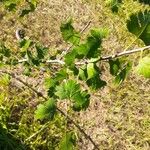
Crataegus marshallii
Parsley-hawthorn
Description
Source: leafsnapCrataegus marshallii, commonly known as parsley hawthorn, is a small deciduous tree or shrub belonging to the Rosaceae family. Native to the southeastern United States, this plant thrives in diverse habitats such as woodlands, fields, and roadsides. It typically grows up to 20 feet tall with a spread of about 15 feet. The leaves of Crataegus marshallii are simple, alternate, and have serrated edges. They are dark green and transform to yellow or red in the fall. The plant produces small white flowers that bloom from April to May, followed by red berries that ripen from September through October. Native Americans have used Crataegus marshallii for medicinal purposes for centuries. The plant contains compounds known to offer cardiovascular benefits, such as reducing blood pressure and cholesterol levels. Additionally, it is used to treat digestive issues like indigestion, diarrhea, and constipation. Overall, Crataegus marshallii is an attractive ornamental plant with medicinal properties, making it an excellent addition to any garden or landscape design project.
🌳 Although seemingly unremarkable, parsley Hawthorn plays an important part in supporting local ecosystems by drawing a range of pollinators. Its flowers, rich in nectar, serve as food for bees, butterflies, and other pollinating insects, which in turn aid the reproductive processes of many plants. This interaction highlights an unexpected role for parsley Hawthorn in promoting biodiversity and indicates its potential to function as a keystone species in its habitat.
🎭 Helpful knowledge
Care Guide
💧 Water Every 7 days
Parsley Hawthorn thrives in moderate moisture and is highly drought-resistant. It can adapt to various soil types and needs watering every three weeks. To ensure vigorous growth and maintain its health, it is important to provide consistent moisture during the growing season.
How should I water my Parsley Hawthorn plant?
To ensure excellent root development, it is recommended to place a garden hose at the base of the plant. When watering, avoid spraying the leaves directly. If the plant is outdoors and exposed to direct sunlight, the leaves will require more watering. To moisten the roots, you can use bubblers or soaker hoses for each plant. When adding or removing plants, use soaker hoses that cover the entire garden or bed to encourage deep root growth. After watering, make sure to drain any excess water and wait for the soil to dry before watering again. Watering at ground level is advised to prevent diseases. On a sunny day, consider spraying the entire bush with water. It is important to note that whether the Parsley Hawthorn is potted or in the ground, deep watering is preferred over light sprinkling.
What should I do if I give Parsley Hawthorn too much or too little water?
An overwatered Parsley Hawthorn can show signs such as yellow leaves that fall off and wilt. The plant may appear dull and unhealthy, with mushy stems. When these signs appear, adjust your watering schedule if possible. Wilting can also indicate under-watering, which is characterized by crispy, dry leaves. In this case, check the soil for dryness and provide a thorough watering as needed. Sufficient water will help the Parsley Hawthorn recover, but the plant may still exhibit yellow, dry leaves due to root damage. Once the plant returns to normal, the yellowing of leaves will cease. When growing Parsley Hawthorn indoors, always check the moisture levels in the pot and avoid overwatering. Look out for black spots on the leaves, indicating that the soil needs to dry out before watering again. Overwatering can lead to root rot, so transfer the plant to a different pot if you observe discolored and slimy roots. Prevent root rot by avoiding excessively wet soil. When planting Parsley Hawthorn outdoors, ensure the soil is adequately watered. If the soil feels too dry when checking with your fingers, it may indicate under-watering. Provide sufficient watering to help the plant recover.
How often do I need to water my Parsley Hawthorn plant?
The Parsley Hawthorn prefers deep and infrequent watering, especially when planted in pots. To prevent the soil from drying out too quickly, soak them in a gallon of water each time. In cold regions, water every 3 to 5 days. It's best to water in the morning when the soil is dry, both indoors and outdoors. You can check the soil moisture by feeling the top 2-3 inches - if it's dry, give the plant a thorough watering. During hot days, check the moisture daily as the heat can quickly dry out the soil in pots. For garden plants, irrigation is necessary. In hot climates, water once a week when about 2 to 3 inches of soil are too dry. Consider the amount of rainfall and avoid overwatering to prevent root rot. Parsley Hawthorn grows in spring and fall. Outdoor plants benefit from mulch (3 to 4 inches deep) to conserve water. Sandy soil needs more frequent watering, while clay soil requires less watering to avoid root rot. Keep track of watering dates on a calendar and watch for drooping leaves as a sign that watering may be needed.
How much water should I give my Parsley Hawthorn plant?
"The watering needs of the Parsley Hawthorn depend on whether it is planted in a pot or outdoors. For potted plants, water them deeply until water drips out from the bottom of the pot, and then wait for the soil to dry before watering again. To measure how much water you have given, you can use a water calculator or a moisture meter once a week. During the flowering period, provide plenty of water, but allow the moisture to evaporate afterwards to avoid root rot. If the Parsley Hawthorn is planted outdoors and receives adequate rainfall, it may not need additional watering. However, when it is young or newly planted, ensure it gets 1-2 inches of rain per week. As it grows, it can rely solely on rainfall. Only if there is extreme heat or no rainfall for 2-3 weeks, consider giving it a full watering during cooler times of the day to prevent heat damage. Additional watering will be necessary during prolonged dry spells."
Should I change how often I water my Parsley Hawthorn depending on the time of year or the weather?
The Parsley Hawthorn thrives in outdoor conditions with regular rainfall, but can withstand dry weather with occasional watering. During the spring and fall, the soil should be kept moist but not too wet. Having a balance of dry and moist soil conditions will promote healthy growth. In the summer, hot weather and lack of rainfall can cause the soil to dry out quickly, so more frequent watering may be necessary to keep the plant moist. During the winter, the Parsley Hawthorn requires less water as it goes dormant and loses its leaves. Using a well-draining soil mixture like terracotta can help evaporate excess water. Once the plant starts to leaf out in the spring, you can resume regular watering. Proper drainage is crucial for the plant's health, especially during winter. When the Parsley Hawthorn is in a pot, it has limited root growth, so it's important to keep it well-watered, especially during summer. Deep soaking the roots once or twice a week, depending on the weather, is recommended. Avoid shallow sprinkles that only reach the leaves, as they can promote fungal growth and don't reach the roots effectively. Even when dormant, the Parsley Hawthorn should not be allowed to completely dry out in the fall or winter. On the other hand, overwatering should be avoided to prevent the plants from sitting in water for too long, which can lead to death. Applying mulch whenever possible can help reduce stress, conserve water, and promote healthy blooming.
☀️ Light Partial sun
Parsley Hawthorn grows best when it receives a substantial amount of sunlight each day, although it can also perform well in very strong sun. Its origins in environments with varied light conditions highlight this adaptability. Plentiful sunlight can enhance its bright foliage, while insufficient light may hinder its growth.
What are the sunlight requirements for Parsley Hawthorn?
Parsley Hawthorn thrives under various sunlight conditions due to its adaptable nature. For healthy growth, it demands a considerable amount of sun daily, with the potential to endure even intense sunlight. Its ability to thrive in habitats with diverse light conditions allows for flexibility in its placement within the garden. Partial sun, meaning about 3-6 hours of sunlight, and full sun, which is above 6 hours of sunlight, are ideal for ensuring the plant's vibrant foliage and robust growth. However, it's important to observe the movement of sunlight in your garden to choose locations that offer a balance of light and shade, optimizing the plant's health and happiness.
How can artificial lighting benefit indoor Parsley Hawthorn plants?
Artificial lighting plays a crucial role in the growth of indoor Parsley Hawthorn plants, especially when natural sunlight is scarce, such as in winter or in less sunny spaces. Adequate lighting is essential for optimal growth, and artificial lights offer a viable solution. LED lights, favored for their ability to provide specific wavelengths of light, can significantly promote faster and healthier plant growth. For full sun plants, 30-50W/sq ft of artificial light is recommended, while partial sun plants require 20-30W/sq ft, and full shade plants need 10-20W/sq ft. The appropriate distance for the light source is 12-36 inches above the plant, mimicking natural sunlight. Also, it's important to match the duration of natural daylight hours, generally 8-12 hours per day, depending on the species.
What are the symptoms of light deficiency in Parsley Hawthorn?
When Parsley Hawthorn is grown indoors under insufficient light, it may exhibit various symptoms indicative of light deficiency. These include smaller new leaves compared to previous ones, leggy or sparse growth leading to a stretched-out appearance, early leaf drop to conserve resources, delayed or halted growth as the plant enters survival mode, and lighter-colored new leaves due to insufficient chlorophyll. Additionally, chlorosis, or the loss of leaf green color, sunscald with its bleached areas on plant tissues, leaf curling as a defense mechanism, wilting from excessive water loss, and leaf scorching characterized by brown or crispy leaf edges, can occur from incorrect light conditions.
How can I address light deficiency or excessive sunlight exposure for Parsley Hawthorn?
To address light deficiency in Parsley Hawthorn, gradually acclimatize your plants to more sunlight by moving them to sunnier spots each week until they receive 3-6 hours of direct sunlight daily. For plants that are large or not easily movable, supplementing with artificial light like a desk or ceiling lamp for at least 8 hours daily, or investing in professional grow lights, can provide additional light. Outdoor plants should be moved gradually to better sunlight locations to avoid shock or sunburn. Enhancing sunlight exposure for ground planting can involve reducing obstructions by pruning trees or transplanting smaller plants to sunnier areas during their dormant periods, ensuring good drainage and optimal sunlight absorption. While parts of the plant affected by insufficient sunlight might not recover, new growth will be healthy following these adjustments.
🌡️ Temperature 15–37.8°C
Parsley Hawthorn naturally occurs in areas with temperatures ranging from 59 to 100 °F (15 to 38 ℃). The plant favors a moderate temperature band, warmer than severe winter conditions but cooler than the height of summer. Small temperature adjustments may be necessary during extreme seasons.
What is the native temperature range for Parsley Hawthorn?
Parsley Hawthorn thrives in environments where temperatures range between 59 to 100 °F (15 to 38 °C). It prefers moderate temperatures that are warmer than cold winter climates but cooler than peak summer heat. This indicates that while the plant has a preference for a certain temperature window, it also possesses a degree of adaptability within that range.
How does Parsley Hawthorn react to cold temperatures and what are the recommended cold protection measures?
Parsley Hawthorn exhibits significant cold resistance and usually does not require special frost protection measures during winter. However, if temperatures are expected to plummet below -15°C, cold protection becomes crucial. Wrapping the trunk and branches with non-woven fabric or cloth and watering the plant abundantly before the first freeze to ensure the soil remains moist and enters a frozen state are effective strategies. These precautions help in preventing drought and resource scarcity for the plant during the colder months.
What symptoms indicate that Parsley Hawthorn is experiencing low temperatures and how can they be addressed?
Parsley Hawthorn is cold-tolerant and ideally should be maintained above -10°C during winter to avoid stress. Should temperatures fall below -15°C, there might not be immediate visible damage, but come spring, branches may become brittle, dry, and fail to produce new shoots. The remedy involves pruning away any dead branches that have not produced new leaves in spring, to encourage healthy growth and rejuvenation of the plant.
How does Parsley Hawthorn react to high temperatures and what measures should be taken?
During the summer months, it is crucial to ensure that the temperature around Parsley Hawthorn does not exceed 38°C. Exposure to temperatures above 43°C can lead to symptoms such as lighter leaf color, dry and withered leaf tips, and an increased risk of sunburn. To mitigate these effects, it is advisable to trim away sunburned and dried parts of the plant, relocate it to a shaded area during the midday and afternoon sun, or provide artificial shade using a cloth. Additionally, watering the plant in the morning and evening will help keep the soil moist and support the plant's overall health.
💨 Humidity
🪴 Soil 6-7
🌱 Fertilizer
The Parsley Hawthorn plant needs adequate nutrients to achieve optimal fruit production. Apply fertilizer in early spring to support new growth and bloom development. Regular feeding keeps the plant healthy, produces more delicious fruit, and prevents nutrient-deficiency problems such as yellow leaves and poor fruit production.
🪴 Pot & Repot
For Parsley Hawthorn to thrive in pots, it needs excellent drainage.
✂️ Pruning
Parsley Hawthorn is characterized by its parsley-like leaves and white flowers. To promote better air circulation and more abundant flowering, prune the plant in early spring. Focus on removing dead or crossing branches. It's important to complete the pruning before new growth begins, as this helps prevent any hindrance to blooming and maintains a healthy, attractive structure.
🌿 Propagating
🐛 Diseases & pets
☠️ Toxicity
Characteristics
- Plant Type
- Tree
- Life Cycle
- Perennial
- Genus
- Crataegus
- Family
- Rosaceae
- Hardiness Zone
- 7-11
- Mature Height
- 7.62 m
- Mature Spread
- 4.57 m
- Leaf Color
- Green, White
- Leaf Type
- Deciduous
- Flower Color
- White
- Flower Size
- 2.54 cm
- Bloom Time
- Mid spring, Late spring, Early summer
- Planting Time
- Spring, Autumn
- Harvest Time
- Mid summer, Late summer