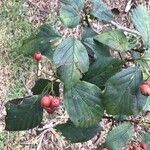
Crataegus succulenta
Succulent hawthorn · Round-fruit cockspurthorn · Fleshy hawthorn · Round-fruited Cockspurthorn
Description
Source: leafsnapCrataegus succulenta is a species of hawthorn known by the common names fleshy hawthorn, succulent hawthorn, and round-fruited cockspurthorn. It is "the most wide-ranging hawthorn in North America", native to much of southern Canada, and the United States as far south as Arizona, New Mexico, Kansas, Missouri, North Carolina, and Tennessee. In this wide area there are many variant forms that have received species names, but can also be considered as synonyms. It is thought to be the parent, along with Crataegus crus-galli, of the tetraploid species Crataegus persimilis. The fruit is edible and can be made into jelly or crushed to make tea.
Care Guide
💧 Water
Fleshy hawthorn thrives when watered deeply but infrequently, ideally every three weeks, which aligns with its drought-tolerant nature. This plant prefers a drier environment and can often rely on natural precipitation during the growing season. This quality makes it resilient when grown outdoors.
☀️ Light Full sun
Fleshy hawthorn is native to open habitats, like sunny meadows and forest edges, which offer abundant light. It does best in full sun but can also tolerate partial sun, adapting well to a range of light conditions.
🌡️ Temperature 5–32.2°C
Fleshy hawthorn shows strong adaptability to a variety of climates, whether experiencing scorching summers or frigid winters. However, it does have an optimal temperature range for growth. When temperatures become excessively high, the plant is susceptible to heat and humidity stress, which can lead to its death. In areas where temperatures approach the lower limit of its cold tolerance, it is important to implement insulation measures to protect the plant.
💨 Humidity
🪴 Soil 6-7
🌱 Fertilizer
The Fleshy hawthorn plant needs adequate nutrients for optimal fruit production. Apply fertilizer in early spring to encourage new growth and bloom development. Regular feeding keeps the plant healthy, helps it grow more delicious fruit, and prevents nutrient deficiency issues like yellow leaves and poor fruit production.
🪴 Pot & Repot
To ensure healthy growth and vitality, fleshy hawthorn should be planted in pots with excellent drainage. This prevents the roots from becoming waterlogged.
✂️ Pruning
The deciduous shrub or small tree known as fleshy hawthorn is characterized by its dense clusters of white flowers and red fruit. To maintain its health and appearance, prune it in early spring by removing dead branches and thinning out the plant to improve airflow. This process not only enhances its appearance but also promotes healthy growth and increases flowering. Additionally, always sterilize your pruning tools to prevent the spread of disease.
🌿 Propagating
🐛 Diseases & pets
☠️ Toxicity
Characteristics
- Plant Type
- Tree, Shrub
- Life Cycle
- Perennial
- Genus
- Crataegus
- Family
- Rosaceae
- Hardiness Zone
- 4-8
- Mature Height
- 3.66 m to 10.97 m
- Mature Spread
- 3.05 m to 4.88 m
- Leaf Color
- Green, Gray, Silver
- Leaf Type
- Deciduous
- Flower Color
- White
- Flower Size
- 1.52 cm to 2.03 cm
- Bloom Time
- Mid spring, Late spring
- Planting Time
- Spring, Summer, Autumn
- Harvest Time
- Late summer, Early fall, Mid fall