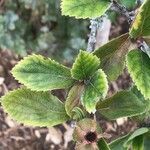
Crataegus uniflora
Dwarf hawthorn · One-flower hawthorn · Oneflower hawthorn · One-flowered Hawthorn
Description
Source: leafsnapCrataegus uniflora, commonly known as the one-flowered hawthorn, is a small deciduous tree or shrub belonging to the Rosaceae family. It is native to North America and thrives in various habitats, including forests, meadows, and rocky slopes. Typically, this plant grows up to 6 meters in height and forms a rounded crown adorned with thorny branches. The leaves of Crataegus uniflora are simple, alternate, and serrated at the edges. They are dark green with a glossy surface, turning yellow or red in the fall. The flowers, which bloom from May to June, are white or pinkish-white and feature five petals. The fruit of Crataegus uniflora is a small, red, berry-like pome that ripens from August through October. While the flesh is edible, the hard seeds inside can be toxic if consumed in large quantities. For centuries, Native Americans have utilized Crataegus uniflora for medicinal purposes due to its high flavonoid content, which provides antioxidant properties. Additionally, its attractive flowers and fruits make it a popular ornamental plant. Ecologically, Crataegus uniflora is an important species. It provides food for wildlife, such as birds and mammals, and offers medicinal benefits to humans when used responsibly and under medical supervision.
Care Guide
💧 Water Every 7 days
Dwarf hawthorn, native to moist regions, thrives best with consistent moisture but can endure short periods of dryness. To keep the soil properly hydrated, it's ideal to water it twice a week. While it benefits from natural rainfall, additional watering is needed during dry spells. This plant demonstrates excellent adaptability and resilience across different climate zones.
☀️ Light Full sun
Dwarf hawthorn is native to open habitats, like sunlit meadows and forest margins, which supply plenty of light. It performs best in full sun but can also endure partial sun, adapting well to various light conditions.
What are the sunlight requirements for Dwarf Hawthorn (Crataegus uniflora)?
Dwarf hawthorn (Crataegus uniflora) thrives in areas that receive full sun, which is defined as above 6 hours of sunlight daily. However, it can also tolerate partial sun, needing about 3-6 hours of sunlight each day. It's important to observe the movement of sunlight through your garden carefully to find spots that offer the right mix of light and shade. This will ensure the plants remain healthy and happy.
🌡️ Temperature 5–35°C
Dwarf hawthorn shows strong adaptability to a variety of climate conditions, from scorching summers to cold winters. It nevertheless has a preferred temperature range for growth. If temperatures become too high, the plant is vulnerable to heat and humidity stress, which can cause it to die. In places where temperatures approach the lower limit of its cold tolerance, it is important to use insulation measures to protect the plant.
What is the botanical name of Dwarf hawthorn?
The botanical name of Dwarf hawthorn is Crataegus uniflora.
💨 Humidity
🪴 Soil 6-7
🌱 Fertilizer
The dwarf hawthorn plant needs adequate nutrients to produce fruit optimally. Apply fertilizer in early spring to promote new growth and flowering. Regular feeding keeps the plant healthy, produces more flavorful fruit, and prevents nutrient deficiency problems like yellowing leaves and reduced fruit production.
🪴 Pot & Repot
For dwarf hawthorn to thrive in pots, it's essential to provide excellent drainage. This prevents excess water from accumulating, which can otherwise lead to root rot and other problems.
✂️ Pruning
To ensure your dwarf hawthorn flourishes, perform pruning in early spring. Focus on removing any dead or crossing branches to enhance airflow and sunlight exposure. Thinning the plant helps it maintain a better shape and encourages healthy growth, which results in more flowers and fruit. Always use clean, sharp tools to reduce the risk of disease.
🌿 Propagating
🐛 Diseases & pets
☠️ Toxicity
Characteristics
- Plant Type
- Tree, Shrub
- Life Cycle
- Perennial
- Genus
- Crataegus
- Family
- Rosaceae
- Hardiness Zone
- 4-9
- Mature Height
- 0.61 m to 3.66 m
- Mature Spread
- 0.91 m to 3.05 m
- Leaf Color
- Dark Green, Forest Green
- Leaf Type
- Deciduous
- Flower Size
- 1.02 cm to 2.03 cm
- Bloom Time
- Mid spring, Late spring
- Planting Time
- Spring, Autumn
- Harvest Time
- Late summer, Early fall, Mid fall
- Native Area
- Mexico