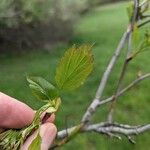
Crataegus viridis
Southernthorn · Green haw · Green hawthorn
Description
Source: leafsnapCrataegus viridis, commonly known as the green hawthorn, is a deciduous shrub or small tree belonging to the Rosaceae family. Native to North America, this plant thrives in various habitats, including woodlands, prairies, and along streams. It can grow up to 10 meters tall, with a spread of approximately 6 meters. The green hawthorn features dark green leaves that are deeply lobed and toothed. In the fall, these leaves turn a vibrant yellow before dropping. The plant produces small white flowers in late spring or early summer, which are followed by bright red berries that persist into winter. For centuries, Native Americans have utilized green hawthorn for medicinal purposes, particularly for treating heart problems and digestive issues. Today, this plant is also popular as an ornamental addition to gardens, thanks to its attractive foliage and berries. This hardy shrub/tree prefers full sun but can tolerate partial shade and various soil types, including clay soils. This adaptability makes it an ideal choice for landscaping projects or naturalizing areas where other plants might struggle. Overall, Crataegus viridis is a versatile plant with multiple uses, from medicinal applications to ornamental landscaping. Its resilience and low maintenance requirements make it an excellent choice for gardeners seeking a plant with numerous benefits.
🌳 The hard, compact wood of cockspur hawthorn is prized for making tool handles, mallets, and fine engraving. Its distinctive qualities have made it the preferred material for uses that demand durability and precision.
🎭 Affection, prosperity and long life
Care Guide
💧 Water Every 7 days
Green hawthorn thrives in temperate environments with balanced moisture levels. It prefers soil that maintains consistent moisture, ideally achieved by watering every other week. Typically grown outdoors, this plant needs well-draining soil to prevent root rot, which is crucial for its health throughout the seasons. It is also suitable for moderate drought conditions.
How should I water my Green hawthorn plant?
To ensure excellent root development, place a garden hose at the base of your plant rather than directly spraying the leaves. If your plants are outdoors and exposed to direct sunlight, be aware that the leaves will need more water. You can use bubblers or soaker hoses to moisten the roots of each plant, or a soaker hose that covers the entire garden or bed when adding or removing plants. After watering, drain any excess water and wait for the soil to dry before watering again. To prevent diseases, water at ground level. On sunny days, consider spraying the entire bush with water. Whether your Green hawthorn is potted or in-ground, remember that it prefers deep watering rather than light sprinkling.
What should I do if I give Green hawthorn too much or too little water?
An overwatered Green hawthorn can have yellow leaves that drop off and wilt, and it may also appear dull and unhealthy with mushy stems. When these signs appear, it's important to adjust your watering schedule. Additionally, wilting can be a sign of under watering, which is indicated by crispy and dry leaves. In this case, check the soil and give the plant a full watering when it is dry. Despite recovering with enough water, the plant may still have dry and yellow leaves due to a damaged root system. Once the plant returns to normal, the yellowing of leaves will stop. Indoors, always check the moisture levels of the pot and avoid overwatering. Look for signs of black spots, and if present, allow the soil to dry out by withholding watering for a few days. Overwatering can cause root rot, which can be indicated by discolored and slimy roots. It is important to prevent root rot by avoiding overly soggy soil and, if needed, transferring the plant to a different pot. When planting the Green hawthorn outdoors, ensure to dig a little deeper and check the moisture levels of the soil. If the soil is too dry, it may indicate underwatering, and adequate watering is necessary to help the plant recover.
How frequently should I give water to my Green hawthorn plant?
The Green hawthorn prefers deep and infrequent watering, especially if it is planted in pots. When watering, soak the plant in one gallon of water. Potted plants have limited water storage, so the soil tends to dry out faster. In cold regions, water every 3 to 5 days. Water the plant in the morning when the soil is dry, whether it is indoors or outdoors. You can check if watering is needed by examining the soil. If the top 2-3 inches of soil are dry, it is time to water the plant. During hot days, monitor the moisture daily as the heat can quickly dry out the soil in the pot. If you have a garden, irrigation of the soil is necessary. In hotter climates, water once a week. Only water when you notice that about 2-3 inches of soil have become dry, whether indoors or outdoors. Take into account the amount of rainfall on the plant and avoid watering if there is already sufficient moisture. Green hawthorn typically grows in the spring and fall. When it is outdoors, adding 3-4 inches of mulch can help conserve water. Sandy soil drains faster, so plants in sandy soil may require more frequent watering. On the other hand, clay soil retains more moisture, so it requires less frequent watering to avoid root rot. Keep track of watering dates on a calendar and watch for drooping leaves, as this may indicate that watering is needed soon.
How much water should I give my Green hawthorn plant?
The Green hawthorn generally needs about a gallon of water on a regular schedule. If you have potted plants, water them deeply until you see water dripping from the bottom of the pot. Then, wait for the soil to dry before watering again. Use a water calculator or moisture meter to track the amount you've given your plant in a week. During the flowering period, provide plenty of water, but let the moisture evaporate to avoid root rot. For outdoor Green hawthorn with adequate rainfall, additional watering may not be necessary. However, when the plant is young or newly planted, ensure it receives 1-2 inches of rain per week. As the Green hawthorn grows, it can rely on rainfall alone. Only during extremely hot weather or prolonged periods without rain for 2-3 weeks, consider watering the plant during cooler moments of the day to prevent heat damage. Additional watering will be needed during persistent dry spells.
Should I change how often I water my Green hawthorn based on the time of year or the weather?
The Green hawthorn needs to be watered only during persistent dry weather and can generally rely on rainfall. Keep the soil moist, but not soggy, throughout the spring and fall. Alternating dry and moist soil conditions are beneficial for growth. In the summer, hot weather causes water to evaporate quickly, so more frequent watering may be necessary if there is a lack of rainfall. Less water is needed for the Green hawthorn during winter when it goes dormant. Use well-draining soil with good drainage, especially during winter. When the Green hawthorn is in a pot, it has limited root growth, so keep it well-watered, especially in summer. Deeply soak the entire root system once or twice a week, depending on the weather, to avoid shallow sprinkles that reach the leaves and encourage fungal growth. However, be careful not to drown the plant. Apply mulch to reduce stress, conserve water, and promote healthy blooms.
☀️ Light Full sun
Cockspur hawthorn grows best with ample sunlight, which is ideal for encouraging healthy development. Still, the plant is quite tough and can tolerate spots with somewhat less sun. Excessive or insufficient sunlight can restrict its growth and change its vivid coloration. This hardiness is tied to its original habitat, which experienced a variety of lighting conditions.
How many hours of sunlight does Green hawthorn need each day to grow well?
To promote healthy growth, it is important for Green hawthorn to get at least 3-6 hours of sunlight daily. This is the minimum amount needed for this plant to thrive. While plants that can tolerate partial sunlight usually do well in full sunlight too, they are more adaptable because they need less light for photosynthesis.
What kind of sunlight does Green hawthorn require?
Green hawthorn thrives in full or partial sunlight. For optimal performance, it prefers direct morning light, yet during summer, it requires shelter from the intense afternoon sun. Excessive exposure to hot afternoon sun in temperate environments can result in leaf burn, jeopardizing the plant's overall condition and aesthetics.
Can direct sunlight harm Green hawthorn? How can we keep Green hawthorn safe from the sun and potential heat damage?
Indoor green hawthorn can get harmed if exposed to direct sunlight when taken outside. To avoid sunburn due to excessive exposure, it is recommended to transition the pots slowly from a shaded area to a brighter spot. However, even plants accustomed to the sun during summer can suffer from extreme heat. In a heatwave, ensuring the soil remains consistently moist is crucial for plants to handle extreme heat levels. To safeguard the delicate green hawthorn during severe weather, consider moving container plants to areas with afternoon shade or using a shade cloth over them.
Should I keep Green hawthorn away from the sun?
Green hawthorn thrives in bright morning sun and some full sun exposure. However, it cannot handle the harsh midday sun of summer. If it is planted in the ground, it can gradually adapt to the increasing intensity of the summer sun. But if it is in a pot and has been indoors or in a protected location, it can be injured if suddenly exposed to direct summer sun during the hottest part of the day. To protect this plant from the intense afternoon summer sun, it should be planted or placed in an understory location where it is shaded at midday by taller trees and plants, or by a building or landscape feature.
What will happen if Green hawthorn doesn't get enough sunlight?
When Green hawthorn plants don't receive enough sunlight, they may turn pale green and have drooping, yellow leaves. It's normal for some leaves to drop, but if new leaves aren't growing to replace them, it's a sign of a problem. If Green hawthorn plants that don't get enough light do manage to grow, the new growth is usually weak, pale, and easily attacked by insects. By paying attention to these signs and adjusting the plant's lighting conditions, you can make a big improvement.
🌡️ Temperature 5–32.2°C
The cockspur hawthorn thrives in temperatures between 41 and 89.6 ℉ (5 and 32 ℃). Native to temperate regions, it needs cooler conditions in fall and winter and warmer conditions in spring and summer. In hotter climates, the cockspur hawthorn benefits from partial shade and regular watering.
What is the best temperature for Green hawthorn?
Green hawthorn thrives best in temperatures ranging from 65 to 80℉ (18 to 27℃). During its primary growing phase, it can tolerate temperatures as high as 95℉ (35℃) and as low as 15℉ (-10℃). This species is able to withstand freezing winters, as it is tolerant of low temperatures. For optimal conditions, the recommended temperature range is as follows: - Perfect: 65 to 80℉ (18 to 27℃) - Highest: 85 to 95℉ (30 to 35℃) - Lowest: -5 to 15℉ (-20 to -10℃), or even below that.
Do I need to change the temperature for Green hawthorn as it grows at different times?
Research has shown that Green hawthorn may experience stunted growth when exposed to higher temperatures, especially when axillary buds are developing and main shoots are growing. To promote healthy growth after germination or transplantation, it is recommended to maintain consistent and cooler temperatures at around 65℉ (18℃).
How can I make sure the Green hawthorn stays warm during cold seasons?
Green hawthorn can tolerate freezing temperatures if planted in the ground in areas where the temperature does not fall below 15℉(-10℃) during winter. However, if planted in pots or containers, their roots need protection from the cold. This can be achieved by wrapping the container in a blanket or bringing it indoors to shield it from the elements.
What will happen to Green hawthorn if the temperature is too hot or cold?
Green hawthorn is more likely to suffer greater harm if the temperature is consistently too high rather than too low. When the temperature becomes excessively hot, the plant's ability to germinate seeds and efficiently conduct photosynthesis is reduced due to the hormonal responses triggered by heat stress. This can be observed through symptoms such as wilting, browning of leaves, and even potential death of the plant. On the other hand, when Green hawthorn is exposed to extreme cold, it can no longer perform vital functions such as absorbing nutrients and carrying out photosynthesis, which can also lead to the plant's demise. If a single freezing event occurs during its growing season, a membrane phase transition may occur, resulting in the cessation of plant functions and eventually causing the plant to die.
What should I remember about temperature for Green hawthorn?
To ensure the health of Green hawthorn and promote successful budding, flowering, and new growth, it is crucial to maintain a consistent soil temperature. This can be achieved by regularly watering, applying mulch to bare soil, and planting the tree in a shaded area.
💨 Humidity
🪴 Soil 6-7
🌱 Fertilizer
Fertilize your Cockspur hawthorn in early spring to encourage healthy growth. Regular feeding improves its overall health, leading to vigorous growth, increased tolerance of difficult conditions, and heightened resistance to diseases and pests. Keep to a defined fertilization schedule for your Cockspur hawthorn to maintain vibrant foliage with rich color and a lush appearance.
Why should I put fertilizer on my Green hawthorn?
Fertilizing your Green hawthorn is important for several reasons. One of the most obvious benefits is that it helps the tree produce beautiful blooms. The best time to fertilize is in early spring, as this will result in excellent flowers during that season. Additionally, fertilizer provides the tree with plenty of energy that it can store in the ground while it is dormant. By giving your Green hawthorn extra nutrients during the fall planting process or late spring, you can ensure that it has enough energy to use once it begins active growth again.
When should I fertilize my Green hawthorn tree?
To effectively fertilize Green hawthorn, timing is crucial. Applying fertilizer too early, while the plant is still dormant, is ineffective and wasteful as rainwater will wash it away, causing pollution. Instead, the first application of fertilizer should be in early spring, followed by monthly fertilizing until early summer.
When is it not a good idea to fertilize my Green hawthorn?
To avoid excessive leaves and few blooms, it's important to avoid using a fertilizer with too much nitrogen on Green hawthorn. Instead, opt for a fertilizer that has a lower level of nitrogen compared to other nutrients. Additionally, refrain from fertilizing after early autumn as it may lead to excessive growth right before winter. During hot and dry periods, it's also not advisable to fertilize Green hawthorn as dry soil is less effective at delivering fertilizer, and the stimulation of growth would require more water that may not be available. It's best to apply fertilizer during cooler temperatures earlier in the season. Lastly, be aware that Green hawthorn can absorb fertilizer from nearby plants or lawns, so be cautious to avoid inadvertently over-fertilizing the tree or shrub.
Which fertilizer is best for my Green hawthorn?
To successfully fertilize a Green hawthorn, it is recommended to use a fertilizer that contains a balanced mix of the three main nutrients, with slightly higher levels of phosphorus. Alternatively, you can enrich the soil by adding organic materials like compost, worm castings, or manure. For better flower development and longer blooms, experienced gardeners may supplement with water-soluble fertilizers containing phosphorus when the flower buds begin to appear. Fertilizers can come in various forms, but liquid or powdered fertilizers tend to work best for Green hawthorn. Regardless of the form chosen, it is important to dilute the fertilizer and apply it while watering the plant.
How do I feed my Green hawthorn?
To ensure you properly fertilize your Green hawthorn, always follow the instructions for the specific type of fertilizer and conduct some research. Over-fertilizing can be harmful, so it's essential to determine the right amount to use. A good estimation is one-tenth of a pound of fertilizer per year or per inch of trunk, with a maximum of one pound. Apply granular or organic fertilizers, like blood meal, by sprinkling them around the base of the tree up to the drip line, avoiding contact with the trunk. These substances break down over time, entering the soil and being absorbed by the roots. Finally, after fertilizing, spread a one-inch layer of compost around the base of the tree and water it thoroughly.
🪴 Pot & Repot 2-3 years
When repotting Cockspur hawthorn, choose a pot 1-2 inches (2.5–5.1 cm) larger with ample drainage. Use a well-draining potting mix. Repot in spring or fall, ensuring the root ball is slightly lower than the rim of the flower pot. Water thoroughly after repotting and place in a warm spot with indirect sunlight.
✂️ Pruning
The green hawthorn showcases lush foliage and attractive flowers. To ensure optimal growth, prune it in early spring by removing any dead or crossing branches. This thinning process promotes better air circulation and light penetration, minimizing the risk of disease. Regular annual pruning encourages healthy growth and enhances both the appearance and productivity of the green hawthorn.
🌿 Propagating
🐛 Diseases & pets
☠️ Toxicity
Characteristics
- Plant Type
- Tree, Shrub
- Life Cycle
- Perennial
- Genus
- Crataegus
- Family
- Rosaceae
- Hardiness Zone
- 4-7
- Mature Height
- 4.57 m to 10.67 m
- Mature Spread
- 6.1 m
- Leaf Color
- Green, Red, Orange, Purple
- Leaf Type
- Deciduous
- Flower Color
- White
- Flower Size
- 2.54 cm to 5.08 cm
- Bloom Time
- Late spring, Early summer
- Planting Time
- Spring
- Harvest Time
- Mid summer, Late summer, Early fall
- Native Area
- Mexico