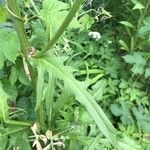
Crepis biennis
Rough hawk's-beard · Rough hawksbeard · Toårig Høgeskæg (DK) · Скереда дворічна
Description
Source: leafsnapCrepis biennis, commonly known as the biennial hawk's-beard, is a flowering plant in the Asteraceae family. Native to Europe and Asia, it has been introduced and naturalized in North America. The plant can grow up to 1 meter tall, featuring a single stem that branches near the top. Its lance-shaped leaves, characterized by toothed edges, can reach up to 20 cm in length. The yellow flowers of Crepis biennis bloom from June through August. They are arranged in clusters at the top of each stem, with each flower head comprising numerous small flowers encircled by bracts. Crepis biennis thrives in well-drained soils under full sun or partial shade but is adaptable to a wide variety of soil types. It is commonly found along roadsides, in fields, meadows, and other disturbed areas. Historically, Native Americans used Crepis biennis for medicinal purposes to treat various ailments, including coughs, colds, fevers, and digestive issues such as constipation and diarrhea. Overall, Crepis biennis is an attractive wildflower that provides food for pollinators like bees and possesses medicinal properties, making it a valuable component of many ecosystems worldwide.
🌳 Rough hawk's-beard is not commonly noted for uses in everyday products or industries, such as spices, essential oils, or furniture. Instead, it is notable for its ecological relationships, particularly with pollinators. Its flowers draw a variety of insects, especially bees, which are important pollinators in many ecosystems. Additionally, the plant's young leaves are edible as a wild food and have been traditionally used in salads and other dishes by foraging enthusiasts.
Care Guide
💧 Water Every 7 days
Rough hawk's-beard comes from temperate regions and thrives best in soil that stays consistently moist without becoming waterlogged. To promote optimal growth, water it once a week to mimic natural rainfall patterns, ensuring it receives enough hydration throughout its active growing season.
How should I water my Rough hawk's-beard plant?
To properly water the Rough hawk's-beard, follow these guidelines for optimal plant health: 1. Use filtered water that is at room temperature. Tap water often contains harmful particles, so it is best to avoid using it for this plant. 2. The water temperature should be at room temperature or slightly warmer. This is because the Rough hawk's-beard is accustomed to warm environments and cold water can be a shock to its system. 3. Do not water the plant from above. Overhead watering can lead to complications with its foliage. 4. Instead, apply filtered room temperature water directly to the soil. Ensure that the soil is completely soaked. 5. Soaking the soil is highly beneficial for this plant as it helps moisten the roots and promotes their spread through the soil, which allows them to gather the necessary nutrients.
If I give my Rough hawk's-beard plant too much water or too little water, what should I do?
Overwatering and underwatering both harm the health of your Rough hawk's-beard plant, but overwatering is more commonly seen. When this species gets excessive water, its stems and leaves may droop, turn yellow, and face potential diseases like root rot, mold, and mildew that can be fatal. On the other hand, underwatering is less frequent since the Rough hawk's-beard is somewhat tolerant to drought. If underwatering occurs, the plant's leaves may become brittle and brown. It's important to recognize signs of overwatering early on, as certain diseases like root rot may become irreversible if not addressed promptly. To prevent this, reduce watering immediately upon noticing signs of overwatering and assess the soil drainage. If water doesn't drain well, replace the soil with a loose, well-draining potting mix. Conversely, if your Rough hawk's-beard lacks water, simply increase watering until signs subside.
How often do I need to water my Rough hawk's-beard?
If your Rough hawk's-beard is potted, the best way to check if it needs water is by inserting your finger into the soil. If the top two to three inches of soil are dry, it's time to water it. For outdoor plants, use the same method. When the top few inches of soil have dried out, water the plant. Typically, during spring and early fall, watering once a week is sufficient. However, during very hot weather, you may need to water twice or more per week. Nevertheless, mature and well-established Rough hawk's-beard plants have a remarkable ability to tolerate drought.
How much water does my plant called Rough hawk's-beard need?
When watering your Rough hawk's-beard, don't be afraid to give it a good amount of water. Make sure the first two to three inches of soil are dry before watering, and then give it a thorough soak. You want to add enough water so that it flows out of the drainage holes at the bottom of the pot. If you don't see any excess water draining, you may not have given enough water. However, be careful not to let water collect in the soil as this can harm the plant. On the other hand, if water isn't draining properly, it could mean that the soil doesn't drain well, which is bad for the plant's health. If the plant is outdoors, about 1 inch of rain per week should be enough.
How do I water my Rough hawk's-beard as it grows?
The water needs of the Rough hawk's-beard can vary depending on its growth stages. In the first few years or after transplantation, it requires more water because it focuses on growing new roots to support future growth. During this time, providing a bit more moisture than usual is essential for optimal root performance. As the plant matures, it will need less water. Additionally, during the bloom period, the Rough hawk's-beard utilizes a significant amount of moisture for flower development, so extra watering may be necessary.
☀️ Light Full sun
Coming from open habitats, rough hawk's-beard prefers plentiful sunlight for vigorous growth. It does well with ample sun but can tolerate spots with less light, although this may slightly affect its health and growth rate. Both excessive and insufficient light can make the plant less robust.
What are the sunlight requirements for Rough hawk's-beard?
Rough hawk's-beard requires above 6 hours of sunlight to be considered in full sun, and about 3-6 hours of sunlight for partial sun. It is crucial to monitor the movement of sunlight through your garden to find spots that offer an optimal balance of light and shade. Originally from open environments, Rough hawk's-beard does best with abundant sun exposure. However, it can adapt to less sunlight, though this may slightly impact its health and growth rate. Both overexposure and underexposure to light can lead to reduced vigor.
How can artificial lighting be used for Rough hawk's-beard indoors?
Indoor Rough hawk's-beard plants require adequate lighting for optimal growth, especially when natural sunlight is insufficient, such as during winter or in less sunny spaces. Artificial lights, like LED lights that can be tailored to provide specific wavelengths needed by your plants, are vital in promoting faster, healthier growth. For full sun plants, 30-50W per square foot of artificial light is recommended; partial sun plants need 20-30W per square foot, and full shade plants require 10-20W per square foot. The light source should be placed 12-36 inches above the plant, mimicking natural sunlight as closely as possible. Most plants will need 8-12 hours of light per day.
What are the symptoms of inappropriate lighting for Rough hawk's-beard?
Symptoms of inadequate lighting for Rough hawk's-beard include smaller new leaves, leggy or sparse growth, faster leaf drop, slower or no new growth, and lighter-colored new leaves. Chlorosis, or the yellowing of leaves due to a breakdown of chlorophyll, sunscald, leaf curling, wilting, and leaf scorching are additional signs of both excessive and insufficient sunlight exposure. These symptoms showcase the plant's struggles in non-ideal light conditions, impacting its overall health and appearance.
What solutions are available for Rough hawk's-beard experiencing inappropriate lighting?
To address lighting issues for Rough hawk's-beard, gradual relocation to sunnier spots is recommended, aiming for at least 6 hours of direct sunlight daily. For indoor plants not easily moved, artificial lighting such as desk or ceiling lamps, kept on for a minimum of 8 hours daily, or professional grow lights can supplement light needs. Outdoors, ensure plants are moved gradually to avoid shock and potential sunburn. Minimizing obstructions, like pruning trees that cast shade, and transplanting smaller plants during their dormant period to locations with sufficient sunlight and good drainage can also help. Note that parts of the plant already affected by insufficient light may not recover, but new growth should be healthy with improved lighting.
🌡️ Temperature 5–25°C
Rough hawk's-beard comes from climates with hotter summers and prefers a temperature range of 68 to 95 °F (20 to 35 °C). During colder seasons, keeping temperatures within that preferred range may be advisable for optimal growth.
What is the optimal temperature range for Rough hawk's-beard?
Rough hawk's-beard thrives in climates with hotter summers, preferring a temperature range of 68 to 95 °F (20 to 35 °C). To ensure optimal growth, it's advised to regulate the temperature within this range, especially during the colder seasons.
Does Rough hawk's-beard require frost protection measures during winter?
Rough hawk's-beard is highly cold-tolerant and does not require additional frost protection measures in winter. However, to prevent drought and water scarcity during winter and early spring, it is recommended to water the plant generously before the first freeze in autumn. This ensures the soil remains moist and enters a frozen state, providing better conditions for the plant.
What should be done if winter temperatures drop below -25°C for Rough hawk's-beard?
If winter temperatures plummet below -25°C, which is lower than Rough hawk's-beard's extreme cold tolerance, it is possible to see a decrease in sprouting or even no sprouting at all come springtime. To address this, in the spring, remove any parts of the plant that have failed to sprout as a remedial action.
How should Rough hawk's-beard be cared for in high temperatures?
Rough hawk's-beard is not tolerant of high temperatures above 35°C. In such conditions, its growth will cease, and it could become more prone to rot. The best approach to care for Rough hawk's-beard in high temperatures includes trimming away sunburned and dried-up parts of the plant. Additionally, moving the plant to a shaded area or utilizing shade cloth to protect it from midday and afternoon sun is advisable. Watering the plant in the morning and evening can help keep the soil appropriately moist, avoiding further stress.
💨 Humidity
🪴 Soil 6-7
🌱 Fertilizer
A single fertilizer application in spring is generally enough for Rough hawk's-beard, although multiple feedings can maximize growth. Apply fertilizer every month to every month and a half. Fertilizing improves the leaves' appearance and function, helping maintain even color and a healthy texture. It also promotes root development and nutrient uptake, supporting the plant's long-term health.
🪴 Pot & Repot
✂️ Pruning
🌿 Propagating
🐛 Diseases & pets
☠️ Toxicity
Characteristics
- Plant Type
- Herb
- Life Cycle
- Perennial, Biennial
- Genus
- Crepis
- Family
- Asteraceae
- Hardiness Zone
- 5
- Mature Height
- 1.22 m
- Mature Spread
- 20 cm to 40 cm
- Leaf Color
- Green, Dark Green
- Leaf Type
- Evergreen
- Flower Color
- Yellow
- Flower Size
- 2.54 cm to 3.05 cm
- Bloom Time
- Late spring, Early summer, Mid summer
- Planting Time
- Spring, Summer, Autumn
- Harvest Time
- Early summer, Mid summer
- Native Area
- Sweden, Austria, Slovakia, Montenegro, Croatia, Slovenia, Belarus, Russia, Germany, Estonia, Romania, Latvia, Belgium, Moldova, Netherlands, France, Czech Republic, Bulgaria, Poland, Greece, Ukraine, Serbia, Lithuania, Norway, Italy, Spain, Switzerland, Denmark, Finland, Albania, Ireland, United Kingdom, Hungary