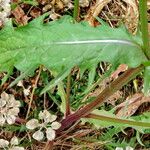
Crepis tectorum
Narrow-leaf hawk's-beard · Narrowleaf hawksbeard · Narrow-leaved Hawk's-beard · Narrow-leaved Hawksbeard · Annual Hawksbeard
Description
Source: leafsnapCrepis tectorum, commonly known as narrow-leaved hawk's-beard, is a perennial herbaceous plant in the Asteraceae family. Native to Europe and Asia, it has also been introduced and naturalized in North America. The plant can grow up to 60 cm tall and features narrow, deeply lobed, and toothed leaves. Its yellow flowers, which are 2-3 cm in diameter, form clusters at the top of the stem. Crepis tectorum thrives in well-drained soils and can grow in diverse habitats such as meadows, roadsides, waste areas, and disturbed sites. Blooming from May to September, the plant attracts bees and other pollinators. Traditionally, Crepis tectorum has been used for medicinal purposes, such as treating liver disorders, digestive problems, and skin diseases. However, scientific evidence supporting its medicinal effectiveness is limited. Due to its ability to spread rapidly through wind-dispersed seeds that can quickly germinate under favorable conditions, Crepis tectorum is considered an invasive species. It can outcompete native plants for resources, making it important to monitor its growth if planted outside its native range. Overall, Crepis tectorum is an interesting herbaceous perennial with attractive yellow flowers. However, its invasive potential necessitates careful monitoring when introduced to non-native areas.
Care Guide
💧 Water Every 3 days
Narrowleaf hawksbeard grows well in temperate regions with moderate moisture levels. It prefers consistent watering but should not be waterlogged. Watering it once a week usually maintains the right balance, though local rainfall can help meet its water needs, particularly when it is grown outdoors.
How should I water my Narrowleaf hawksbeard plant to keep it healthy?
To water Narrowleaf hawksbeard, you have several options. You can use a garden hose with a spray nozzle, a watering can, or any other common watering tool. Narrowleaf hawksbeard is not too particular about how it receives water - it can thrive with rainwater, tap water, or filtered water. However, it is generally best to avoid watering this plant from overhead, as it can cause damage to the leaves and flowers and increase the risk of disease. A drip irrigation system is often considered the most effective method for watering Narrowleaf hawksbeard. These systems distribute water evenly and directly to the soil. If you have a Narrowleaf hawksbeard growing in a container, you can still follow a similar watering approach but using a cup, watering can, or tap to apply water directly to the soil.
What should I do if I give too much or too little water to my Narrowleaf hawksbeard?
The solution for underwatering Narrowleaf hawksbeard is simple: water it more regularly when you notice it lacks moisture. However, overwatering can be a serious issue, leading to diseases and the plant's decline or death. To prevent this, it's important to choose a suitable growing location with sufficient sunlight and good drainage. If you've overwatered a potted Narrowleaf hawksbeard, you might need to transfer it to a new pot with proper drainage and loose soil.
How frequently should I give water to my Narrowleaf hawksbeard?
To keep your Narrowleaf hawksbeard healthy, it needs regular watering throughout the growing season. In the spring, watering once a week should be sufficient. However, as the weather gets hotter, you may need to increase watering to two or three times per week. It's important not to exceed this rate as it can harm the plant. Regardless of how often you water, make sure the soil remains moist but not overly wet. When it comes to potted Narrowleaf hawksbeard, you'll generally need to water more frequently than you would with an in-ground plant. This is because the soil in pots can dry out faster. Plan to water container-grown Narrowleaf hawksbeard a few times per week rather than just once for plants in the ground.
How much water does my Narrowleaf hawksbeard require?
Determining how much water to give your Narrowleaf hawksbeard can be done in a few different ways. One method involves feeling the soil for moisture and watering until the first six inches of soil feel moist. Another option is using a set measurement, like about two gallons per week, considering the temperature and soil dryness. However, be cautious with strict guidelines as they might cause overwatering. In the case of growing the plant in a container, you should water enough to moisten all dry layers of soil. To check, simply insert your finger into the soil or look for a slight trickle of excess water from the drainage holes.
How do I know if I'm giving enough water to my Narrowleaf hawksbeard plant?
Narrowleaf hawksbeard can be a bit tricky to water properly. On one hand, they have deep roots that need to be moistened weekly. However, they are vulnerable to root rot and can turn brown if they get too much water. Underwatering is less likely to be an issue because these plants can survive without extra watering for a while. However, if you wait too long to water, they may start to wilt and their leaves may become dry.
☀️ Light Full sun
The smooth hawksbeard prefers spots that receive largely unobstructed sunlight for most of the day, which supports healthy growth. It can also prosper in areas with moderate light penetration. Its native habitat shapes this sunlight preference. Excessive or insufficient sun exposure can negatively affect its growth.
What are the sunlight requirements for Narrowleaf hawksbeard?
Narrowleaf hawksbeard requires abundant sunlight to thrive, ideally above 6 hours of direct sunlight for what's considered 'Full sun', and about 3-6 hours of sunlight for 'Partial sun'. It's essential to monitor the movement of sunlight in your garden to ensure plants get the ideal balance of light and shade. Originating from environments with plentiful sunlight, the Narrowleaf hawksbeard can tolerate some reduction in light but too much shade may lead to stress and poor growth.
How does insufficient sunlight affect Narrowleaf hawksbeard?
When Narrowleaf hawksbeard doesn't receive enough sunlight, especially if grown indoors, it may reveal symptoms like smaller new leaves, leggy or sparse growth, faster leaf drop, halted new growth, lighter-colored new leaves, chlorosis, sunscald, leaf curling, wilting, and leaf scorching. These symptoms indicate the plant's struggle with inadequate light conditions, leading to weakened health and reduced growth.
What artificial lighting requirements do indoor Narrowleaf hawksbeard plants have?
Indoor Narrowleaf hawksbeard plants require adequate lighting for optimal growth, particularly when natural sunlight is insufficient. LED lights are recommended as they can provide specific wavelengths needed by the plant. Full sun plants need 30-50W/sq ft, partial sun plants require 20-30W/sq ft, and full shade plants should have 10-20W/sq ft of artificial light. The light source should be placed 12-36 inches above the plant and kept on for 8-12 hours per day to mimic natural daylight conditions.
What solutions can help improve light conditions for Narrowleaf hawksbeard?
To improve light conditions for Narrowleaf hawksbeard, gradually move the plant to a sunnier location until it receives at least 6 hours of direct sunlight daily; use a south-facing window for indoor plants and keep curtains open. Consider using artificial light for plants that are large or not easily movable, keeping a desk or ceiling lamp on for at least 8 hours daily. When outdoors, avoid sudden changes in light intensity to prevent sunburn. Minimize obstructions by pruning trees or relocating plants to areas with better sunlight exposure.
🌡️ Temperature 0–35°C
Smooth hawksbeard originates from habitats where temperatures range from 68 to 95°F (20 to 35°C). The plant favors moderate warmth but can tolerate somewhat higher temperatures. In winter, a heated greenhouse is best.
What is the preferred environment for Narrowleaf Hawksbeard?
Narrowleaf Hawksbeard, or Crepis Tectorum, is native to environments with temperate cycles, preferring temperatures ranging from 68 to 100.4°F (20 to 38°C). It exhibits strong cold resistance, allowing it to thrive without special frost protection measures in most winter conditions. Even though it is robust in cold weather, if temperatures are expected to drop below -35°C, it is crucial to provide cold protection by covering the plant with soil or straw. It is also recommended to water the plant abundantly before the first freeze in autumn to keep the soil moist. This preparation helps prevent drought and water scarcity for the plant during the colder seasons.
How does Narrowleaf Hawksbeard respond to low temperatures?
Narrowleaf Hawksbeard is cold-tolerant and favors temperatures above 20°C for optimal growth. While the plant can generally withstand winter conditions above 0°C, temperatures falling below -35°C may not show immediate changes during the winter but could lead to a decrease in, or even absence of, sprouting during the spring. To manage any damage from these extreme cold conditions, it's advisable to remove any parts of the plant that have failed to sprout once spring arrives.
What should be done if Narrowleaf Hawksbeard experiences high temperatures?
During the hotter periods, it's essential to ensure that Narrowleaf Hawksbeard does not exceed temperatures of 38°C. Should temperatures surpass 43°C, the plant might show signs of stress, such as leaves becoming lighter, prone to curling, susceptibility to sunburn, and in severe cases, the plant might wilt and dry out. To mitigate these issues, trim away any sunburned or dried-up parts of the plant. Move the plant to a shaded area or use a shade cloth to protect it from the midday and afternoon sun. Additionally, keeping the soil moist by watering in the morning and evening can help the plant recover and thrive despite the high temperatures.
💨 Humidity
🪴 Soil 6-7
🌱 Fertilizer
Smooth hawksbeard benefits from regular, dilute applications of fertilizer to encourage healthy leaf development. You should fertilize Smooth hawksbeard about once a month during the summer months. Nitrogen is essential for foliage, and adding nitrogen-rich sources helps Smooth hawksbeard thrive.
🪴 Pot & Repot
✂️ Pruning
Narrowleaf hawksbeard is characterized by its slender leaves and yellow flowers. To promote vitality, prune the plant from early to late spring, removing any dead stems and spent blooms. Be cautious not to over-prune, as this can stunt growth. Regular pruning also enhances airflow and light penetration, reducing the risk of disease and contributing to a healthier plant.
🌿 Propagating
🐛 Diseases & pets
☠️ Toxicity
Characteristics
- Plant Type
- Herb
- Life Cycle
- Annual, Biennial, Perennial
- Genus
- Crepis
- Family
- Asteraceae
- Hardiness Zone
- 3-9
- Mature Height
- 10 cm to 91 cm
- Mature Spread
- 10 cm to 49 cm
- Leaf Color
- Green
- Leaf Type
- Deciduous
- Flower Color
- Yellow
- Flower Size
- 1.02 cm to 1.52 cm
- Bloom Time
- Late spring, Early summer, Mid summer
- Planting Time
- Autumn
- Harvest Time
- Early summer, Mid summer
- Native Area
- India, Austria, Sweden, Slovakia, Montenegro, Croatia, Slovenia, Belarus, Russia, Germany, Romania, Belgium, Netherlands, France, Portugal, Czech Republic, Bulgaria, Poland, Ukraine, Serbia, Lithuania, Norway, Italy, Spain, Switzerland, Denmark, Albania, Ireland, United Kingdom, Hungary