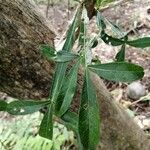
Crescentia alata
Morrito · Crossleaf calabash · Mexican calabash · Winged calabash
Description
Source: leafsnapCrescentia alata, commonly known as the calabash tree or the Mexican calabash, is a tropical species that belongs to the Bignoniaceae family. Native to Central and South America, it can be found in countries such as Mexico, Costa Rica, Panama, Colombia, and Venezuela. The calabash tree can grow up to 10 meters in height and have a trunk diameter of up to 50 cm. Its large leaves are green on the top and lighter underneath, with a velvety texture. The flowers of Crescentia alata are trumpet-shaped with five petals, varying in color from yellowish-green to white. The fruit of Crescentia alata is large, reaching up to 25 cm in length, and has a hard shell that makes it ideal for use as containers or musical instruments like maracas and drums. The fruit also possesses medicinal properties, containing saponins that have been used for centuries by indigenous people for their anti-inflammatory benefits. Crescentia alata thrives in warm temperatures ranging from 20-30°C but can tolerate cooler conditions if protected from frost. It prefers well-drained soils but is also capable of growing in poor soils. In summary, Crescentia alata is a fascinating plant species known for its unique fruit, which has been utilized by humans throughout history for various purposes, including as food storage containers and musical instruments.
Care Guide
💧 Water Every 7 days
Morrito thrives in a tropical climate characterized by high humidity and occasional rainfall. It requires watering every 2-3 weeks, allowing the soil to dry out slightly between waterings. Adapted to warmer regions, Morrito is resilient to water loss during hot seasons, making it well-suited for landscapes with variable rainfall.
What's the best way to water my Morrito plant?
To promote excellent root development, it is recommended to place a garden hose at the base of the plant. It's important to avoid directly spraying the leaves, especially if the plant is outdoors and exposed to direct sunlight. Moistening the roots can be achieved by using bubblers or soaker hoses, depending on the size of the plant or garden bed. After adding or removing plants, it is advised to use soaker hoses that cover the entire garden or bed to ensure deep watering of the roots. Make sure to drain any excess water and wait for the soil to dry before watering again. To prevent diseases, it is best to water at ground level. On a sunny day, it may be helpful to spray the entire bush with water. Whether the plant is potted or in the ground, it is important to remember that Morrito prefers deep watering rather than light sprinkling.
What do I do if I give Morrito too much or too little water?
An overwatered Morrito can have yellow leaves that drop off and wilt. The plant may also look dull and unhealthy, with mushy stems. When you notice these signs, adjusting your watering schedule is recommended. Wilting can also be a sign of under watering. Underwatered leaves may become crispy and dry, while overwatered leaves will be soft and wilted. If the soil is dry and watering is not enough, give the plant a thorough watering. However, be aware that even with enough water, the Morrito may still have dry and yellow leaves due to root damage. Once the plant recovers, the yellowing of leaves will stop. When keeping the Morrito indoors, always check the moisture levels in the pot and avoid overwatering. Look for signs of black spots, and if present, allow the soil to dry out for a few days before watering again. Overwatering can cause root rot, so it's important to prevent this by not letting the soil become too soggy. If you see discolored and slimy roots indicating root rot, consider transferring the Morrito to a different pot. When planting the Morrito outdoors, dig a little deeper and if the soil feels too dry, it may indicate underwatering. Adequate watering is necessary for the plant to recover.
How frequently do I need to water my Morrito?
The Morrito plant prefers deep but infrequent watering. When planted in pots, they should be soaked with a gallon of water each time, as the water storage in pots is limited and the soil dries out faster. In cold regions, watering is required every 3 to 5 days. Water in the morning when the soil is dry and check the top 2-3 inches of soil to determine if it needs watering. During hot days, the soil in pots can dry out quickly, so check its moisture daily. For gardens, watering once a week is enough in hot climates. Avoid overwatering and take into account the rainfall. Mulch can help conserve more water when the plant is outdoors. Sandy soil requires more frequent watering, while clay soil can be watered less frequently. Mark your watering dates on a calendar and observe drooping leaves as an indicator of watering needs.
How much water should I give my Morrito?
The Morrito plant generally requires about a gallon of water on a regular schedule. For potted plants, it is recommended to water them deeply until you see water dripping from the bottom of the pot. After that, allow the soil to dry before watering again. You can use a water calculator or moisture meter to ensure you are providing the appropriate amount of water each week. During the flowering period, it's important to provide plenty of water, but allow the moisture to evaporate to avoid root rot. If your Morrito plant is planted outdoors and receives adequate rainfall, it may not need additional watering. However, when the plant is young or newly planted, it should receive 1-2 inches of rain per week. As the Morrito plant grows, it can rely solely on rainfall. Only during hot weather or prolonged periods without rain should you consider giving the plant a full watering during the cooler parts of the day to prevent heat damage. Additional watering may be needed during persistent dry spells.
Should I change how often I water my Morrito based on the time of year or the weather?
The Morrito plant prefers to be outdoors except during rainy weather when it needs to be protected. In the spring and fall, the soil should be kept moist but not overly wet. Alternating between dry and moist soil conditions will benefit the plant. In the summer, hot weather causes water to evaporate quickly, so extra watering may be needed to keep the plant moist. During winter, the plant requires less water as it goes dormant. Well-draining soil, such as terracotta, helps the water evaporate faster. Once the plant starts growing and leafing out, it can rely on fall and winter rains without additional watering. In spring, encourage growth and blooming as temperatures rise. The Morrito plant doesn't like excessive moisture or drought while flowering, so ensure good drainage at all times. When planted in pots, water them well, especially in summer. Avoid shallow waterings that only wet the leaves since they promote fungal growth and don't reach the roots. Even during dormancy in fall and winter, don't let the plant dry out completely. However, be careful not to leave the plant sitting in water for too long as it can cause damage. Applying mulch is beneficial for reducing stress, conserving water, and promoting healthy blooms.
☀️ Light Full sun
Morrito develops most successfully when given a generous amount of sunlight daily. Consequently, it is commonly found in areas that are frequently sunlit. Insufficient light can impede its growth, while too much sun can be detrimental. Nevertheless, it can endure a variety of sunlight intensities.
How much sunlight does Morrito need to grow?
Tropical ornamental plants that thrive in full sun require at least 6 hours of direct sunlight each day. These plants are well-suited to areas with strong and direct sunlight, as they need this light to flourish. In their natural habitats, they tend to grow in open fields or along forest edges, where they can enjoy abundant sunlight all day long.
What will happen if Morrito doesn't receive enough sunlight?
Tropical ornamental plants that need full sun may face issues if they don't receive enough sunlight. They might become leggy and weak, and their leaves could turn yellow or pale. Furthermore, they may stop producing flowers. Ultimately, if these plants continue to lack the required amount of direct sunlight, there is a possibility that they may die.
What will happen if Morrito gets too much sun?
Tropical ornamental plants that thrive in full sun require ample direct sunlight, but excessive exposure to intense sunlight can harm them. Prolonged periods of direct sunlight can cause sunburned leaves or the development of unsightly brown spots. Additionally, if the soil dries out too rapidly in full sun, these plants may become dehydrated.
How can you keep Morrito safe from too much sunlight?
To protect tropical ornamental plants that thrive in full sun, it's important to find a spot with ample direct sunlight but some shield from the intense midday heat. If you're growing these plants in containers, you can move them to a shadier area during the hottest hours to shield them from excessive sunlight. Another option is to offer shade using a shade cloth or umbrella during the peak heat of the day.
🌡️ Temperature 20–37.8°C
Morrito is suited to warm environments and performs best in temperatures from 68 to 100.4 °F (20 to 38 ℃). In colder periods, keep the ambient temperature at a minimum of 68 °F (20 ℃) to support optimal growth.
What temperature is best for Morrito?
To help your tropical plants thrive, it's best to maintain a temperature range of 75℉ to 90℉ (25-32℃). While different species can tolerate temperatures outside this range, sticking within a few degrees of these limits will ensure optimal growth. However, there are extreme temperature limits to be aware of. Anything below 50℉ (10℃) or above 95℉ (35℃) can hinder growth and cause issues with the leaves and stems. Low temperatures are particularly damaging, as even a light frost can lead to the death of your tropical plants. In fact, cellular death can occur rapidly, with some species dying within 12 to 24 hours.
Does Morrito need different temperatures at different stages of growth?
Morrito doesn't need temperature changes to go through different growing phases, but consistency is important. If the temperature fluctuates too much, regardless of the phase it's in, it can slow down its growth. It's best to keep Morrito in a controlled environment, with the optimal temperature range being between 75℉ and 90℉ (25-32℃). It's especially important to stay above the lower limit of 75℉, but going above 90℉ isn't ideal. However, as a tropical plant, it can tolerate higher temperatures. On the other hand, if the temperature drops below 50℉ (10℃), and especially below 40℉(5℃), it will start to cause direct damage to this heat-loving plant.
Does Morrito require different temperatures for different seasons?
Morrito does not require different temperatures for different growing seasons. The key to caring for it seasonally is to maintain an optimal temperature range. To ensure this, it's best to keep the plant indoors, as it allows you to control the temperature regardless of the external climate. Additionally, light is crucial for tropical species like Morrito, which prefer partial side-level sun exposure. This means the light they receive should be dappled or filtered, and bright yet indirect light is ideal for indoor plant growth. Excessive direct sunlight can harm the plant's leaves and hinder its growth potential.
What temperatures should you keep your Morrito at to keep it healthy?
Here are three tips to help you take care of your plants: 1. Keep your plants away from windows during colder months: Cold air can leak into your home through cracks in the windows, and any plants placed near them will be affected. Move tropical plants to an area with bright but indirect light, while avoiding potential drafts. 2. Watch out for dry patches, which may indicate too much sunlight or heat: If you notice white or scorched leaves, your plant may be getting too much heat or sunlight. This can lead to dehydration and hinder growth. Dry spots can spread and eventually cause your plants to die if left unaddressed. 3. Be cautious of frost: Colder temperatures and frost can damage plants by disrupting their water circulation. This can lead to a lack of moisture in the stems and leaves. Look out for signs of hydrosis (a water-soaked appearance) and if the issue persists, the plant may shrivel and turn dark brown or black, eventually leading to death.
How can I keep my Morrito at the right temperature?
To maintain the right temperature range for Morrito, it's important to consider both the climate and humidity. If you have control over the climate, try to keep the temperature within the species' natural habitat range. In addition, monitoring humidity levels is crucial since it affects temperature. You can raise humidity by using a humidifier or lightly misting the leaves. Maintaining the appropriate balance of temperature and humidity might be challenging if you grow the species outside. In such cases, it's recommended to find a space indoors where you can control the climate more closely. This will help your plant thrive.
💨 Humidity
🪴 Soil 6-7
🌱 Fertilizer
Use organic fertilizers (for example, fish emulsion or compost) instead of chemical fertilizers for Morrito. Give young plants higher amounts of nitrogen and phosphorus in spring. Work compost or fertilizer into the soil before or after planting. For mature plants, top up in spring with a balanced fertilizer or one aimed at specific deficiencies. Nutrient deficiency leads to small leaves, short branches, yellow or bronze foliage, acidic fruits, premature fruit drop, and splitting.
🪴 Pot & Repot
✂️ Pruning
To help the unique gourd-like fruit and dense foliage of the morrito plant thrive, it's important to prune selectively in late winter. Start by removing any dead branches and shaping the canopy to improve air circulation and light penetration. Make sure to prune before new growth begins, as this will minimize stress, enhance flowering, and maintain the plant's structural aesthetics.
🌿 Propagating
🐛 Diseases & pets
☠️ Toxicity
Characteristics
- Plant Type
- Tree
- Life Cycle
- Perennial
- Genus
- Crescentia
- Family
- Bignoniaceae
- Hardiness Zone
- 9-12
- Mature Height
- 7.92 m
- Mature Spread
- 7.92 m
- Leaf Color
- Dark Green
- Leaf Type
- Deciduous
- Flower Color
- Yellow, Green, Red, Brown
- Flower Size
- 5.08 cm to 6.35 cm
- Bloom Time
- All year round
- Planting Time
- Spring, Summer, Autumn
- Harvest Time
- All year round
- Native Area
- Honduras, Mexico, Guatemala, El Salvador, Nicaragua, Costa Rica, Panama