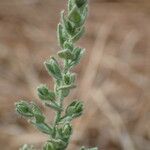
Cressa cretica
Rosin weed · Cretan Alkaliweed
Description
Source: leafsnapCressa cretica, commonly known as alkali weed or watercress, is a small perennial herb belonging to the family Convolvulaceae. Native to the Mediterranean region, it can also be found in various parts of Asia and Africa. The plant typically grows up to 30 cm in height and produces small white or pink flowers that bloom from June to September. Cressa cretica thrives in sandy soils with high salinity levels and can withstand drought conditions. It is commonly found in salt marshes, coastal areas, and other saline habitats. Traditionally, this plant has been used for medicinal purposes, including treating fever, coughs, asthma, and rheumatism, among other ailments. The leaves of Cressa cretica are edible and have a slightly bitter taste, similar to that of watercress, which explains its common name. They are rich in vitamins A and C, as well as minerals such as calcium and iron, making it a nutritious food source for both humans and livestock. In addition to its medicinal properties and nutritional value, Cressa cretica also plays an important ecological role. It helps stabilize soil erosion along coastlines and provides habitat for various insects, including bees, which assist in pollinating nearby plants. Overall, Cressa cretica is an important plant species with multiple uses, ranging from medicinal applications and nutritional benefits to ecological contributions. It plays a vital role in many ecosystems around the world.
Care Guide
💧 Water Every 3 days
Rosin weed flourishes in dry environments, demonstrating its ability to withstand drought and efficiently use water. This evergreen plant is well-suited to arid habitats and needs watering only every 2-3 weeks. Its growth cycle is attuned to water availability, which makes it ideal for drier climates.
How should I water my Rosin weed plants?
Your Rosin weed can be watered using various common watering tools such as watering cans, hoses, or even cups. It's important to apply the water directly to the soil and ensure that all areas are evenly moistened to meet the water needs of the entire root system. Using filtered water is helpful as tap water may contain harmful particles for the plant. Additionally, using water at or slightly above room temperature is beneficial to avoid shocking the Rosin weed. However, this plant usually responds well to any type of water provided.
If I give my Rosin weed too much or too little water, what should I do?
If you have outdoor plants, especially newly planted ones or seedlings, it's important to water them enough for the first few months. Once the roots are established, they can rely on rain most of the time. When you have Rosin weed in pots, be careful not to overwater them. If you accidentally overwater your Rosin weed, stop watering it immediately and check its roots. If there's no root rot, you can put it back in the pot. If there is root rot, trim the affected roots and use a fungicide. Repot the Rosin weed in well-draining soil. If your Rosin weed is underwatered, simply water it more frequently. Underwatering is easy to fix - the leaves will droop and dry out, but they will recover when you water it enough. Make sure to adjust your watering frequency when you notice underwatering.
How many times should I water my Rosin weed?
Most outdoor plants can grow naturally with rainfall. However, if your area lacks rainfall, you should water your plants adequately every 2 weeks in spring and fall. During summer, you will need to water more frequently. In winter, when plants require less water due to slower growth, you should water sparingly or even not at all. If your Rosin weed is young or newly planted, it is important to water more often to help it establish and grow into more adaptable and drought-tolerant plants. For potted plants like Rosin weed, there are two main ways to determine watering frequency. The first is to follow a set schedule, such as once a week or every other week. However, this may not always work as it doesn't consider the specific conditions of your growing environment. Watering frequency can also vary based on the season. In summer, when the plant's water needs are highest, a predetermined schedule may not be enough. An alternative approach is to check the moisture level of the soil. Wait until the top 2 to 4 inches of soil (about 1/3 to 1/2 of the pot depth) have completely dried out before watering again.
How much water does my Rosin weed plant require?
When watering your Rosin weed, you don't always need to use a lot of water. If only a few inches of soil have dried since the last watering, giving the plant about five to ten ounces of water should promote healthy growth. Additionally, you can determine how much water to use based on the soil's moisture level. Pay attention to how many inches of soil have dried between waterings. To ensure your Rosin weed gets enough moisture, water the plant enough to dampen all the dry soil layers since the last watering. If over half of the soil has dried out, consider giving more water than usual. In such cases, continue watering until excess water drains from the pot's drainage holes. If your Rosin weed is planted in an area that receives ample rain, it may not require additional watering. When the plant is young or newly established, make sure it receives 1-2 inches of rain per week. As it grows, it can survive on rainwater alone. However, if the weather is hot and there has been no rainfall for 2-3 weeks, consider giving your Rosin weed a thorough watering to prevent stress.
How can I know if I'm giving enough water to my Rosin weed?
Overwatering is a common problem for the Rosin weed, and there are clear signs to watch out for. When a Rosin weed is overwatered, its leaves turn yellow and may even fall off. Additionally, overwatering can cause the plant to shrink and can lead to root rot. On the flip side, an underwatered Rosin weed will also start to droop. Its leaves may become brown and fragile to the touch. Regardless of whether signs of overwatering or underwatering are present, it is important to take action and restore the plant's health.
☀️ Light Full sun
Rosin weed is native to open habitats such as sunlit meadows and forest margins, places that provide plentiful light. It does best in Full Sun but can also tolerate Partial Sun, demonstrating good adaptability to different light levels.
What are the sunlight requirements for Rosin weed?
Rosin weed requires full sun, which is above 6 hours of sunlight, but it can also tolerate partial sun, about 3-6 hours of sunlight. Observing how sunlight moves through your garden is crucial for choosing spots that offer a balance of light and shade, ensuring the well-being of your plants. Rosin weed naturally thrives in sunny meadows and forest edges, making it well-adapted to various sunlight conditions.
How can artificial lighting be used for indoor plants?
Indoor plants, including Rosin weed, require adequate lighting for optimal growth. When natural sunlight is insufficient, artificial lights are a vital solution. For effective artificial lighting, choose the right type of light, such as LED lights that can provide specific wavelengths needed by your plants. For full sun plants, 30-50W/sq ft is needed, partial sun plants require 20-30W/sq ft, and full shade plants need 10-20W/sq ft. The light source should be placed 12-36 inches above the plant to mimic natural sunlight. Lastly, mimic natural daylight hours, with most plants needing 8-12 hours of light per day.
What are the common symptoms of inadequate light in Rosin weed?
Rosin weed sensitive to light may exhibit symptoms like small or irregularly colored new leaves, leggy or sparse growth, faster leaf drop, slower or no new growth, chlorosis, sunscald, leaf curling, wilting, and leaf scorching. These symptoms reflect the plant's struggle with suboptimal lighting conditions and extreme sunlight exposure.
What are some effective solutions for light-related issues in Rosin weed?
To address light-related issues in Rosin weed, gradually increase sunlight exposure to ensure the plant receives at least 6 hours of direct sunlight daily. Using a south-facing window can maximize sunlight and nutrient accumulation. Artificial lighting, such as desk or ceiling lamps on for at least 8 hours daily or professional plant grow lights, can also help. Outdoors, moving your plants to a sunnier spot gradually is key to avoid sunburn. Reducing obstructions like pruning trees can improve sunlight access. When moving smaller plants, doing it during their dormant period ensures a successful transition to a location with ample sunlight.
🌡️ Temperature 20–37.8°C
Rosin weed is fairly adaptable to temperature, capable of enduring higher heat and considerable temperature swings. In hot conditions, attention should be paid to watering and providing adequate shade to avoid sunburn. Conversely, Rosin weed is less tolerant of cold. While it can handle some chill, very low temperatures can result in frost damage.
💨 Humidity
🪴 Soil 7-7
🌱 Fertilizer
Fertilize your Rosin weed in early spring to encourage healthy growth. Regular feeding improves the plant’s overall health, producing vigorous growth, better tolerance of harsh conditions, and increased resistance to pests and diseases. Keep a defined fertilization schedule for your Rosin weed to maintain foliage that is vivid, deeply colored, and lush.
🪴 Pot & Repot
✂️ Pruning
Rosin weed is a low-growing perennial plant known for its silvery leaves and small white flowers. To maintain its health and shape, improve vigor, and encourage denser growth, it is best to prune it from early to late winter. Regular pruning also helps prevent pests and enhances the plant's overall appearance.
🌿 Propagating
🐛 Diseases & pets
☠️ Toxicity
Characteristics
- Plant Type
- Shrub
- Life Cycle
- Perennial
- Genus
- Cressa
- Family
- Convolvulaceae
- Hardiness Zone
- 9-11
- Mature Height
- 37 cm
- Mature Spread
- 20 cm to 49 cm
- Leaf Color
- Gray, Light Gray
- Leaf Type
- Evergreen
- Flower Color
- White, Yellow
- Flower Size
- 0.25 cm to 0.51 cm
- Bloom Time
- Summer
- Planting Time
- Spring, Summer, Autumn
- Harvest Time
- Late summer, Early fall, Mid fall
- Native Area
- Sri Lanka, Libya, Somalia, Egypt, Turkey, India, Djibouti, Angola, United Arab Emirates, Madagascar, Eritrea, Pakistan, Croatia, Morocco, Yemen, Guinea-Bissau, Kenya, Uzbekistan, Mali, Iraq, Mozambique, Oman, Ethiopia, Qatar, Portugal, France, Saudi Arabia, Tajikistan, Tunisia, Sudan, Mauritania, Cyprus, Bulgaria, Armenia, Greece, Guinea, Afghanistan, Syria, Italy, Kazakhstan, Spain, Senegal, Iran, Azerbaijan, Algeria, Kuwait, Turkmenistan