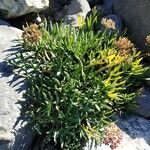
Crithmum maritimum
Rock Samphire · Samphire · Sea-fennel · Peter's cress · Fenicul de mare (RO)
Description
Source: leafsnapCrithmum maritimum, commonly known as sea fennel or rock samphire, is a perennial plant in the Apiaceae family. Native to the coastal regions of Europe and North Africa, it thrives on rocky cliffs, shingle beaches, and salt marshes. This plant features a fleshy stem that can grow up to 50 cm in height and small green leaves divided into segments. During the summer months, it produces clusters of small yellow-green flowers, which are followed by tiny black seeds. Sea fennel has been valued for centuries as a medicinal herb due to its high content of vitamins A and C, as well as minerals such as calcium, magnesium, potassium, and iron. Traditionally, it has been used to treat digestive problems like flatulence and constipation. In addition to its medicinal properties, sea fennel is also prized in culinary dishes for its unique flavor, which resembles celery with a hint of saltiness. The leaves can be eaten raw or cooked, while the stems are often pickled. Overall, Crithmum maritimum is a fascinating plant with both culinary and medicinal uses, making it an important part of coastal ecosystems throughout Europe and North Africa.
Care Guide
💧 Water Every 7 days
Rock samphire thrives in coastal environments where moisture varies but prefers moderate hydration. To maintain this balance, it requires weekly watering. When grown outdoors in full sunlight, rock samphire makes efficient use of water. This quality makes it ideal for seaside gardens, where salinity and water availability can change.
How should I water my Rock samphire?
To properly water the Rock samphire, it is recommended to use filtered water that is at room temperature. Tap water may contain harmful particles, so filtered water is preferable. Additionally, the water should be at room temperature or slightly warmer because the Rock samphire is accustomed to a warm environment and cold water can be a shock to its system. It is best to avoid overhead watering as it can cause issues with the foliage. Instead, gently and thoroughly water the soil until it is completely soaked. This method helps moisten the roots and allows them to spread throughout the soil to collect the necessary nutrients.
What should I do if I give my Rock samphire too much water or not enough?
Overwatering is a more common problem for Rock samphire, causing wilting, yellowing stems and leaves, and potentially diseases like root rot, mold, and mildew. Underwatering is less common but can lead to brittle, brown leaves. It's important to notice signs of overwatering early to prevent irreparable damage. Reduce watering if overwatering is suspected and consider improving soil drainage. If underwatering is the issue, simply increase watering until signs improve.
How frequently should I water my Rock samphire plant?
If your Rock samphire is in a pot, you can check if it needs water by sticking your finger in the soil. If the top two to three inches of soil are dry, it's time to water it. For Rock samphire grown outdoors, you can use a similar method to test the soil. If the top few inches of soil have dried out, it's time to water it. Usually, in spring and early fall, you'll need to water this plant about once a week. But during extremely hot weather, you may need to water it twice or more per week. However, mature and well-established Rock samphire plants can tolerate drought well.
How much water does my Rock samphire plant need?
To properly water your Rock samphire, don't hold back on the amount of water you give. Make sure the top two to three inches of soil are dry before watering, and when you do, water thoroughly until the soil is completely soaked. You should add enough water so that the excess flows out of the drainage holes at the bottom of your pot. If you don't see any excess water draining, it means you haven't watered enough. However, be careful not to let the water accumulate in the soil, as this can harm the plant. On the other hand, if water doesn't drain properly from the pot, it could mean that the soil doesn't have good drainage, which is bad for the plant's health. If the plant is outdoors, receiving about 1 inch of rain per week should be enough.
How should I water my Rock samphire as it grows?
The water needs of Rock samphire can vary depending on its growth stages. In the first few years of its life or when you recently transplant it, you'll need to increase watering compared to usual. During these stages, Rock samphire focuses on developing new roots to ensure future growth, and these roots perform best with slightly more moisture. As Rock samphire matures, it will require less water. Additionally, during the bloom period, the plant uses a lot of moisture for flower development, so you may need to provide extra water at this time.
☀️ Light Full sun
Rock samphire does best in locations that get sunlight for most of the day. It can persist with reduced light, but its growth may be limited. Unfiltered sun allows the plant to reach its full potential. If it gets too much or too little sunlight, its health will likely suffer.
What are the sunlight requirements for Rock Samphire?
Rock Samphire requires full sun, defined as more than 6 hours of sunlight daily, to thrive. Paying attention to the movement of sunlight through your garden will help you choose the best spots that provide the ideal balance of light and shade, ensuring your plants' happiness. Although Rock Samphire grows best in areas that receive unfiltered sun for most of the day, it can survive with less light. However, insufficient sunlight may inhibit its growth and affect its health.
How can artificial lighting help Rock Samphire grow indoors?
When natural sunlight is insufficient, especially in winter or less sunny spaces, artificial lighting can be a vital solution for indoor Rock Samphire plants. It promotes faster, healthier growth by compensating for the lack of natural light. LED lights are recommended because they can be adjusted to provide the specific wavelengths of light that plants need. For optimal growth, full sun plants require 30-50W/sq ft of artificial light, partial sun plants need 20-30W/sq ft, and full shade plants should have 10-20W/sq ft. The light source should be placed 12-36 inches above the plant to mimic natural sunlight, and you should aim to replicate the length of natural daylight hours, which is typically 8-12 hours per day for most plants.
What are the symptoms of inadequate lighting for Rock Samphire?
When Rock Samphire does not receive enough light, several symptoms may appear, including smaller new leaves, leggy or sparse growth, faster leaf drop, slower or no new growth, and lighter-colored or yellow new leaves. Excessive sunlight exposure can also cause issues such as chlorosis, sunscald, leaf curling, wilting, and leaf scorching. These symptoms indicate a need for better lighting conditions, either by adjusting the plant's exposure to natural sunlight or supplementing with artificial light.
What are some solutions for lighting problems with Rock Samphire?
To address lighting problems, gradually introduce Rock Samphire to more sunlight, ensuring it receives at least 6 hours of direct sunlight daily. If the plant is indoors and not easily movable or is large, consider using artificial light, such as a desk or ceiling lamp for at least 8 hours daily, or invest in professional grow lights. For outdoor plants, avoid sudden changes in light intensity to prevent sunburn. If plants have been affected by insufficient sunlight, the damaged parts may not recover, but new growth should be healthy once light exposure is increased. Reducing obstructions such as trees by pruning, or transplanting smaller plants during their dormant period to locations with ample sunlight and good drainage can also help.
🌡️ Temperature 5–35°C
Rock samphire originates from habitats where temperatures range between 41 and 95 °F (5 to 35 °C). It does best within that span. Try to keep the surrounding temperature similar to these conditions, particularly during seasonal changes.
What is the native environment temperature range for Rock samphire?
Rock samphire, botanically known as Crithmum maritimum, naturally thrives in environments where temperatures fluctuate between 41 to 95 °F (5 to 35 °C). Maintaining the ambient temperature within this range, especially during seasonal variations, is ideal for the best growth of Rock samphire.
Does Rock samphire require special frost protection measures during winter?
Rock samphire exhibits strong cold resistance and does not usually necessitate special frost protection measures. However, if winter temperatures are expected to dip below -25°C, it is advisable to protect the plant. This can be achieved by covering it with insulating materials such as soil or straw. Additionally, watering the plant abundantly before the first freeze of autumn to maintain soil moisture is recommended, as it helps prevent the plant from drought and water scarcity during the colder months.
How does Rock samphire react to temperatures below -25°C?
Although Rock samphire is cold-tolerant, enduring temperatures below -25°C might not show immediate visible damage during winter, but it could lead to decreased sprouting or completely absent sprouting in springtime. To manage this, any parts of the plant that have failed to sprout in spring should be removed.
What should be done if Rock samphire is exposed to temperatures above 35°C?
When Rock samphire is subjected to high temperatures, specifically above 35°C, it can exhibit signs of stress such as leaves turning lighter, curling, susceptibility to sunburn, and in severe cases, the entire plant wilting and drying out. To mitigate these effects, it's advisable to trim away any sunburned and dried-up parts of the plant, relocate it to a shaded area, or create artificial shade using a shade cloth. Ensuring the soil remains moist through watering in the mornings and evenings is also critical during hot periods.
💨 Humidity
🪴 Soil 6-8
🌱 Fertilizer
To maximize the yield and flavor of Rock samphire, provide sufficient nitrogen throughout the entire growing period, including before planting and at harvest. Keeping plants well watered and fertilized results in plentiful, healthy leaves and helps reduce bitterness. Before planting, amend the soil with organic matter such as compost or manure, ideally 2 to 8 weeks beforehand.
Why should I put fertilizer on my Rock samphire?
The main structure of Rock samphire is made up of its leaves, so fertilization is important for both appearance and function. Proper fertilization will keep the leaves vibrant and textured, and also support the growth of new roots and maintenance of existing ones. This ensures that the plant remains healthy now and improves its ability to absorb nutrients from the soil in the future.
When should I fertilize my Rock samphire?
If you choose to grow Rock samphire outdoors, you will notice new growth in early spring. This is the cue to start fertilizing. Typically, a single application of fertilizer is sufficient, but if you want to maximize growth, you can fertilize multiple times throughout spring and early summer. In this case, feed your Rock samphire every month to a month and a half.
When should I not put fertilizer on my Rock samphire?
During late fall and winter, your Rock samphire will go into a dormant phase and stop producing new growth. It's important to avoid fertilizing it during this time. In the spring and summer, if you choose to fertilize, gradually reduce the amount as summer approaches since the growth rate of your Rock samphire will slow down too. It's never a good idea to fertilize your Rock samphire during extremely hot weather or when the soil is overly dry. Fertilizing in these conditions could stress your plant and cause it to die prematurely.
What kind of fertilizer does my Rock samphire plant need?
Choosing the appropriate fertilizer for a Rock samphire is actually quite simple. These plants thrive on a general-purpose garden fertilizer with equal amounts of nitrogen, phosphorus, and potassium. A fertilizer with a 10-10-10 ratio or something similar works best. Avoid high nitrogen fertilizers if uncertain. Most suitable fertilizers for Rock samphire come in granular form, which are slow-release and easy to apply. Additionally, adding organic soil amendments like compost can be beneficial for feeding your Rock samphire.
How should I give food to my Rock samphire?
To ensure proper growth of your Rock samphire, wait until early spring when you see its first leaves emerging from the soil. At this stage, apply a balanced granular slow-release fertilizer to the soil around the base of the plant. If desired, you may repeat this fertilizing process later in the season. Remember to apply the fertilizer to the soil beneath the plant, not directly onto the plant itself. Occasionally, you may need to move some leaves to access the soil near the roots. It is also recommended to water your Rock samphire before and after fertilizing.
🪴 Pot & Repot Every 3 years
✂️ Pruning
Rock samphire flourishes in coastal environments and benefits from pruning in early to late spring. Use clean, sharp tools to remove dead stems, which helps improve air circulation and reduce the risk of disease. Regular maintenance encourages growth and enhances flowering, increasing its ornamental and culinary appeal.
🌿 Propagating
🐛 Diseases & pets
☠️ Toxicity
Crithmum maritimum has no toxic effects reported.
Characteristics
- Plant Type
- Herb
- Life Cycle
- Perennial
- Genus
- Crithmum
- Family
- Apiaceae
- Hardiness Zone
- 5-9
- Mature Height
- 15 cm
- Mature Spread
- 30 cm
- Leaf Color
- Green
- Leaf Type
- Evergreen
- Flower Color
- White
- Flower Size
- 0.20 cm to 0.25 cm
- Bloom Time
- Early summer, Mid summer
- Planting Time
- Spring
- Harvest Time
- Mid summer
- Native Area
- Libya, Egypt, Turkey, Tunisia, Montenegro, Cyprus, Bulgaria, Greece, Croatia, Slovenia, Morocco, Lebanon, Russia, Portugal, Syria, Italy, Spain, France, Albania, Ireland, United Kingdom, Romania, Algeria, Netherlands