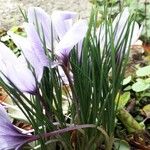
Crocus sativus
Saffron · Saffron crocus · Autumn crocus · Šafran · Italian Crocus
Description
Source: leafsnapCrocus sativus, commonly known as saffron crocus, or autumn crocus, is a species of flowering plant of the Crocus genus in the iris family Iridaceae. It is best known for producing the spice saffron from the filaments that grow inside the flower. The term "autumn crocus" is also used for species in the Colchicum genus, which strongly resemble crocuses. However, crocuses have three stamens and three styles, while colchicums have six stamens and one style, and belong to a different family, Colchicaceae. Colchicums are also toxic.This cormous autumn-flowering perennial plant species is unknown in the wild. Human cultivation of saffron crocus and use of saffron have taken place for more than 3,500 years and spans different cultures, continents, and civilizations (see History of saffron). Crocus sativus is currently known to grow in the Mediterranean, East Asia, and Irano-Turanian Region. Saffron is the triploid form of a species found in Eastern Greece, Crocus cartwrightianus; it probably appeared first in Southern Greece on the Attic peninsula or the island of Crete. An origin in Western or Central Asia, although often suspected, is not supported by botanical research. Other sources suggested some genetic input from Crocus pallasii, which has not been verified by chromosome and genome comparisons.
🌳 The saffron crocus is a type of crocus that produces the valuable spice saffron, which is both edible and highly sought after. You can cultivate this plant in your garden for its spice-producing properties. The spice is made from the dark yellow stigmas of the flowers, which is an essential ingredient in many dishes. Even if you don't plan on harvesting the spice, the vibrant purple flowers that bloom in mid-autumn will still add a splash of color to your garden.
Care Guide
💧 Water Every week
The saffron crocus, which originates from Mediterranean climates, is drought-resistant and flourishes in well-drained soils. While it requires weekly watering, its water needs decrease during its dormancy period following flowering. To mimic its natural habitat conditions, irrigation should be adjusted according to the local rainfall patterns.
What should I do if I give Saffron crocus too much or too little water?
Saffron crocus can develop yellow leaves if they are over-watered. This is normal towards the end of their blooming period. However, if the leaves turn yellow before the flowers bloom, it means there is too much water. To fix this, ensure there is good drainage and don't water it for a few days. Adding sawdust to the soil can help absorb excess moisture. If the problem persists, check the seedpods for rot. Remove any severely decayed ones. Under-watered Saffron crocus also develop yellow leaves, but the stems will droop, the leaves will be smaller and curl, and brown patches may appear. If you've given it too little water, don't panic. Saffron crocus can tolerate some drought. Give it a good drink when you realize, but don't saturate the soil. Just keep it moist. Avoid overwatering, as it can lead to root rot and fungus growth. This can cause damage to the bulb, seen as spots on the leaves and buds, and discoloration and death of leaf tips.
How often do I need to water my Saffron crocus?
The watering needs of your Saffron crocus depend on its location and growth stage. After planting, give them a good watering to kick start their growth. Then, wait until you see shoots appear before watering again. If your Saffron crocus is in a pot, water it when the top 1-2 inches of soil feels dry. Container plants dry out faster than ones in flower beds, so make sure the soil stays damp. For Saffron crocuses planted outside, they won't need extra water if it has rained during the week. These plants have some drought resistance and can recover from slight dryness after watering. However, be cautious not to overwater, as excessive moisture can cause the plant to die if the seed ball rots.
Do I need to water my Saffron crocus more or less depending on the season or climate?
To care for your Saffron crocus, water it approximately once a week while it's growing. Remember that as temperatures rise, the soil will dry out faster, so you may need to water more frequently. However, it's important to avoid an excessively wet soil environment as Saffron crocus prefers a drier soil. During the summer, the Saffron crocus will become dormant, and its above-ground parts will dry up and die. If you planted it outdoors, you don't need to water it at this time. However, if you live in a rainy region, it's advisable to dig them out to protect the buds from rot caused by too much water. For potted Saffron crocus, once the dormant part dries out completely, you should stop watering it. Then, dig up the buds and store them in a cool location without watering. Alternatively, you can keep the crocus in the soil in a cool location until the next growing season. Remember to resume watering when the next sowing season arrives.
What should I search for when I plant my Saffron crocus inside or outside?
To ensure healthy growth of your plants, it is important to monitor your containers for moisture. If the containers become very wet, it is recommended to move them to a sheltered position. Let them dry out before placing them back outside when the weather improves. When planting outdoors, it is crucial to consider the amount of rainwater your plants will receive. To avoid waterlogging and decay, it is advisable to plant them in well-drained soil. Whether you are growing plants indoors or outdoors, it is important to take care of the bulbs before the buds start growing. During this stage, minimal watering is needed. It is best to let the soil completely dry out before giving them small amounts of water. This helps prevent bulb rot. Regular watering should begin once new shoots start growing. Indoor conditions with low light and poor ventilation can make Saffron crocus more susceptible to rot. Therefore, when watering indoors, it is important to make sure that most of the soil is dry before watering. If the soil remains consistently moist for a long time, you should also consider whether the location of your Saffron crocus is suitable. In contrast, planting outdoors with good ventilation and ample light will generally be safer for the plants.
☀️ Light Full sun
The saffron crocus requires plentiful sunlight for optimal growth, although it can still grow in somewhat shaded conditions. Excessive shade impedes its growth, while excessive sun is typically not harmful. Coming from light-rich habitats, sunlight fosters vigorous growth and flowering.
What are the sunlight requirements for a Saffron Crocus?
Saffron crocus, scientifically known as Crocus sativus, thrives best in full sun conditions, requiring more than 6 hours of sunlight daily. However, it can also tolerate partial sun, defined as about 3-6 hours of sunlight per day. It's essential to observe how sunlight moves through your garden to find the optimal balance of light and shade for your plants, ensuring their well-being and happiness. The plant originates from environments abundant in light, which aids in its growth and flowering. Though excessive shade is detrimental, affecting the plant's growth, excessive sunlight typically does not harm the plant.
How can artificial lighting be used for Saffron Crocus indoor plants?
For indoor Saffron crocus plants where natural sunlight is insufficient, especially during winter or in less sunny spaces, artificial lights can be a beneficial solution. They promote faster, healthier growth by providing the necessary light intensity. LED lights are recommended because they can be customized to provide specific wavelengths needed by the plants. For different sunlight needs, full sun plants require 30-50W/sq ft, partial sun plants need 20-30W/sq ft, and full shade plants require 10-20W/sq ft of artificial light. The artificial light source should be placed 12-36 inches above the plant to mimic natural sunlight as closely as possible, and the duration should align with the natural daylight hours needed by the species, which is mostly 8-12 hours per day.
What are the symptoms of improper lighting for a Saffron Crocus?
Saffron crocus exhibits several symptoms when exposed to inadequate lighting conditions. These include the development of smaller leaves compared to mature ones, leggy or sparse growth due to elongated spaces between leaves or stems, faster leaf drop as the plant tries to conserve resources, slower or ceased growth as it enters survival mode, lighter-colored new leaves indicating a lack of chlorophyll, and chlorosis, where leaves turn yellow due to chlorophyll breakdown. Additionally, sunscald can damage plant tissues with intense sunlight exposure, leaf curling can occur as a defense mechanism to reduce water loss, wilting from excessive transpiration due to overexposure to sunlight, and leaf scorching characterized by brown, dry, and crispy leaf edges.
What solutions are available for Saffron Crocus experiencing light-related issues?
For Saffron crocus plants struggling with light-related issues, several solutions can be applied depending on the setup. Indoors, gradually moving the plants to sunnier locations each week until they receive at least 6 hours of direct sunlight daily is recommended. Using a south-facing window and keeping curtains open can maximize sunlight exposure. If the plant is large or immovable, consider using artificial light, keeping lamps on for at least 8 hours daily. Outdoors, plants should be moved to sunnier spots gradually to avoid sunburn. Reducing obstructions like pruning trees or transplanting smaller plants during their dormant period to sunnier locations with good drainage can also help. It's important to note that parts of the plant already damaged by insufficient sunlight might not recover, but increasing light exposure ensures that new growth will be healthy.
🌡️ Temperature 5–35°C
The saffron crocus comes from temperate regions and thrives when temperatures range from 41 to 95 °F (5 to 35 ℃). In colder seasons, consider raising its ambient temperature into that range to sustain optimal growth.
What are the essential growing conditions for Saffron Crocus?
Saffron crocus, also known by its botanical name Crocus sativus, is native to temperate climates and thrives in temperatures ranging from 41 to 95 °F (5 to 35 °C). To maintain optimum growth, especially in cooler seasons, it's important to ensure its surrounding temperatures are kept within this range. The plant exhibits strong resistance to cold and usually doesn't require special frost protection measures during winter. However, if temperatures are expected to drop below the tolerable limit, protecting the plant with materials like soil or straw can be beneficial. It's also advised to water the plant abundantly before the first freeze in autumn, ensuring the soil stays moist and enters a frozen state to prevent drought and water scarcity during winter and early spring.
How does low temperature affect Saffron Crocus and what are the remedial actions?
Saffron crocus is notably cold-tolerant and performs best when temperatures remain above its suitable growth minimum. Throughout winter, it's crucial to keep temperatures above its tolerable growing minimum. Exposure to temperatures below its growth limit may not show immediate changes during winter but could lead to decreased sprouting or no sprouting at all come springtime. A recommended remedy for this is to remove any parts of the plant that have failed to sprout in spring.
What should be done if Saffron Crocus is exposed to high temperatures?
During summer, it's important to keep the Saffron crocus below its suitable maximum growth temperature. Exceeding the tolerable maximum growing temperature may result in lighter leaf color, increased susceptibility to curling, sunburn, and in severe cases, the plant may wilt and dry up entirely. Solutions for this include trimming away any sunburned and dried-up parts of the plant. Additionally, moving the plant to a shaded location or using a shade cloth to protect it from midday and afternoon sun can be beneficial. Ensuring the soil is kept moist by watering in the morning and evening is also advisable.
💨 Humidity
🪴 Soil 6-8
🌱 Fertilizer
For Saffron crocus, the primary time to fertilize is early spring when the flowers are developing. The proper fertilizer promotes better blooms and helps the Saffron crocus produce attractive flowers. Fertilizing in early spring ensures good flowers during the season and supplies energy for dormant growth phases.
Why should I add fertilizer to my Saffron crocus?
Fertilizing your Saffron crocus is important for a few reasons. Firstly, it helps the plant produce beautiful blooms. To ensure excellent flowers in spring, it's best to fertilize in early spring. Additionally, fertilizer gives the crocus energy to store during dormant phases. By providing extra nutrients during fall planting or late spring, you can help the crocus store more energy for when active growth resumes.
When should I fertilize my Saffron crocus?
To fertilize a Saffron crocus, there are a few optimal times. The main time is in early spring when the flowers are forming, as the right fertilizer will enhance their growth. Additionally, you can fertilize the crocus later in the spring after the flowers have faded, which will provide it with energy for the following year. If you're planting the crocus for the first time in the fall, it's also advisable to apply fertilizer during that period. Doing so during the planting process gives the crocus the best chance of producing healthy flowers in its first growing season.
When is it not a good idea to put fertilizer on my saffron crocus?
To properly fertilize a Saffron crocus, apply fertilizer during the fall planting process, the early spring bloom period, and the late spring after the bloom period. It is not necessary and may harm the plant to fertilize at any other time of the year. When taking care of a Saffron crocus, it is important to note that it has a significant dormant phase during which it requires less water and no fertilizer. During the winter and summer, the plant enters this dormant phase. After the flowers fade, the leaves will remain for a short time before dying back to the ground. Once the leaves have died back, the plant has reentered its dormant phase and does not require fertilizer.
What kind of plant food does my Saffron crocus need?
There are different types of fertilizer that can benefit Saffron crocus. If you prefer simplicity, a balanced fertilizer with equal amounts of nitrogen, phosphorus, and potassium, like 10-10-10 or 5-5-5, will work well. It's generally recommended to use granular fertilizer instead of liquid. For more specific options, consider a fertilizer that is overall rich in the three main nutrients but has a higher phosphorus content. Many gardeners believe that phosphorus can improve flower quality and longevity. Organic materials, like bonemeal, can provide the needed phosphorus to benefit the blooming abilities of your Saffron crocus.
How can I add fertilizer to my Saffron crocus plants?
To ensure the healthy growth of your Saffron crocus, you should fertilize it twice. The first time is during the planting process in the fall. Simply add granular slow-release fertilizer to the hole while planting and remember to maintain consistent soil moisture by watering regularly. After the plant starts emerging from the ground and developing its flowers in early spring, you can fertilize it again. Use a granular fertilizer with a balanced mix of nutrients and sprinkle it on the ground. It's important to water the soil gently when applying the fertilizer.
🪴 Pot & Repot 2-3 years
Repot saffron crocus every 2 to 3 years before they start blooming. Choose a medium-sized pot that is deep enough to accommodate the bulbs. The best time to repot is in late summer while the plants are dormant. Use well-draining soil and water moderately after repotting. Place the pot in a sunny location to help the plants recover and stay healthy.
✂️ Pruning
The saffron crocus is known for its vibrant violet flowers and the valuable spice obtained from its stigmas. To promote better ventilation and prevent disease, prune the saffron crocus in early spring by removing any dead foliage. Be careful not to trim the flowers or buds, as this can enhance their growth and flowering. For specific care tips, refer to horticultural guides.
🌿 Propagating
🐛 Diseases & pets
☠️ Toxicity
Characteristics
- Plant Type
- Herb
- Life Cycle
- Perennial
- Genus
- Crocus
- Family
- Iridaceae
- Hardiness Zone
- 4-10
- Mature Height
- 10 cm to 30 cm
- Mature Spread
- 10 cm
- Leaf Color
- Green
- Leaf Type
- Deciduous
- Flower Color
- Purple, Lavender
- Flower Size
- 2.54 cm to 3.05 cm
- Bloom Time
- Mid fall, Late fall
- Planting Time
- Autumn
- Harvest Time
- Late fall, Early winter
- Native Area
- Temperate Europe and Asia