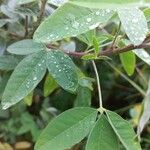
Crotalaria micans
Caracas rattlebox · Pine Kotalelia
Care Guide
💧 Water
Shining rattlepod flourishes in tropical climates with high humidity. It exhibits moderate drought tolerance, needing water only every 2-3 weeks. As an evergreen, this plant retains its foliage year-round, which enhances its resilience to changes in water availability.
How should I water my Shining rattlepod plant in the best way?
To ensure excellent root development for your plants, follow these steps: 1. Place a garden hose at the base of the plant. - This helps promote root growth, but avoid spraying the leaves directly. 2. Consider the location of your plants and adjust watering accordingly. - If your plants are outdoors and facing direct sunlight, the leaves may need additional watering. 3. Use bubblers or soaker hoses to moisten the roots. - Bubblers can be placed on each plant, while soaker hoses can cover the entire garden or bed. 4. When adding or removing plants, use soaker hoses to push the roots deeply. - Remember to drain any excess water and allow the soil to dry before watering again. 5. Water at ground level to prevent diseases. - This is especially important on a sunny day, when watering the entire bush may be necessary. 6. Regardless of whether your plants are potted or in-ground, remember that Shining rattlepod prefers deep watering rather than light sprinkling.
What do I do if I give the Shining rattlepod plant too much or too little water?
If you overwater a Shining rattlepod, you may notice its leaves turning yellow, dropping off, and wilting. The plant might look unhealthy overall, with mushy stems as a possible indicator. When you start seeing these signs, try adjusting your watering schedule accordingly. Interestingly, wilting can also occur when under watering, but the leaves will become crispy and dry instead. To determine if your plant needs watering, check the soil for dryness. If it is dry, providing a thorough watering should be sufficient. However, be aware that even with proper watering, the damaged root system may cause the plant to continue appearing dry with yellow leaves for a few days. Once the plant recovers, the yellowing of leaves should stop. When keeping a Shining rattlepod indoors, always monitor the moisture levels in the pot and avoid overwatering. Look out for black spots, and if present, allow the soil to dry out for a few days before watering again. Overwatering can lead to root rot, which might require transferring the plant to a different pot if you observe discolored and slimy roots. Preventing root rot by avoiding excessively soggy soil is crucial. When planting a Shining rattlepod outdoors, make sure to dig a bit deeper. If you find that the soil is too dry when checking with your fingers, it could be a sign of underwatering. Adequate watering is necessary to aid in the plant's recovery.
How often do I need to water my Shining rattlepod?
The Shining rattlepod prefers deep and infrequent watering, especially when planted in pots. To ensure proper hydration, soak them with a gallon of water each time. Potted plants dry out faster due to limited water storage, so watering every 3 to 5 days is necessary in cold regions. It's best to water them early in the morning when the soil is dry, whether you have them indoors or outdoors. You can also check if watering is needed by feeling the soil. When the top 2-3 inches are dry, it's time for a thorough watering. In hot weather, monitor the moisture daily as the heat can quickly dry out the soil in pots. If you have a garden, irrigation is also essential. In a hot climate, watering once a week is recommended. Only water when you observe that 2-3 inches of soil have become too dry, and don't add water if there has been sufficient rainfall to prevent root rot. Shining rattlepod plants typically grow during spring and fall. When they are outdoors, adding a 3-4 inch layer of mulch can help conserve water. Sandy soil requires more frequent watering due to faster drainage, while clay soil can go 2-3 days without water to avoid root rot. To keep track of watering, mark the dates on a calendar and pay attention to drooping leaves as a sign that watering may be overdue.
How much water should I give my Shining rattlepod plant?
The Shining rattlepod plant generally needs about a gallon of water on a regular schedule. For potted plants, water them deeply until you see water dripping from the bottom of the pot. Then, wait for the soil to dry before watering again. You can use a water calculator or moisture meter to determine how much water you've given your plant in a week. During the flowering period, provide plenty of water but allow the moisture to evaporate afterwards to prevent root rot. If the Shining rattlepod is planted outdoors with adequate rainfall, it may not need extra watering. When it's young or newly planted, make sure it receives 1-2 inches of rain per week. As the plant grows, it can rely on rainfall alone. Only consider giving it a full watering during cooler times of the day if the weather is very hot or if there has been no rainfall for 2-3 weeks to prevent heat damage. Additional watering will be needed during prolonged dry spells.
Should I change how often I water my Shining rattlepod plant depending on the time of year or the weather?
The Shining rattlepod requires outdoor conditions with rain, but it can tolerate dry weather and only needs watering during persistent dry periods. During the spring and fall, the soil should be kept moist but not soggy, and alternating between dry and moist soil will promote growth. In the summer, hot weather and lack of rain can lead to faster evaporation, so more frequent watering is necessary to keep the plant moist. During winter, the Shining rattlepod requires less water as it goes dormant and loses its leaves. Planting it in well-draining soil like terracotta can help the water evaporate quickly. Once the plant is dormant, watering can be skipped, relying on fall and winter rains for survival. In spring, watering can be resumed to promote growth and blooming. Good drainage is important at all times, especially in winter. If the plant is in a pot, it has limited root growth, so regular watering is necessary, especially during summer. Deep soakings once or twice a week are recommended, avoiding shallow sprinkles that reach the leaves. The plant should not be allowed to dry out completely in fall or winter, even during dormancy. Overwatering and poor drainage should be avoided, as the plant can die in these conditions. Applying mulch can help reduce stress, conserve water, and encourage healthy blooms.
☀️ Light Full sun
Shining rattlepod is native to open habitats like sunny meadows and forest edges, which offer abundant light. It performs best in Full Sun but can also tolerate Partial Sun, adapting well to a range of sunlight conditions.
What are the sunlight requirements for Shining Rattlepod?
Shining Rattlepod thrives best in full sun, requiring more than 6 hours of sunlight per day, but it can also tolerate partial sun, about 3-6 hours of sunlight daily. It's important to observe how sunlight moves through your garden to select spots that offer a balance of light and shade, ensuring the best conditions for your plants. Originating from open environments like sunny meadows and forest edges, Shining Rattlepod is adaptable to various sunlight conditions.
How can artificial lighting support Shining Rattlepod's growth indoors?
When natural sunlight is insufficient for Shining Rattlepod, especially indoors, artificial lighting can be an effective substitute. LED lights are recommended because they can be tailored to provide specific wavelengths needed by plants. For full sun plants, 30-50W/sq ft is required, for partial sun plants 20-30W/sq ft, and for full shade plants 10-20W/sq ft of artificial light. The light source should be placed 12-36 inches above the plant to mimic natural sunlight, and the duration should replicate natural daylight hours, typically 8-12 hours per day.
What symptoms indicate Shining Rattlepod is not getting enough sunlight?
Symptoms of insufficient sunlight in Shining Rattlepod include small, immature leaves; leggy or sparse growth; early leaf drop to conserve resources; halted or no new growth; pale new leaves indicating lack of chlorophyll; chlorosis, or yellowing leaves due to excessive sunlight affecting photosynthesis; sunscald indicated by pale, bleached areas on leaves or stems; leaf curling as a defense against excessive sunlight; wilting from loss of water through transpiration; and leaf scorching, characterized by dry, crispy leaf edges.
How can I address Shining Rattlepod's light deficiencies indoors and outdoors?
To address light deficiencies in Shining Rattlepod, gradually move the plant to sunnier locations each week to adapt. For indoor plants, ensure at least 6 hours of direct sunlight daily using a south-facing window or artificial lighting for 8 hours daily if the plant is large. Outdoors, avoid sudden changes in light to prevent sunburn. Reducing obstructions by pruning obstructive trees and transplanting smaller plants during their dormant period can also improve sunlight exposure. Note that parts of the plant affected by insufficient light may not recover, but new growth will be healthy after adjusting light exposure.
🌡️ Temperature 20–37.8°C
Shining rattlepod comes from tropical areas, where the climate is generally warm and humid. Consequently, it is adapted to high temperatures and moisture. It is sensitive to sudden temperature shifts and prefers a steady temperature, so avoiding indoor temperature fluctuations is important. It typically cannot tolerate cold and needs relatively high temperatures to grow. If the surrounding temperature falls too low, the plant may stop growing or even die.
💨 Humidity
🪴 Soil 6-7
🌱 Fertilizer
The best time to fertilize a Shining rattlepod is in early spring, as it comes out of dormancy. This encourages overall growth and the development of flowers. Fertilizing improves the foliage, stems, and branches, and supports the formation of large, vivid, long-lasting blooms. It helps transport nutrients from the roots to the flowers and enhances the plant’s health and resistance to disease.
🪴 Pot & Repot
✂️ Pruning
The shining rattlepod is known for its bright yellow flowers and distinctive seed pods. To encourage lush foliage and more blooms, prune one-third of the previous year's growth in early spring. Additionally, be sure to remove any dead branches to maintain the plant's health. Pruning at this time helps the plant recover before it blooms, improves air circulation, and reduces the risk of pests.
🌿 Propagating
🐛 Diseases & pets
☠️ Toxicity
Characteristics
- Plant Type
- Shrub
- Life Cycle
- Perennial
- Genus
- Crotalaria
- Family
- Fabaceae
- Hardiness Zone
- 9-11
- Mature Height
- 2.13 m
- Mature Spread
- 49 cm to 91 cm
- Leaf Color
- Green, Dark Green
- Leaf Type
- Deciduous
- Flower Color
- Yellow
- Flower Size
- 10.16 cm to 30.48 cm
- Bloom Time
- Summer, Fall
- Planting Time
- Summer
- Harvest Time
- Late summer, Fall, Early winter
- Native Area
- Colombia, Belize, Honduras, Mexico, Guatemala, Bolivia, Venezuela, Peru, Guyana, Brazil, Nicaragua, Ecuador, Costa Rica, Panama