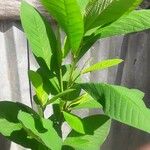
Crotalaria spectabilis
Rattlebox · Showy crotalaria · Showy rattlebox · Showy rattlepod · Silent rattlepod
Description
Source: leafsnapCrotalaria spectabilis, the showy rattlebox or showy rattlepod, is a species of flowering plant in the pea family Fabaceae. It is native to the Indian Subcontinent, southern China, and Southeast Asia. It was introduced (originally as a green manure) to most of the world's tropics and subtropics and is now a serious agricultural pest species. It is toxic to livestock, causing liver damage.
🌳 Although showy rattlebox is not widely known for common uses, it has underutilized potential in environmental management via phytoremediation. The plant can remove heavy metals from soil, helping to clean contaminated sites. Its rapid growth and resilience make it a suitable choice for reclaiming and revitalizing polluted landscapes, thereby supporting ecological sustainability.
Care Guide
💧 Water
Native to tropical regions, the showy rattlebox thrives in environments with consistent moisture and high humidity. It requires weekly watering and flourishes in sunny outdoor settings. To support its growth, it's important to use soil that mimics its warm, moist natural habitat, taking into account rainfall and seasonal water availability.
How should I water my Showy rattlebox plant?
Showy rattlebox can be watered using various tools such as a garden hose with a spray nozzle, a watering can, or any other common watering tool. This plant is not too particular about the type of water it receives, whether it's rainwater, tap water, or filtered water. It's generally not recommended to water Showy rattlebox from above as it can harm the leaves and flowers and may cause disease. A drip irrigation system is often the best watering method for this plant as it ensures even and direct water application to the soil. If you have a container-grown Showy rattlebox, you can use a cup, watering can, or tap water to directly water the soil.
What do I do if I give my Showy rattlebox plant too much water or too little water?
To solve the issue of underwatering Showy rattlebox, simply water it more consistently when you notice it lacking moisture. Overwatering, on the other hand, can be more serious, as it can lead to diseases and the plant's decline. To prevent this, choose a sunny location with good drainage to allow excess water to drain. If your Showy rattlebox in a pot is overwatered, consider transferring it to a new pot with better drainage and loose soil.
How much water does my Showy rattlebox need?
To keep your Showy rattlebox healthy, water it regularly throughout the growing season. In spring, water it once a week. As the weather gets warmer, increase watering to two or three times a week, but be careful not to overwater. The soil should be moist but not wet. If your Showy rattlebox is in a pot, you'll need to water it more frequently. Potted plants dry out faster, so plan to water a few times per week instead of just once for plants in the ground.
How much water does my Showy rattlebox plant need?
There are a few different ways to decide how much water to give your Showy rattlebox. Some gardeners prefer to gauge the moisture by feeling the soil, suggesting you water until the top six inches are moist. Another method is using a specific measurement, such as two gallons per week, taking into account factors like temperature and soil dryness. However, following strict guidelines may result in overwatering if your plant needs less. When growing in a container, you need to use a different approach. Ensure all layers of soil are moist by checking with your finger or watering until there's slight excess water flowing out of the pot's drainage holes.
How do I know if I'm giving enough water to my Showy rattlebox?
Avoiding overwatering your Showy rattlebox can be somewhat challenging due to the plant's deep roots requiring weekly soil moistening. Despite this, Showy rattlebox is highly vulnerable to root rot and may exhibit browning when overwatered. Conversely, underwatering is less of a concern as these plants can survive without additional watering for a considerable period. Nonetheless, extended periods without water may cause wilting and dry leaves in your Showy rattlebox.
☀️ Light Full sun
Showy rattlebox thrives in locations that receive sun for most of the day, though it can tolerate areas with partial light. Because it comes from environments with plentiful sunlight, that amount of light promotes its best growth. However, long periods of weak light produce thin, spindly growth, while excessively strong light can burn the plant.
What are the sunlight requirements for Showy Rattlebox?
Showy Rattlebox thrives best in areas that receive full sun, which means they should be exposed to more than 6 hours of sunlight daily. However, the plant can also grow in partial sun conditions, which is about 3-6 hours of sunlight. It's important to observe how sunlight moves through your garden to find spots that offer the right balance of light and shade, ensuring the plants' well-being. Originating from environments where sunlight is abundant, Showy Rattlebox achieves optimal growth in suitable lighting conditions. Yet, too much direct sunlight or very weak light can either burn the plant or cause it to grow weak and spindly.
How does artificial lighting affect Showy Rattlebox growth indoors?
When natural sunlight is insufficient, especially during winter or in less sunny spaces, artificial lighting becomes crucial for the growth of indoor Showy Rattlebox plants. Optimal growth is achieved by providing the right type of light, as LED lights are favored for their ability to supply specific wavelengths needed by plants. For full sun plants, 30-50W/sq ft is necessary; partial sun plants require 20-30W/sq ft, and full shade plants need 10-20W/sq ft of artificial light. The light source should be placed 12-36 inches above the plant to mimic sunlight, ensuring that indoor plants receive 8-12 hours of light per day.
What are common symptoms of inadequate light in Showy Rattlebox?
Inadequate light leads to several symptoms in Showy Rattlebox, including smaller new leaves, leggy or sparse growth, faster leaf drop, slower or halted growth, and lighter-colored or chlorotic new leaves. Additionally, intense sunlight can cause sunscald, wilting due to increased water loss, leaf curling as a defense mechanism, and leaf scorching, characterized by brown, dry, and crispy leaf edges. These symptoms highlight the plant's struggle with improper lighting conditions.
How can I address lighting issues for my Showy Rattlebox?
To mitigate lighting issues, gradually acclimatize your Showy Rattlebox to receive at least 6 hours of sunlight daily by slowly moving it to sunnier spots each week. For indoor plants large or difficult to move, supplementing with artificial light for at least 8 hours daily or using professional grow lights can ensure adequate light exposure. Outdoors, it's crucial to move plants gradually to prevent sunburn. Also, reducing obstructions like pruning branches from trees can increase sunlight exposure. If needed, transplant smaller plants during their dormant period to more suitable locations with enough sunlight and good drainage. Although parts of the plant that suffered from insufficient light might not recover, new growth will be healthy with proper care.
🌡️ Temperature 20–37.8°C
Showy rattlebox does well in a humid tropical climate, with its native habitat requiring consistently warm temperatures. It prefers an ideal range of 68 to 100 °F (20 to 38 ℃). Seasonal adjustments involve warming measures during cooler periods.
What is the ideal temperature range for growing Showy Rattlebox?
Showy Rattlebox, or Crotalaria spectabilis, thrives best in a tropical humid climate with a consistent warm temperature. The ideal temperature range for its growth is between 68 to 100°F (20 to 38°C). It's crucial to make seasonal adjustments to ensure the plant stays warm during cooler periods. During autumn, it's advisable to move outdoor-grown Showy Rattlebox indoors to a location near a bright window, keeping it away from heaters to avoid damage. Maintaining a temperature above 20°C during the winter promotes healthy plant growth, as temperatures nearing 0°C can be harmful.
How does low temperature affect Showy Rattlebox and what are the solutions?
Showy Rattlebox is not tolerant of low temperatures and prefers conditions above 20°C. Exposure to temperatures below 0°C, especially falling below -5°C, can cause the leaves to lighten in color, which might eventually turn brown or black after frost damage. Symptoms such as wilting and drooping may also occur. To combat this, trim off the frost-damaged parts and immediately move the plant to a warm environment indoors. Placing it near a south-facing window ensures ample sunlight while avoiding heaters or air-conditioning vents helps prevent excessive dryness in the air.
What should be done if Showy Rattlebox is exposed to high temperatures?
During summer, it's important to keep Showy Rattlebox's temperature below 38°C to prevent heat stress. If the temperature exceeds 43°C, the plant's leaves may lighten, becoming more susceptible to sunburn. Address this by trimming away sunburned and dried parts of the plant. Moving the Showy Rattlebox to a shaded area, especially from the midday and afternoon sun, can help. Additionally, watering the plant in the morning and evening will keep the soil moist, supporting plant health during extreme heat.
💨 Humidity
🪴 Soil 6-7
🌱 Fertilizer
When most of Showy rattlebox's blooms have opened to full size, resume fertilizing. At the time the blooms are at peak production, apply fertilizer once every three to four weeks, as weather allows. Then, when Showy rattlebox begins producing fewer new blooms, stop fertilizing; there's no need to feed the plant once it can no longer produce more blooms.
🪴 Pot & Repot Every 12 months
✂️ Pruning
🌿 Propagating
🐛 Diseases & pets
☠️ Toxicity
Characteristics
- Plant Type
- Herb
- Life Cycle
- Annual, Biennial
- Genus
- Crotalaria
- Family
- Fabaceae
- Hardiness Zone
- 9-11
- Mature Height
- 0.61 m to 1.52 m
- Mature Spread
- 49 cm to 91 cm
- Leaf Color
- Green
- Leaf Type
- Deciduous
- Flower Color
- Yellow
- Flower Size
- 2.54 cm
- Bloom Time
- Early summer, Mid summer
- Planting Time
- Spring, Summer
- Harvest Time
- Mid summer, Late summer
- Native Area
- Nepal, India, Malaysia, Myanmar, Bangladesh, Pakistan, Thailand, China