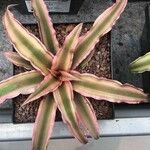
Cryptanthus bivittatus
Earth Star · Pink starlite · Pink starfish
Description
Source: leafsnapCryptanthus bivittatus, commonly known as the Earth Star plant, is a species of bromeliad native to Brazil. This small plant typically grows up to 6 inches in height and 8 inches in width. Its leaves are arranged in a rosette pattern and feature green coloration with reddish-brown stripes or markings. As an epiphyte, the Earth Star plant grows on other plants or objects without causing them harm. The Earth Star plant thrives in bright but indirect light and prefers well-draining soil that remains moist but not waterlogged. It can be cultivated indoors as a houseplant or outdoors in warm, humid climates. This plant produces small, pinkish-white flowers that bloom close to the base of its leaves. However, it rarely flowers when grown indoors. Additionally, Cryptanthus bivittatus has air-purifying properties that make it an excellent choice for improving indoor air quality by removing harmful toxins such as formaldehyde from the air. Overall, this low-maintenance tropical beauty adds color and texture to any indoor space while also providing health benefits for its owners!
Care Guide
💧 Water Every 7 days
Native to the Brazilian rainforests, the earth star plant thrives in humid environments but can withstand short periods of drought. To keep it healthy, water it weekly to maintain a balanced moisture level. This popular indoor plant flourishes in higher humidity, which helps enhance its vibrant foliage during its active growth phase.
☀️ Light Partial sun
Earth star prefers a mix of sun and shade, which encourages vigorous, healthy growth. Still, it can do well in spots that get continuous sun throughout the day. Too much or too little light can hinder its growth, reflecting the conditions of its native habitat without specifying particular locations.
What are the sunlight requirements for Earth star plants?
Earth star plants appreciate a balance of sun and shade for robust, healthy growth, thriving in areas that receive constant sunlight throughout the day as well. Partial sun exposure means about 3-6 hours of sunlight, while full sun calls for more than 6 hours. It's critical to monitor how sunlight moves through your garden, ensuring you place your Earth star in locations that provide a suitable mix of light and shade, emulating the conditions of its natural habitat without confining it to specific locales.
How can artificial lighting be used for indoor Earth star plants?
For indoor Earth star plants, when natural sunlight is insufficient, artificial lighting becomes a crucial alternative to fulfill their light requirements, especially in less sunny spaces or during winter. LED lights are recommended due to their ability to be customized according to the specific light wavelengths needed by the plants. Full sun plants should have 30-50W/sq ft of artificial light, partial sun plants require 20-30W/sq ft, and full shade plants need 10-20W/sq ft. The light source should be placed 12-36 inches above the plant, simulating natural sunlight, and the lighting duration should mimic natural daylight hours, with most plants needing 8-12 hours of light per day.
What are common symptoms of inappropriate light conditions in Earth star plants?
Earth star plants exhibit several symptoms when subjected to less than ideal light conditions. In low light, new leaves might grow smaller, and the plant may show leggy or sparse growth due to elongated spaces between leaves or stems. Faster leaf drop can occur as the plant conserves resources, leading to slower or no new growth as the plant enters survival mode. Insufficient sunlight may also cause new leaves to develop irregular color patterns or appear paler, signaling a lack of chlorophyll. Conversely, excessive sunlight can lead to chlorosis (yellowing of leaves), sunscald (pale or necrotic areas on the plant), leaf curling, wilting, and leaf scorching, indicating damage from too much sun exposure.
How can I address light-related issues in my Earth star plant?
To optimize growth and address light-related issues, gradually adapt your Earth star plant to changing light conditions. For indoor plants that cannot be easily moved, consider using artificial light to supplement natural sunlight, keeping a desk or ceiling lamp on for at least 8 hours daily or investing in professional plant grow lights. When adjusting outdoor plants, move them to a sunnier location each week to prevent sunburn. If sunlight is obstructed by elements like trees, pruning may help increase exposure. For smaller plants, transplanting during the dormant period (late winter or early spring) to a location with ample sunlight and good drainage is advisable. Note that while parts of the plant affected by insufficient sunlight may not recover, new growth should be healthy following these adjustments.
🌡️ Temperature 20–37.8°C
Earth star prospers in warm conditions. If the temperature falls too low, the plant may stop growing or sustain frost damage. It tolerates high heat and humidity well and needs a steady level of moisture in its environment. However, very high temperatures and humidity can make it prone to fungal infections. In dry surroundings, regular watering and misting are needed to keep the air humidity adequate. The plant is sensitive to rapid temperature changes, so keeping the temperature fairly stable is important.
What are the essential care instructions for an Earth star plant?
The Earth star (Cryptanthus bivittatus) thrives in warm environments and requires a consistent level of moisture in its surroundings. It is tolerant of high temperatures and humidity but can be susceptible to fungal infections if conditions are excessively hot and humid. In dry conditions, the plant benefits from regular watering and misting to maintain adequate air humidity. It's crucial to avoid sudden temperature fluctuations to keep the plant healthy. During winter, if temperatures drop below -20°C, it is advised to move the plant indoors, preferably near a south-facing window, while avoiding placing it near heaters or air conditioners to prevent dryness. Indoor temperatures should be kept above 5°C. If outdoor overwintering is necessary, ensure the plant is sheltered and wrapped for protection, with reduced watering to keep the soil slightly moist.
How should I care for my Earth star plant in low temperature conditions?
Earth stars prefer warm environments and are not tolerant of low temperatures, thriving best above 5°C. In winter, temperatures should be kept above -20°C to avoid damage. If exposed to temperatures below -25°C, you might not notice symptoms for 3-5 days, after which leaves can wither, droop, and the plant may die in severe cases. To protect your Earth star in cold conditions, trim any frostbitten areas and move the plant indoors to a warm spot with ample sunlight near a south-facing window. Avoid placing the plant near heaters or air conditioning vents to prevent air from becoming too dry.
What should I do if my Earth star plant experiences high temperatures?
During the summer, ensure that your Earth star plant is kept in temperatures below 35°C to avoid overheating. If temperatures rise above 41°C, the plant's leaves may dry and become withered at the tips, growth may halt, and there is an increased risk of root rot. Sunburn can also occur from excessive sunlight exposure. In such situations, remove any withered parts of the plant and relocate it to a shaded area, particularly away from the harsh midday and afternoon sun. Watering the plant in the morning and evening can help keep both the plant and its surrounding environment moist, which is beneficial for its health.
💨 Humidity high (>60%)
This plant needs special care because it loves high humidity levels of 60-80% or more. The best way to achieve this is by placing a humidifier near the plant. Daily misting is also essential! Make sure the room has good ventilation.
🪴 Soil 5-6
🌱 Fertilizer
Proper fertilization is vital for the Earth star's health and appearance. Fertilize the Earth star in summer, repeating the application monthly throughout the season. The nutrients fuel growth and maintain the plant's components. Fertilization enhances the Earth star's flower display, ensuring the best blooms.
🪴 Pot & Repot 2-3 years
When repotting an Earth star, select a pot 1-2 inches (2.5–5.1 cm) larger with good drainage. Use a well-draining potting mix. Repot in spring or fall, making sure the root ball is slightly lower than the rim of the flower pot. Water thoroughly after repotting and place it in a warm spot with indirect sunlight.
✂️ Pruning
Renowned for its rosette shape and vibrant foliage, the earth star plant requires minimal pruning. To keep it healthy and attractive, focus on removing any dead leaves. The best time to prune is in early spring. This helps enhance airflow, prevent disease, and encourages the formation of offsets for propagation.
🌿 Propagating
🐛 Diseases & pets
☠️ Toxicity
Red star bromeliad plants are generally non-poisonous; however, they are not meant for consumption. Ingesting the plant will likely cause a stomach upset and other mild digestive symptoms.
Characteristics
- Plant Type
- Herb
- Life Cycle
- Perennial
- Genus
- Cryptanthus
- Family
- Bromeliaceae
- Hardiness Zone
- 10-12
- Mature Height
- 10 cm to 15 cm
- Mature Spread
- 10 cm to 15 cm
- Leaf Color
- Green, White, Variegated
- Leaf Type
- Evergreen
- Flower Color
- White, Pink
- Flower Size
- 2.54 cm
- Bloom Time
- Summer, Early fall
- Planting Time
- Spring, Summer, Autumn
- Harvest Time
- Late summer, Fall
- Native Area
- Brazil