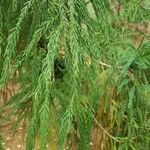
Cryptomeria japonica
Japanese Red-cedar · Cryptomeria · Japanese cedar · Sugi · Ash Juniper
Description
Source: leafsnapCryptomeria japonica, commonly known as Japanese cedar, is a large evergreen tree native to Japan and China. Its attractive foliage and conical shape make it a popular choice for ornamental use in gardens and parks. The tree's needle-like leaves are arranged in spirals around the branches and range in color from green to blue-green. Its bark is reddish-brown and features deep furrows. The Japanese cedar can reach heights of up to 70 meters, with a trunk diameter of up to 4 meters. While it grows rapidly when young, its growth rate slows as the tree matures. It thrives in moist soil conditions but is also drought-tolerant once established. In Japan, Cryptomeria japonica holds cultural significance, having been used for centuries in the construction of temples and shrines due to its resistance to insects and decay. Overall, Cryptomeria japonica is not only a visually appealing evergreen tree that enhances any landscape but also a culturally important species in Japan's history of construction.
💡 Jomon Sugi, one of the oldest trees in the world, is a Japanese red cedar that stands 25 meters tall on Yakushima Island in Japan. Estimated to be between 2,000 and 7,000 years old, this magnificent tree serves as a living monument to Japan's past and as a silent witness to the lives of the villagers who once thrived there.
🌳 Japanese cedar, admired for its beauty in Asian landscapes, supplies versatile timber to a range of industries. In Japan, its slightly reddish wood is a top choice for building and for producing luxury furniture. Its wood-derived essential oil also has antimicrobial properties, making it a natural disinfectant ingredient. Uniquely, Japanese cedar wood is even used for casks that impart the distinctive flavor of red cedar to Japanese sake.
🎭 Sacredness: the bond between humanity and the natural world
Care Guide
💧 Water Every 7 days
Japanese red cedar, native to moist and temperate regions, thrives in environments with moderate moisture and consistent humidity. To care for this plant, water it every 1-2 weeks, allowing the soil to dry slightly between waterings. In cooler climates, applying mulch can help retain moisture during the active growing season.
When Should I Water My Japanese Red Cedar?
To ensure the health and growth of your Japanese red cedar, it's important to water when the top 1 to 2 inches of soil around the plant base is dry. Wilting or discolored leaves indicate the need for watering, especially during the pre-flowering stage, warm temperatures, and high sunlight exposure. Avoid watering too early or too late to prevent risks of root rot and plant dehydration, respectively. Understanding these signs will help maintain the plant's health, vibrancy, and growth.
How Should I Water My Japanese Red Cedar?
Watering your Japanese red cedar properly involves using a soaker hose or drip irrigation system to ensure deep, even watering throughout the root zone. If using a watering can, do so slowly to allow water absorption. Utilize a moisture meter to determine watering needs and focus on watering the base of the plant to prevent moisture-related diseases. Avoid watering the foliage directly and use well-draining soil to prevent overwatering and ensure the plant remains healthy.
How Much Water Does Japanese Red Cedar Really Need?
Japanese red cedar's need for water varies with pot size, root depth, and plant size. On average, 1-2 gallons of water per week is sufficient for a potted cedar, but larger plants may require more. Look for moist but not soggy soil as an indicator of proper watering; over or underwatering can cause yellowing leaves or browning and dry leaves, respectively. Ensure deep watering while providing good drainage to avoid root problems.
What Kind of Water is Best for Japanese Red Cedar?
Japanese red cedar thrives best with rainwater due to its natural properties, lack of chemicals, and balanced pH level. Distilled water, filtered water, and treated tap water are also suitable options, with tap water needing dechlorination for at least 24 hours to remove chlorine. Be mindful of the cedar's high sensitivity to chlorine and moderate sensitivity to fluoride, which can stress the plant. Water should be at moderate temperature to avoid shocking the plant.
How Do Japanese Red Cedar's Watering Needs Change with the Seasons?
Japanese red cedar's watering needs vary seasonally. In spring, consistent moisture supports new growth. Summer demands more frequent watering due to higher evaporation rates. As temperatures cool in autumn, reduce watering to maintain slightly moist soil. During winter dormancy, water sparingly, allowing the top soil layer to dry out between waterings while preventing complete dryness. Adjust your watering schedule in response to weather changes and the plant's growth cycle.
☀️ Light Full sun
Japanese cedar thrives under ample sunlight, which improves its health and vigor, yet it can also tolerate moderately lit environments. The sunlight levels in its native habitat correspond to this preference. Excessive sun can cause stress, whereas inadequate sun may restrict growth.
What are the sunlight requirements for Japanese red cedar?
Japanese red cedar thrives under generous sun exposure, ideally flourishing with more than 6 hours of sunlight daily (full sun), which enhances its health and vitality. However, it can also adapt to partially sunlit environments, needing about 3-6 hours of sunlight (partial sun). Its natural habitat's sun exposure aligns with these preferences. Excessive sun exposure may result in plant stress, whereas insufficient sunlight can impede growth.
How does sunlight affect the growth of Japanese red cedar?
Sunlight plays a crucial role in the growth and health of Japanese red cedar. Adequate sunlight exposure is essential for optimal growth, contributing to the plant's vitality. In its natural habitat, the Japanese red cedar is accustomed to significant sunlight, which supports its development. Lack of sufficient sunlight can hinder the plant's growth by causing symptoms such as smaller new leaves, leggy or sparse growth, faster leaf drop, slower or no new growth, and changes in leaf coloration, indicating a lack of chlorophyll and essential nutrients.
What are the recommendations for artificial lighting for Japanese red cedar indoor plants?
For Japanese red cedar indoor plants where natural sunlight is insufficient, artificial lighting is a beneficial alternative to promote growth. LED lights are recommended due to their ability to offer specific wavelengths needed for plant growth. Full sun plants require 30-50W/sq ft of light, partial sun plants need 20-30W/sq ft, and full shade plants need 10-20W/sq ft. The artificial light source should be placed 12-36 inches above the plant to mimic natural sunlight conditions. Most plants will need 8-12 hours of artificial light per day, matching natural daylight hours for the specific plant species.
What symptoms indicate inadequate sunlight for Japanese red cedar?
Symptoms of inadequate sunlight in Japanese red cedar include smaller leaves, leggy or sparse growth, faster leaf drop, slower or no new growth, and lighter-colored or chlorotic leaves. Additionally, excessive sunlight exposure can lead to sunscald, leaf curling, wilting, and leaf scorching. These symptoms reflect the plant's struggle with inappropriate light levels, impacting its ability to photosynthesize effectively and maintain overall health.
How can you address sunlight-related issues for Japanese red cedar?
To address sunlight-related issues for Japanese red cedar, it's important to gradually adjust its exposure to sunlight. For indoor plants, gradually move them to a sunnier location each week until they receive at least 6 hours of direct sunlight daily, utilizing a south-facing window and keeping curtains open during the day. Artificial lighting, like desk or ceiling lamps left on for at least 8 hours daily or professional plant grow lights, can supplement light for plants that are large or not easily movable. Outdoor plants should also be moved gradually to sunnier spots to avoid sunburn. Additionally, reducing obstructions or transplanting to a location with ample sunlight can benefit plants struggling with insufficient natural light.
🌡️ Temperature 5–35°C
Japanese cedar, a woody temperate species native to East Asia, prefers temperatures from 41 to 95 ℉ (5 to 35 ℃). It performs best in subtropical to temperate regions with mild winters and moderate to high humidity. To cope with seasonal changes, ensure sufficient moisture in summer and protect it from frost and strong winds in winter.
What are the ideal growing conditions for Japanese red cedar?
Japanese red cedar, scientifically known as Cryptomeria japonica, is a temperate woody plant native to East Asia. It thrives in a temperature range of 41 to 95°F (5 to 35°C), flourishing in subtropical to temperate climates characterized by mild winters and moderate to high humidity. The plant benefits from receiving adequate moisture during the summer months and needs protection from frost and strong winds during winter. Despite its strong cold resistance, precautions should be taken when winter temperatures are expected to drop below -25°C by wrapping the trunk and branches with non-woven fabric or cloth. It's also advisable to water the plant abundantly before the first freeze in autumn to ensure the soil remains moist and enters a frozen state, which aids in preventing drought and water scarcity during the colder months.
How does Japanese red cedar respond to low temperatures?
Japanese red cedar is highly cold-tolerant, thriving best when temperatures remain above 5°C. It can withstand winters where temperatures stay above -20°C. However, when temperatures plunge below -25°C, the tree may not show immediate changes during winter, but by springtime, its branches can become brittle and dry, and it might fail to produce new shoots. To combat these effects, it's advisable to prune away any dead branches that have failed to produce new leaves during the spring.
What should be done if Japanese red cedar experiences high temperatures?
During the summer, it's crucial to ensure that the Japanese red cedar does not endure temperatures above 35°C. Exposing the cedar to temperatures exceeding 38°C can result in the lightening of leaf color, drying and withering of the tips, and increased susceptibility to sunburn. Managing these conditions involves trimming away sunburned and dried-up parts of the plant, relocating it to a shaded area or employing a shade cloth to shield it from the midday and afternoon sun. Additionally, watering the plant in the early morning and evening helps maintain soil moisture, further mitigating stress from high temperatures.
💨 Humidity normal (40-60%)
This plant will thrive in moderate humidity, which is probably the level in your home. However, misting it a few times a week can be very beneficial. Make sure the room has good ventilation.
🪴 Soil 5-6
🌱 Fertilizer
Japanese cedar has specific nutrient needs and does not require heavy fertilization. Spring is the best time to apply fertilizer for optimal growth. Providing nutrients improves its health, increases its resistance to pests and diseases, and helps sustain a long lifespan.
Why is it important to add fertilizer to my Japanese red cedar?
To promote the healthy growth of Japanese red cedar, it is beneficial to fertilize the plant in the spring. Keep in mind that this plant has a long lifespan and requires support. Adding nutrients to the soil can enhance the plant's well-being, making it more resilient to common pests and diseases, which can hinder growth or reduce its lifespan.
When should I fertilize my Japanese red cedar?
Sometimes, the growing medium lacks sufficient nutrients for healthy growth. However, Japanese red cedar is unique compared to garden annuals and perennials because it does not need a lot of extra nutrients. The ideal time to fertilize Japanese red cedar is during spring before new growth starts to appear.
When is it not a good idea to fertilize my Japanese red cedar?
Not all plants benefit from frequent fertilization, and this includes the Japanese red cedar. It does not require excessive nutrients and can actually suffer if given too much fertilizer. To properly care for the Japanese red cedar, only apply fertilizer in the spring and avoid doing so in the other seasons. It is best to refrain from adding fertilizer or organic matter to the soil during the summer, fall, and winter.
What kind of plant food should I use for my Japanese red cedar?
The age of your plant is important when choosing fertilizer. Japanese red cedar doesn't need a lot of extra nutrients. Look for a balanced plant food that supports healthy root development and growth. Avoid fertilizers with high nitrogen content.
How should I fertilize my Japanese red cedar tree?
Applying fertilizer to Japanese red cedar is crucial, and it is important to consider both the timing and method. The best time to fertilize is in the spring, and it should be applied to the base of the plant. Take care to avoid getting any fertilizer on the trunk. When using granulated fertilizer, it is recommended to cover the pellets with a thin layer of soil. This will help ensure that the fertilizer is properly absorbed into the soil.
🪴 Pot & Repot 2-3 years
Choose a pot 1-2 inches (2.5–5 cm) larger with ample drainage. Use a well-draining potting mix. Repot in spring or fall, making sure the root ball sits slightly lower than the rim of the flower pot. Water thoroughly after repotting and place the pot in a warm spot with indirect sunlight.
✂️ Pruning
The Japanese red cedar is an evergreen conifer that benefits from pruning during the winter months. To ensure the tree's optimal health, it's important to target dead or damaged branches and thin out crowded areas for better air circulation. Regular pruning boosts the tree's vigor, reduces the risk of disease, and helps maintain both the aesthetic appeal and health of the Japanese red cedar.
🌿 Propagating
🐛 Diseases & pets
☠️ Toxicity
Both humans and animals are unaffected by Japanese cedar. However, its pollen can cause seasonal allergies in some people. Its duration varies depending on location, beginning earlier in the warmer west of Japan and ending later in the colder north.
Characteristics
- Plant Type
- Tree
- Life Cycle
- Perennial
- Genus
- Cryptomeria
- Family
- Cupressaceae
- Hardiness Zone
- 5-9
- Mature Height
- 47.85 m
- Mature Spread
- 3.05 m to 3.96 m
- Leaf Color
- Green
- Leaf Type
- Evergreen
- Flower Color
- Yellow
- Flower Size
- 0.25 cm
- Bloom Time
- Spring
- Planting Time
- Spring, Autumn
- Harvest Time
- Mid summer, Late summer, Early fall
- Native Area
- Japan