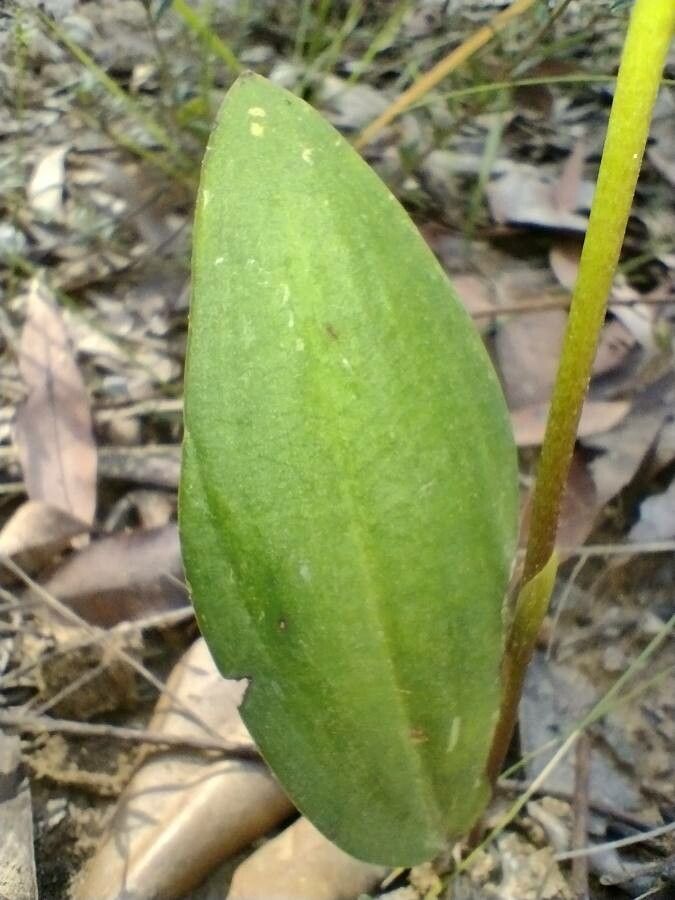
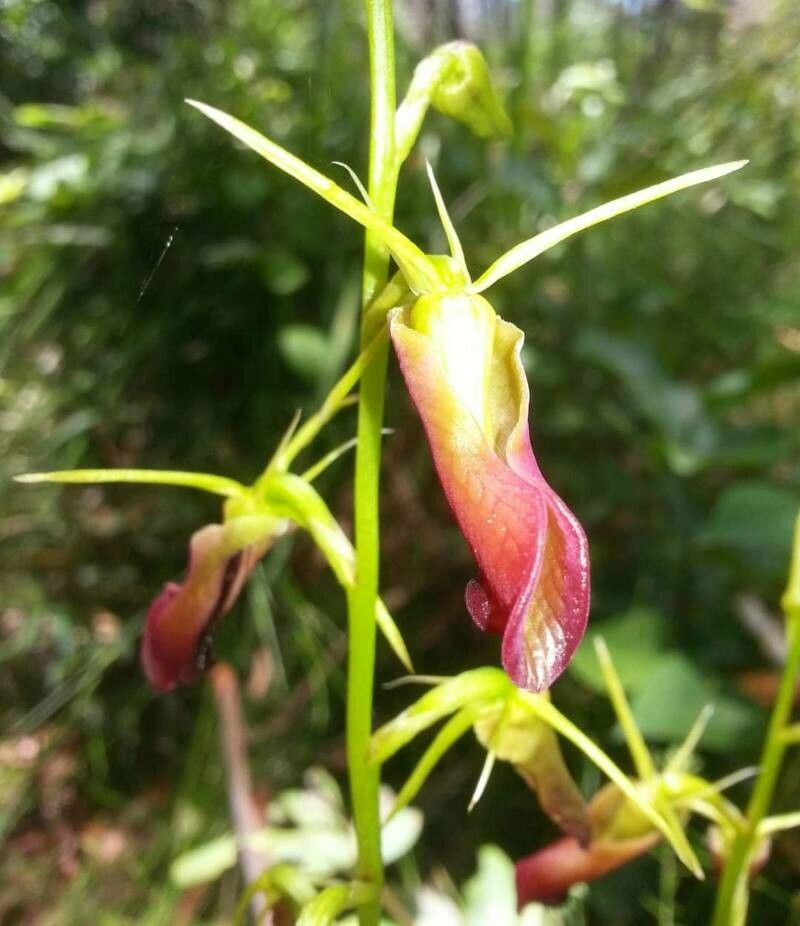
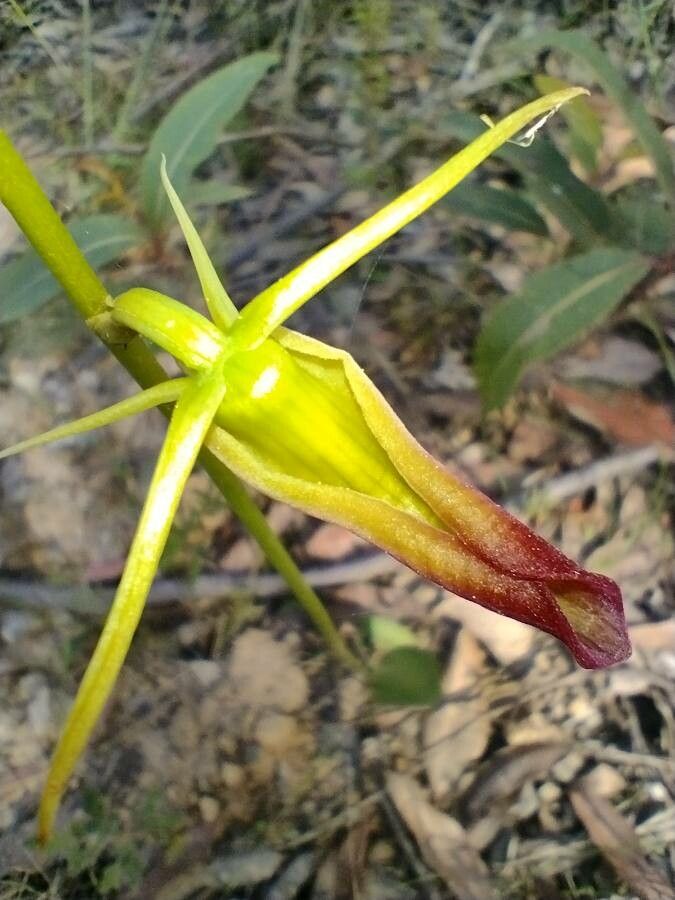
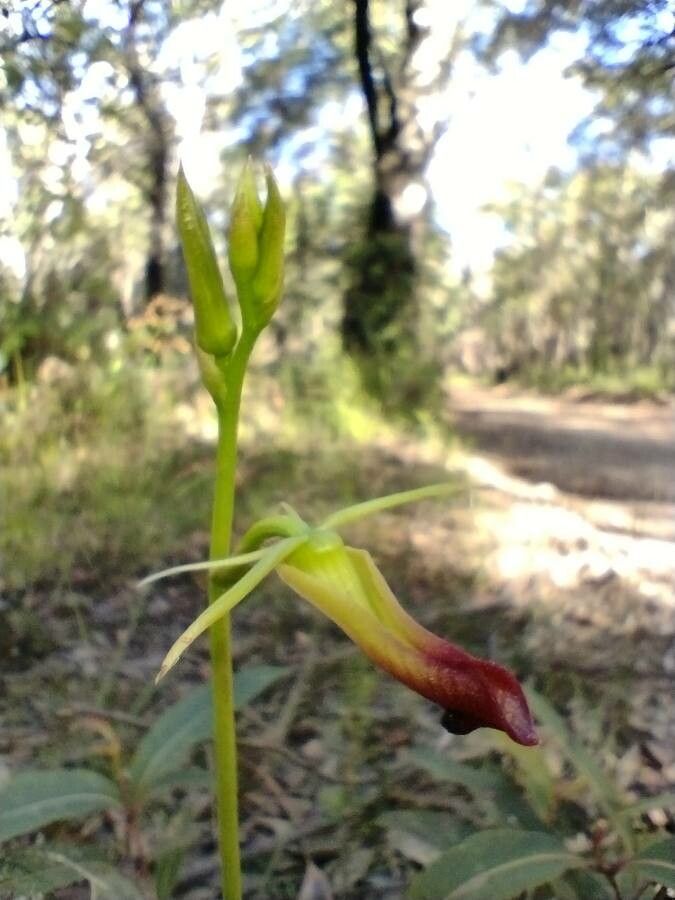
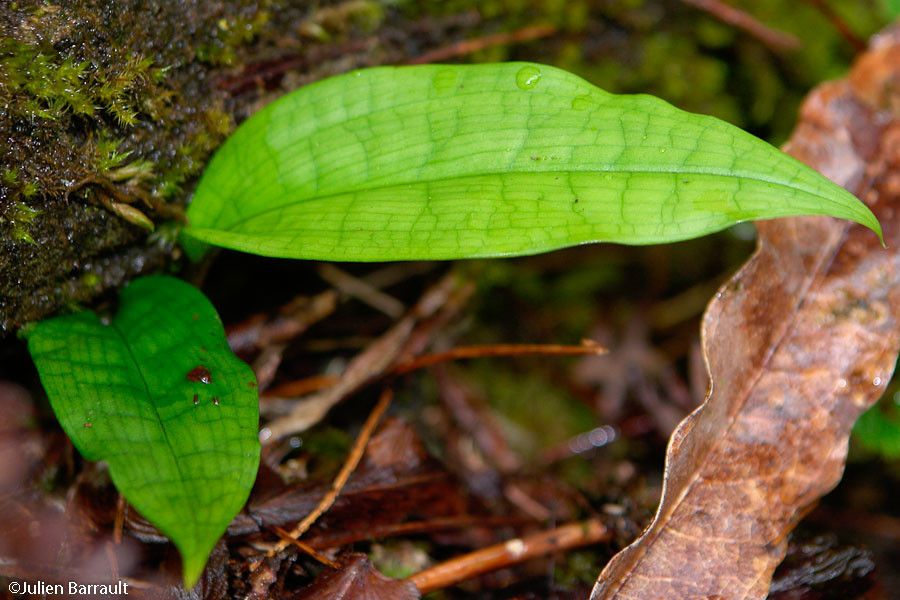
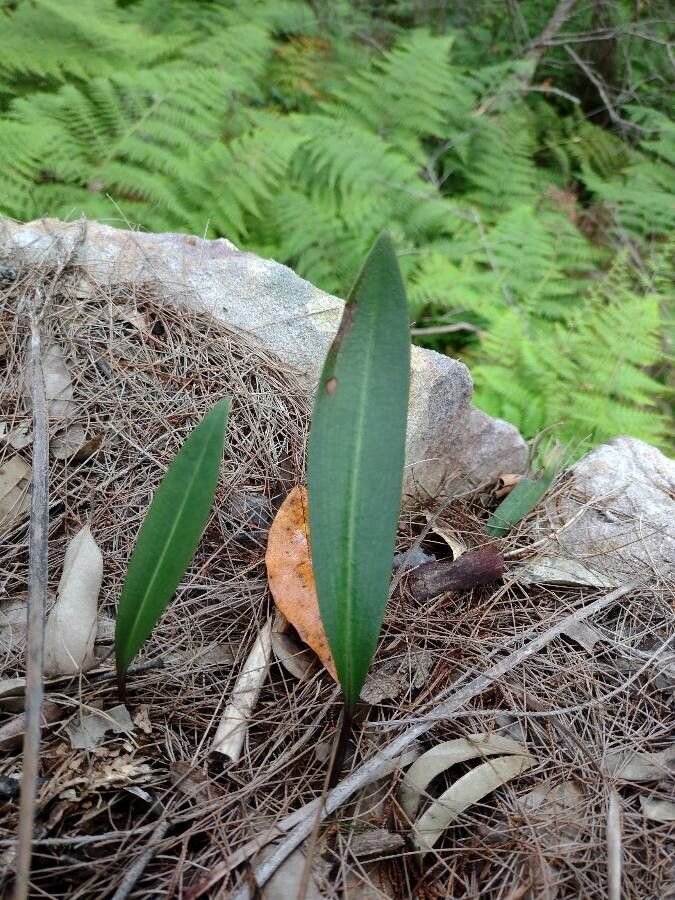
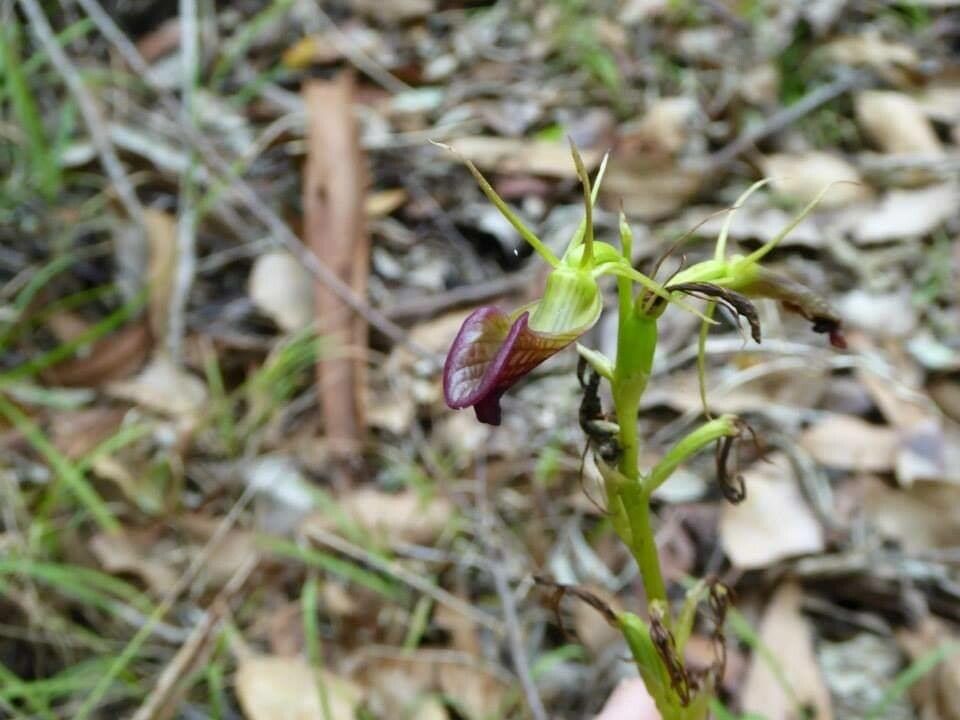
Cryptostylis subulata, commonly known as the large tongue orchid, duckbill orchid or cow orchid, is a common and widespread orchid in south eastern Australia and New Zealand. It has relatively large, leathery, dark green to yellowish-green leaves and up to twenty yellowish flowers with a reddish-brown and dark purple labellum. It is often found in damp or swampy situations but also occurs in drier places.
Large tongue orchid generally resists disease well and has relatively few insect pests. Its care is considered difficult, since it needs high humidity combined with good ventilation and a low presence of harmful pathogens. Too much watering can cause root rot. Although anyone can grow Large tongue orchid, more growing experience is needed to keep it healthy and make it flower again.
How to keep Cryptostylis Subulata.
Light
Large tongue orchid is native to habitats like forest understories and rocky areas, where it grows in natural shade. It prefers partial sun but can tolerate full sun or full shade, illustrating its versatile and hardy nature.
Water
The large tongue orchid flourishes when it receives sufficient moisture, but it can also tolerate some drought conditions. During the summer, water the orchid weekly, and in the fall and winter, extend the watering interval to every 10 days. To maintain humidity, especially in dry weather, mist the plant regularly. It's best to use neutral pH water for watering and misting. Ideally, let the water sit for a while before use to allow any dissolved substances to dissipate.
Temperature
The Large tongue orchid is fairly adaptable to temperature, tolerating higher heat and considerable temperature swings. In hot weather, attention should be paid to watering and providing adequate shade to avoid sunburn. Conversely, the Large tongue orchid is less tolerant of cold; it can handle some chill, but very low temperatures may cause frost damage.
Fertilizer
A single fertilizer application in spring is generally enough for the Large tongue orchid, though several feedings can maximize its growth. Apply fertilizer about once a month to once every six weeks. Fertilizing improves the leaves' appearance and function, helping them keep an even color and healthy texture. It also encourages root growth and nutrient uptake, supporting the plant's long-term health.
Pruning
The large tongue orchid boasts elongated flowers and lush foliage, requiring only minimal pruning. In early spring, use sterilized tools to remove any dead leaves to promote healthy growth and improve air circulation. It's best to prune before the growing season to encourage flowering, but be careful not to over-prune so that the plant can develop naturally.
Botanical profile.
- Plant Type
- Herb
- Life Cycle
- Perennial
- Genus
- Cryptostylis
- Family
- Orchidaceae
- Hardiness Zone
- 9-11
- Mature Height
- 30 cm to 61 cm
- Mature Spread
- 20 cm to 30 cm
- Leaf Color
- Dark Green
- Leaf Type
- Evergreen
- Flower Size
- 2.03 cm to 3.05 cm
- Bloom Time
- Summer, Early fall
- Planting Time
- Spring, Summer
- Harvest Time
- Mid fall, Late fall, Early winter, Mid winter
Other names.
Reader questions.
What is the Large Tongue Orchid?
The Large Tongue Orchid, scientifically known as Cryptostylis subulata, is a species of orchid. Unfortunately, there is no further detailed information available regarding its essentials or symptoms within the provided data.