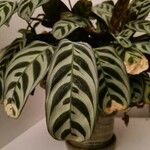
Ctenanthe burle-marxii
Fishbone prayer plant · Fish bone prayer plant · Prayer plant · The Rosemary Bush
Description
Source: leafsnapCtenanthe burle-marxii, commonly known as the "Fishbone Prayer Plant," is a tropical plant native to Brazil and belongs to the Marantaceae family. It gets its nickname from the unique pattern on its elongated, lance-shaped leaves, which resemble fishbones. The leaves are dark green on top and purple underneath, with prominent white veins running through them, making the plant quite striking. This plant is a popular choice for houseplant enthusiasts due to its attractive foliage and low maintenance requirements. It thrives in bright, indirect light and prefers moist soil, though it can also tolerate lower light conditions. For optimal growth, regular misting or placing the plant on a pebble tray with water is beneficial. Besides its ornamental appeal, Ctenanthe burle-marxii is valued in traditional Brazilian medicine for its medicinal properties. The leaves are known for their anti-inflammatory effects and can be applied topically or consumed as tea. Overall, Ctenanthe burle-marxii is an excellent choice for anyone seeking a visually appealing, easy-to-care-for houseplant with potential health benefits.
🌳 The Fishbone Prayer Plant's primary use beyond its ornamental appeal is very limited. It is mainly grown and admired for its striking foliage, which displays vivid green stripes against a dark green background. There has been little adoption of the Fishbone Prayer Plant outside this decorative role, and it is not recognized for any other notable uses.
Care Guide
💧 Water Every 7 days
Native to tropical rainforests, the fishbone prayer plant thrives in high humidity and well-drained, moist soil. It requires weekly watering and has a moderate tolerance to drought. This indoor plant prefers indirect light and benefits from regular misting to maintain its lush foliage and vibrant patterns.
What should I do if I give too much or too little water to my Fishbone Prayer Plant?
If you want to determine if your plant has watering issues, carefully observe it. If you overwater your plant, you'll notice that the leaves can turn yellow and develop yellow-brown patches at the tips. In serious cases, the leaves may droop and curl due to root rot caused by overwatering. Fishbone Prayer Plants, when grown indoors, are particularly prone to overwatering as they cannot tolerate standing water. It's best to catch the overwatering early by watching for standing water or changes in the leaves and stop watering in that case. Let the soil dry out for 3-5 days. If you notice signs of root rot, act quickly by removing the plant from its pot or the ground, washing off the roots, removing dead or decaying roots, and replacing the old soil with new soil. If planting in the garden, relocate the plant and replace the old soil. Underwatering is also a concern for these plants as they are sensitive to drought conditions. Signs of underwatering include curled, pendulous, lifeless leaves; gradual yellowing of leaves from the bottom; and browning on the edges of leaves. Underwatering is easier to fix by increasing the frequency of watering. If the plant is drying out quickly, consider increasing the humidity in the air or relocating the plant to a less sunny or hot spot to prevent excessive evaporation.
How regularly should I water my Fishbone Prayer Plant?
To ensure your Fishbone Prayer Plant receives the appropriate amount of water, consider the following guidelines. During spring, water the plant approximately once per week. However, during summer, it is advisable to increase the watering frequency. In contrast, during winter, decrease the amount of water you provide. Keep in mind that factors such as humidity, temperature, and soil type may affect the watering schedule. To determine the ideal watering frequency, regularly check the soil condition using your finger or a Soil Moisture Meter. Aim to keep the soil moist but not soggy, watering after the top 1.5-2 inches of soil has dried out. Potted plants are more susceptible to overwatering, so it is crucial to use a pot with proper drainage holes and well-draining soil. Before watering, ensure there is no excess water in the plant tray. For plants in the ground, rainfall typically contributes to their growth. The Fishbone Prayer Plant usually requires around 1 inch of rain per week. If rainfall is insufficient, supplemental watering may be necessary. Additionally, humidity also plays a role in maintaining proper hydration for the plants. While the plant can tolerate normal room humidity, it prefers higher humidity levels (around 40 to 60 percent) if possible. To increase humidity for indoor plants, consider placing a small humidifier nearby. If you have outdoor plants, misting them throughout the day can help.
How do I make sure I water my Fishbone Prayer Plant the right way?
When it comes to watering your Fishbone Prayer Plant, there are several options to consider. If your plant is in a small pot indoors, you can bring it to your kitchen sink and use the faucet to add water. Hold the pot in your hands and stop watering when you see water running through the drainage holes. However, avoid doing this in cold weather as it can harm the plant's root system. If your tap water has high levels of fluorine, chlorine, or salts, it's better to use rainwater or lake water. The Fishbone Prayer Plant also responds well to overhead watering and watering directly into the soil. You can use a watering can, hose, or any other tool that suits you. For plants planted in the ground, you can aim the hose at the root system and water for more than 10 minutes when there isn't enough rain. When it comes to the water you use, keep in mind that the Fishbone Prayer Plant prefers soft, acidic water. If you have hard water, consider using an at-home water filter or letting tap water sit out for 24 hours to remove minerals and salts. Rainwater is also a good option, so you can collect some when it rains for your plant.
When is the best time to water my Fishbone Prayer Plant?
To keep the Fishbone Prayer Plant in good condition, it's important to maintain a humid environment that keeps the plants moist. However, it's also important to avoid overwatering, as this can cause the root system to rot. A good rule of thumb is to wait until the top 1.5-2 inches of soil has dried out before watering again. The exact depth to test depends on the depth of the soil, but for a soil depth of around 5 inches, testing about 1.5 inches (about one-third of the soil depth) is recommended. If you have a Soil Moisture Meter, you can use it to easily determine when to water. When the meter reads around 3, it's a good time to water. If it reads higher than 3, it's best to wait until it dries out a bit more. By following these guidelines, you can avoid overwatering your plants.
☀️ Light Full shade
The Fishbone Prayer Plant thrives with partial sun exposure and comes from areas where sunlight is filtered through a lush canopy. The plant’s health is best when it is not subjected to the sun’s full intensity. However, too little or too much light can damage the plant or impede its growth.
What are the sunlight requirements for Fishbone Prayer Plant?
Fishbone Prayer Plant, scientifically known as Ctenanthe burle-marxii, thrives under partial exposure to sunlight, typically flourishing in conditions where sunlight is filtered through a dense canopy, similar to its native environment. For healthy growth, this plant should not be exposed to the full intensity of sun rays for prolonged periods. It requires less than 3 hours of direct sunlight (full shade), with an ideal setup being indirect sunlight throughout the day. It's crucial to monitor the movement of sunlight in your garden to select spots that provide a balance of light and shade, ensuring the plant's well-being.
How can artificial lighting be used for indoor Fishbone Prayer Plants?
For Fishbone Prayer Plants kept indoors, adequate lighting is vital for optimal growth, especially when natural sunlight is insufficient, such as during winter or in less sunny spaces. Artificial lights offer a valuable solution. LED lights are recommended as they can be customized to provide the specific wavelengths of light plants need. Full sun plants require 30-50W/sq ft of artificial light, partial sun plants need 20-30W/sq ft, and full shade plants need 10-20W/sq ft. The light source should be placed 12-36 inches above the plant to mimic natural sunlight, with most plants benefiting from 8-12 hours of artificial light per day.
What are the key symptoms of inadequate or excessive light exposure in Fishbone Prayer Plants?
Fishbone Prayer Plants can exhibit several symptoms due to inadequate or excessive light exposure. Insufficient light can result in smaller new leaves, leggy or sparse growth, faster leaf drop, slowed or ceased growth, and lighter-colored or yellowing leaves (chlorosis). Excessive sunlight, on the other hand, can cause sunscald, leaf curling, wilting, and leaf scorching, indicating damage to the plant. These symptoms highlight the plant's struggle with light conditions and underline the importance of providing the plant with an ideal amount of filtered light.
What solutions exist for managing light conditions for Fishbone Prayer Plant?
To manage light conditions for Fishbone Prayer Plant effectively, consider moving plants to locations where they can receive ample filtered light, including brief periods of direct morning sunlight, ideally 1-2 meters away from a window. For large or immovable plants, using artificial light sources like desk or ceiling lamps for at least 8 hours a day or investing in professional plant grow lights can provide sufficient light. Outdoors, gradually moving plants to sunnier spots can help them adapt without suffering sunburn, and reducing obstructions such as pruning trees can enhance sunlight access. For plants in the ground that are small enough, transplanting during the plant's dormant period to a brighter location with good drainage is beneficial. Note that parts of the plant affected by previous poor light conditions may not recover, but new growth will be healthy with adequate light exposure.
🌡️ Temperature 20–37.8°C
Fishbone Prayer Plant is native to tropical woodlands and does best in temperatures of 68 to 100 °F (20 to 38 ℃). It prefers to have this steady warmth year-round to thrive. If temperatures fall or rise outside this range, alter your home's climate to imitate its natural surroundings.
What is the native environment of the Fishbone Prayer Plant?
The Fishbone Prayer Plant, botanically known as Ctenanthe burle-marxii, is native to tropical woodlands. It thrives in temperatures ranging from 68 to 100°F (20 to 38°C), enjoying consistent warmth throughout the year. The plant is extremely heat-loving and does not tolerate cold temperatures well. To ensure its well-being, especially in conditions outside these temperature ranges, it's recommended to adjust your home's climate to mimic the plant's natural habitat. During autumn, for those growing it outdoors, it is advisable to bring the Fishbone Prayer Plant indoors and place it near a bright window, keeping it away from direct heat sources to maintain an ideal temperature above 20°C, while ensuring it does not get exposed to temperatures nearing 5°C, which are harmful.
How does the Fishbone Prayer Plant react to low temperatures, and what are the recommended solutions?
The Fishbone Prayer Plant prefers warm environments and is sensitive to low temperatures. It thrives best when the temperature is consistently above 20°C, particularly during winter, where the temperature should not drop below 5°C to avoid damage. Exposure to temperatures below 1°C can lead to the leaves lightening in color. Frost damage further darkens the leaf color to brown or black, with wilting and drooping as common symptoms. If your plant suffers from frost damage, it's advisable to trim off the frost-affected parts and move the plant to a warmer indoor setting immediately. Placing the plant near a south-facing window ensures it receives ample sunlight, while also being cautious not to place it near heaters or air conditioning vents to avoid air that is too dry.
What should I do if the Fishbone Prayer Plant is exposed to high temperatures?
During the summer, it's essential to ensure that the Fishbone Prayer Plant is not exposed to temperatures above 38°C. Exposure to temperatures exceeding 43°C can cause the leaves to lighten in color and make the plant more prone to sunburn. If the plant exhibits signs of sunburn or dried-up portions, it's advisable to trim away these parts. To protect the plant from excessive heat, move it to a shaded area, particularly away from the intense midday and afternoon sun. Additionally, watering the plant in the morning and evening helps keep the soil moist, aiding in the plant's ability to cope with high temperatures.
💨 Humidity normal (40-60%)
This plant will thrive in moderate humidity, which is probably the level in your home. However, misting it a few times a week can be very beneficial. Make sure the room has good ventilation.
🪴 Soil 6-7
🌱 Fertilizer
Appropriate fertilization is essential for the Fishbone Prayer Plant's health and appearance. Apply fertilizer in summer and repeat the application monthly throughout the season. Nutrients support growth and the maintenance of the plant's parts. Fertilizing also improves the Fishbone Prayer Plant's flowering, helping it produce the best blooms.
🪴 Pot & Repot 3-4 years
When repotting a Fishbone Prayer Plant, pick a container slightly larger than the current one that has good drainage. Do the repotting in spring or fall and use a well-draining potting mix. Place the plant at the same depth it was before. After repotting, water thoroughly and set the plant in a warm spot with bright, indirect light. Avoid overwatering to prevent root rot.
✂️ Pruning
To help your Fishbone Prayer Plant thrive, it's best to prune it in early spring. This encourages new growth and helps maintain its shape. Start by trimming any damaged stems and removing spent flowers. This will promote bushier growth and allow better light to reach all parts of the plant. Be sure to use clean, sharp tools to prevent disease and improve the plant's overall health.
🌿 Propagating
🐛 Diseases & pets
☠️ Toxicity
Do not be concerned about toxicity. We are fortunate that this lovely Calathea burle Marx is a non-toxic plant variety. Pets like cats and dogs, mature humans, and even young children cannot be harmed by it. Families with pets should definitely consider the Fishbone prayer plant as an indoor plant. Definitely one you'll adore.
Characteristics
- Plant Type
- Herb
- Life Cycle
- Perennial
- Genus
- Ctenanthe
- Family
- Marantaceae
- Hardiness Zone
- 10-12
- Mature Height
- 49 cm
- Mature Spread
- 49 cm
- Leaf Color
- Green, Silver, Brown
- Leaf Type
- Evergreen
- Flower Color
- White
- Flower Size
- 2.54 cm
- Bloom Time
- Summer, Early fall
- Planting Time
- Spring
- Harvest Time
- Late summer, Fall
- Native Area
- Brazil