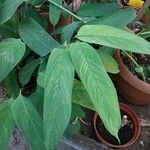
Ctenanthe compressa
Care Guide
💧 Water
The Bamburanta plant thrives in humid, tropical environments and needs consistent moisture to keep the soil evenly damp. To encourage lush foliage, water the plant weekly. Additionally, regular misting helps mimic its native rainforest habitat, enhancing the vibrancy of its leaves.
☀️ Light Full shade
The bamburanta plant prefers a moderate amount of sunlight. Excessive light can scorch its leaves, while insufficient sun can cause stunted growth. In its native habitat it receives gentle, filtered sun that matches its moderate light requirement, so the plant does well in settings with soft solar illumination.
What are the sunlight requirements for the Bamburanta plant?
The Bamburanta plant, scientifically known as Ctenanthe compressa, thrives best in environments with a moderate level of sunlight. It requires about 3-6 hours of direct sunlight per day and can benefit from indirect sunlight throughout the day. The plant's native habitat aligns with these conditions, as it typically enjoys gentle, filtered sun. It's important to watch how sunlight moves through your garden and choose spots that provide a balance of light and shade, ensuring the plant's happiness and preventing issues like leaf scorching due to excessive sun or stunted growth due to insufficient light.
How can artificial lighting be used for the Bamburanta plant?
For indoor Bamburanta plants, adequate lighting is essential, especially when natural sunlight is insufficient, such as in winter or less sunny spaces. Artificial lights can be an excellent solution, promoting healthier and faster growth. LED lights are recommended because they can be customized to provide specific wavelengths needed by plants. The amount of artificial light needed varies by plant type: full sun plants require 30-50W/sq ft, partial sun plants 20-30W/sq ft, and full shade plants 10-20W/sq ft. The light source should be placed 12-36 inches above the plant to mimic natural sunlight, and the duration should mimic natural daylight hours, typically 8-12 hours per day.
What are the signs of inadequate light for a Bamburanta plant?
When a Bamburanta plant is exposed to insufficient light, several symptoms may arise. These include smaller new leaves, leggy or sparse growth due to longer spaces between leaves or stems, faster leaf drop as a way to conserve resources, and a halt in new growth indicating the plant is in survival mode. Leaves may also develop paler colors or irregular patterns, signaling a lack of chlorophyll and essential nutrients. Additionally, there can be signs of chlorosis, where leaves lose their green color and turn yellow, or symptoms of excessive sunlight exposure like sunscald, leaf curling, wilting, and leaf scorching.
What solutions can improve the Bamburanta plant's exposure to light?
To optimize the Bamburanta plant's growth in terms of light exposure, gradual adaptation is key. For indoor plants, gradually shifting them to sunnier spots weekly until they receive the recommended 3-6 hours of direct sunlight daily can be beneficial. Additionally, using artificial light, such as keeping a desk or ceiling lamp on for at least 8 hours daily or investing in professional plant grow lights, can provide supplemental illumination. Outdoors, moving plants to better sunlight spots gradually helps prevent sunburn. Minimizing obstructions like pruning blocking trees or transplanting smaller plants during their dormant period to locations with ample sunlight and good drainage can also significantly improve light exposure. Note that parts of the plant affected by insufficient light might not recover, but new growth will be healthy with improved light conditions.
🌡️ Temperature 20–37.8°C
The Bamburanta plant comes from tropical areas, where the weather is generally warm and humid. As a result, it is adapted to high temperatures and humidity. It does not tolerate sudden temperature changes and prefers a consistent thermal environment, so avoiding temperature fluctuations indoors is important. It typically cannot endure cold and requires warmer conditions to grow. If the surrounding temperature falls too low, the plant’s growth may stop or it may die.
What is the Bamburanta plant?
The Bamburanta plant, scientifically known as Ctenanthe compressa, is a distinct species recognized by its unique botanical attributes. However, further details about its essentials and symptoms were not provided in the provided data.
💨 Humidity
🪴 Soil 6-7
🌱 Fertilizer
The Bamburanta plant requires the most fertilizer during its active growth period, mainly in spring, summer, and early fall. Fertilizing is needed to supply essential nutrients the soil may lack, supporting healthy root and stem development and the attractive foliage that is a key characteristic of this plant.
🪴 Pot & Repot 3-4 years
When repotting a Bamburanta plant, pick a pot slightly larger than the current one that has good drainage. Repot in spring or fall and use a well-draining potting mix. Place the plant at the same depth it was before. Water thoroughly after repotting and put it in a warm spot with bright, indirect light. Avoid overwatering to prevent root rot.
✂️ Pruning
To promote healthy growth and ensure good airflow, it's important to properly prune your Bamburanta plant in early spring. Start by removing any damaged leaves and trimming back overgrown stems to maintain the plant's shape. Make sure to use clean tools to prevent the spread of disease. By following these practices, your Bamburanta plant will have vibrant foliage throughout the growing season.
🌿 Propagating
🐛 Diseases & pets
☠️ Toxicity
Characteristics
- Plant Type
- Herb
- Life Cycle
- Perennial
- Genus
- Ctenanthe
- Family
- Marantaceae
- Hardiness Zone
- 10-12
- Mature Height
- 30 cm to 61 cm
- Mature Spread
- 30 cm to 49 cm
- Leaf Color
- Green
- Leaf Type
- Evergreen
- Flower Color
- White
- Flower Size
- 1.02 cm to 2.03 cm
- Bloom Time
- Summer, Early fall
- Planting Time
- Spring, Summer, Autumn
- Harvest Time
- Late summer, Fall
- Native Area
- Brazil, Bolivia, Venezuela