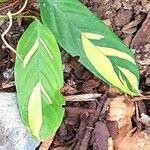
Ctenanthe lubbersiana
Never Never Plant
Description
Source: leafsnapCtenanthe lubbersiana is a tropical plant native to Brazil, prized for its striking foliage and unique patterns. It belongs to the Marantaceae family, which also includes popular houseplants such as Calathea and Stromanthe. The leaves of Ctenanthe lubbersiana are large, oval-shaped, and pointed at the tip. They exhibit a dark green color with silver stripes running along the veins, while the undersides are purple. This plant is relatively easy to care for, thriving in bright but indirect light and well-draining soil that is kept consistently moist but not waterlogged. Although it can tolerate low light conditions, it may produce less foliage in such environments. Indoors, Ctenanthe lubbersiana can grow up to 2-3 feet tall with proper care, making it an excellent choice for those seeking an eye-catching statement piece for their home or office. Overall, Ctenanthe lubbersiana is an attractive houseplant that adds beauty and interest to any indoor space, while being relatively low maintenance compared to other tropical plants.
Care Guide
💧 Water Every 7 days
Bamburanta, a plant native to tropical rainforests, thrives in environments with high humidity and consistently moist soil. It does well with weekly watering and can withstand short periods of dryness. Ideally, it should be placed in humid indoor spaces such as bathrooms or kitchens, where it can benefit from the ambient moisture similar to its natural habitat.
☀️ Light Full shade
Bamburanta is found in habitats such as forest understories or rocky areas that offer natural shade. It prefers Full Shade but can tolerate Partial Sun.
🌡️ Temperature 20–37.8°C
Bamburanta comes from tropical areas, where the climate is generally warm and humid. Consequently, it is adapted to high heat and moisture. It does not tolerate abrupt temperature changes and prefers a steady thermal environment, so it is important to avoid temperature fluctuations indoors. It usually cannot withstand cold temperatures and needs warmer conditions to grow. If the ambient temperature drops too low, the plant may stop growing or even die.
💨 Humidity high (>60%)
This plant needs special care because it loves high humidity levels of 60-80% or more. The best way to achieve this is by placing a humidifier near the plant. Daily misting is also essential! Make sure the room has good ventilation.
🪴 Soil 6-7
🌱 Fertilizer Every 30 days
Bamburanta needs the most fertilizer during its active growth period, which occurs mainly in spring, summer, and early fall. Fertilization supplies essential nutrients that the soil may lack, supporting healthy root and stem growth as well as attractive foliage, a key characteristic of this plant.
🪴 Pot & Repot 3-4 years
When repotting Bamburanta, select a pot slightly larger than the previous one with good drainage. Repot in spring or fall, using a well-draining potting mix. Plant it at the same depth as before. Water thoroughly after repotting and place it in a warm spot with bright, indirect light. Avoid overwatering to prevent root rot.
✂️ Pruning
Bamburanta thrives indoors and benefits from strategic pruning. In early spring, focus on removing damaged leaves and trimming overgrown stems to promote bushier growth. It's important to use clean tools to prevent disease, which will enhance both the plant's appearance and health.
🌿 Propagating
🐛 Diseases & pets
☠️ Toxicity
The ASPCA lists the bamburanta species as non-toxic. The plant is generally safe to handle and doesn't have any poisonous components. You can grow it indoors without being concerned that your children and pets will be poisoned. Despite not being harmful, some people have reported mild allergy reactions.
Characteristics
- Plant Type
- Herb
- Life Cycle
- Perennial
- Genus
- Ctenanthe
- Family
- Marantaceae
- Hardiness Zone
- 11-12
- Mature Height
- 91 cm
- Mature Spread
- 0.91 m to 1.22 m
- Leaf Color
- Yellow, Green
- Leaf Type
- Evergreen
- Flower Color
- White
- Flower Size
- 1.02 cm to 2.03 cm
- Bloom Time
- Summer, Early fall
- Planting Time
- Summer
- Harvest Time
- Late summer, Fall
- Native Area
- Brazil