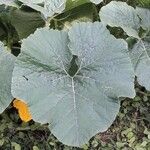
Cucurbita maxima
کدو · Great pumpkin · Winter squash · Pumpkin · Hubbard Squash
Description
Source: leafsnapCucurbita maxima, one of at least four species of cultivated squash, is one of the most diverse domesticated species. This species originated in South America from the wild Cucurbita andreana over 4000 years ago. The two species hybridize quite readily but have noticeably different calcium levels. Only long-vining plants are known in this species.
💡 Originally native to South America, winter squash was adopted by Native Americans in North America centuries ago. Since then, it has been developed into many distinct cultivars. One of these is particularly well-known during Halloween, recognized as a type of pumpkin, although it belongs to a different species than the traditional jack-o'-lantern pumpkin.
🌳 Although winter squash is commonly known as a tasty ingredient in savory stews or traditional pies, its use reaches beyond the kitchen. Various animals, including deer, rabbits, and possums, eat winter squash, showing its appeal to wildlife. Surprisingly, winter squash also appears in the beauty industry, supplying enzymes and antioxidants for skincare products like masks and creams as well as for nourishing hair treatments. Furthermore, its seeds are rich in vitamin-filled oil that is used in folk remedies.
🎭 renewal, fecundity, harvest celebrations
Care Guide
💧 Water Every 7 days
Winter squash, which originates from South America, thrives in consistently moist conditions akin to its tropical habitat. Ideally, it should be watered twice a week, but it can tolerate short dry spells. When grown outdoors, it benefits from natural rainfall, especially during its peak growth seasons.
When Should I Water My Winter Squash?
Understanding when to water your winter squash is vital for its growth, health, and fruit production. The soil's moisture is a primary indicator; if the top 2-3 inches of soil are dry, it's time to water. Additionally, droopy or limp leaves, yellowing or browning of leaves, and leaf curling are signals that your plant needs water. During the fruit development stage, consistent and adequate watering is crucial. Remember to adjust watering based on temperature and weather conditions to prevent underwatering or overwatering, which can lead to issues like root rot or fungal diseases.
How Should I Water My Winter Squash?
Watering your winter squash properly involves maintaining consistent moisture without overwatering. Bottom-watering is an effective technique, allowing roots to absorb water from the bottom up, which prevents excess moisture on foliage and reduces fungal disease risks. Use a watering can with a narrow spout to target the base of the plant and avoid wetting the foliage. Utilize a moisture meter to accurately gauge soil moisture. The frequency of watering should be based on the soil feeling dry to the touch rather than a fixed schedule, taking into account environmental factors.
How Much Water Does Winter Squash Really Need?
The right amount of water for winter squash varies with pot size, root depth, and plant size. Smaller plants typically need 1-2 inches of water per week, while mature plants may require more, ensuring thorough soil saturation without standing water. Healthy, well-hydrated winter squash will have vibrant green leaves. Overwatering and underwatering can both lead to detrimental effects on the plant, such as yellowing leaves, drooping, or stunted growth. Ensure proper watering by monitoring the soil and adjusting as necessary.
What Kind of Water is Best for Winter Squash?
Winter squash thrives best when watered with rainwater, but distilled or filtered tap water are also suitable. It is moderately sensitive to chlorine, so tap water should be left to sit for 24-48 hours to allow chlorine to dissipate. While winter squash isn't specifically sensitive to fluoride, using water with minimal fluoride is advisable. Regularly treating tap water to remove chlorine or using a softener for hard water can improve plant health. Stick to room temperature water to avoid shocking the plant's roots.
How Do Winter Squash's Watering Needs Change with the Seasons?
Winter squash's watering needs vary by season. In spring, keep the soil evenly moist to support growth. During summer, reduce watering frequency to reflect its natural dormancy. In autumn, decrease watering as the plant prepares for dormancy, keeping the soil lightly moist. In winter, the plant requires minimal moisture, so water sparingly and allow the topsoil to dry out between waterings. Adjust your watering practices to accommodate these seasonal needs.
☀️ Light Full sun
Winter squash does best in places where it gets plenty of sunlight all day. This supports strong growth from sprouting through fruit production. However, too much sun can scorch leaves or fruit, while too little light can slow its development.
What are the sunlight requirements for winter squash?
Winter squash requires full sun, which means it should receive more than 6 hours of direct sunlight per day, to thrive properly. However, it can also grow under partial sun conditions, which equates to about 3-6 hours of sunlight daily. It's important to observe the movement of sunlight in your garden to ensure your plants receive the ideal balance of light and shade, contributing to their health and growth.
What essential conditions do winter squash need for growth?
Winter squash needs environments that offer ample sunlight throughout the day for robust growth, from germination all the way through to fruiting. While sufficient sunlight is crucial, too much direct exposure can harm the leaves or fruit, and not enough light can slow down its growth. For indoor plants, where natural light is limited, artificial lighting serves as an essential substitute to promote faster and healthier growth. LED lights are recommended because they can be adjusted to provide the specific wavelengths your plants need, with full sun plants requiring 30-50W/sq ft, partial sun plants needing 20-30W/sq ft, and full shade plants requiring 10-20W/sq ft. The artificial light source should be placed 12-36 inches above the plant to mimic natural sunlight and provided for 8-12 hours per day.
What are the symptoms of insufficient or excessive light in winter squash?
Winter squash shows various symptoms under inadequate light conditions, including smaller new leaves, leggy growth, early leaf drop, and halted growth indicating light deficiency. Leaves might also display irregular color patterns or chlorosis (yellowing), which suggests inadequate chlorophyll and essential nutrient levels. Under excessive sunlight, symptoms include sunscald, leaf curling, wilting, and leaf scorching, which can damage the plant's tissue and reduce its overall health. Leaf curling acts as a defense mechanism against extreme light by minimizing water loss and damage.
How can I address light-related issues in my winter squash plants?
For indoor winter squash plants experiencing light deficiency, gradually moving them to a sunnier spot can be beneficial. A south-facing window can provide ample sunlight; alternatively, using artificial lighting for at least 8 hours daily can supplement light needs. For outdoor plants, it's essential to adapt them gradually to increased sunlight to prevent sunburn. Reducing obstructions like pruning tree branches or transplanting to areas with better sunlight and drainage can also improve light exposure. Keep in mind that parts of the plant damaged by insufficient light may not recover, but new growth should be healthier post-adjustment.
🌡️ Temperature 5–37.8°C
Winter squash is typically adapted to moderately warm climates, doing best in temperatures of 68 to 100 °F (20 to 38 ℃). Depending on the season, growers should monitor and adjust conditions to maintain these temperature levels and ensure healthy growth.
What are the ideal growing conditions for Winter squash?
Winter squash thrives in moderately warm climates, with ideal temperatures ranging from 68 to 100 °F (20 to 38 °C). To ensure healthy growth, it is important for growers to monitor and adjust the climate accordingly. Maintaining temperatures above 20°C during winter cultivation is beneficial, and the minimum temperature should be kept above freezing to prevent damage. If outdoor temperatures approach -5°C (25°F) during winter, it is advisable to bring Winter squash indoors or provide protection by setting up a temporary greenhouse or using materials like plastic film or fabric.
How does low temperature affect Winter squash, and what are the solutions?
Winter squash has a moderate tolerance to low temperatures but thrives best between 20°C and 38°C. It should be kept above 0°C during winter to avoid damage. Exposure to temperatures below -25°C can cause leaves to darken, potentially leading to water-soaked necrosis, wilting, and drooping, with leaves gradually turning brown. The solution is to trim away frost-damaged parts and immediately move the plant indoors to a warm environment or set up a makeshift greenhouse. Place the plant near a south-facing window to ensure it receives ample sunlight, and if natural light is insufficient, consider supplemental lighting.
How does high temperature affect Winter squash, and what are the solutions?
During summer, Winter squash's growth is optimal when temperatures are kept below 38°C. Temperatures exceeding 43°C can slow the plant's growth, lighten the color of its leaves, and increase susceptibility to sunburn. To mitigate high temperature effects, trim away sunburned and dried-up parts, move the plant to a location that provides shade during the afternoon sun, and ensure the soil remains moist by watering the plant in the morning and evening.
What is the botanic name of Winter squash?
The botanic name of Winter squash is Cucurbita maxima.
💨 Humidity
🪴 Soil 6-7
🌱 Fertilizer
When feeding Winter squash, use natural or commercial fertilizer high in nitrogen for leaf growth, phosphorus for roots and blossoms, and potassium for photosynthesis and maximum fruit production. Plant in spring, enrich the soil with compost or manure, and fertilize seedlings when they reach a height of 2–4 inches (5.1–10.2 cm). Insufficient macronutrients lead to slow growth, wilting, and fruit quality issues.
Why is it important to put fertilizer on my Winter squash?
To ensure optimal growth and harvest of Winter squash fruit, it is important to provide the necessary nutrients. Each main macronutrient contributes differently to plant growth. Phosphorus, for instance, plays a crucial role in the development of flowers and fruit. In addition to promoting flowering and fruiting, it is essential to have a strong root system and healthy leaves that can absorb sunlight. Without sufficient macronutrients, plants become weaker, have slower growth rates, and may even wilt. Since flowering and fruiting demand significant energy from plants, deficiencies in these key components will also be reflected in the quality of the resulting fruits.
When should I add fertilizer to my Winter squash?
To successfully grow winter squash during the summer months, it's important to plant them in the spring. Different varieties have specific planting times, so it's important to check the recommendations. To ensure a high-quality yield, winter squash requires nutrient-rich soil. Before planting, mix in a 2-inch layer of compost or well-rotted manure to provide necessary nutrients and improve soil drainage. Transplants can be fertilized right after planting, while seedlings should reach a height of 2 to 4 inches before their first fertilization. Established plants should be fertilized every 3 to 4 weeks throughout the growing season until the first frost or when they stop producing. Make sure to choose the appropriate type of fertilizer based on the specific variety of winter squash you're growing. If unsure, it's better to err on the side of using less fertilizer.
When is it not a good idea to add fertilizer to my Winter squash plants?
To ensure healthy development of Winter squash, it is important to avoid using a fertilizer with excessive nitrogen. This is because too much nitrogen can result in abundant leaf growth but limited blooms and fruits. Instead, choose a fertilizer that has a lower proportion of nitrogen compared to other nutrients. Additionally, it is advisable not to fertilize Winter squash during periods of high temperatures or dry conditions. During these times, the fertilizer may simply wash away in the soil without being absorbed by the plants. Moreover, plants are less capable of absorbing nutrients in hot weather, which can lead to the fertilizer remaining in the soil and restricting the plants' ability to uptake water. This situation can be particularly harmful during droughts or heatwaves.
What kind of fertilizer should I use for my Winter squash?
To determine the best fertilizer for your Winter squash, start by assessing your soil's composition and nutrient levels. Conducting a soil test is the most accurate way to obtain this information, although some people have success growing Winter squash without testing. While there are specialized fertilizers available for different types of Winter squash, it is not necessary to buy a separate one for each vegetable you grow. By understanding the basic needs of your plants and the existing nutrients in your soil, you can use the same fertilizer for multiple plants. Many growers prefer using a high-phosphorus fertilizer, which promotes flower and fruit development. These fertilizers have NPK ratios with the highest middle number, like 8-32-16 or 10-30-10. Alternatively, some people simplify their fertilizer routine by using a balanced option like 10-10-10 for all their garden plants.
How can I fertilize my Winter squash?
When using different types of fertilizer, it's important to follow the specific instructions for each type. Some fertilizers may need to be diluted, while others should be carefully measured. By doing your research and following these instructions, you can avoid over fertilizing your garden. For Winter squash planted in a row, the side-dressing method can be used. This means mixing the fertilizer into the soil along the rows on either side, about 3 to 4 inches away from the base of the plant. This allows the fertilizer to reach the roots without touching the plant. When you water the plants, the nutrients from the fertilizer will be washed into the soil and down to the roots. If your garden layout doesn't allow for side-dressing, you can apply the fertilizer to the soil around the plant, again staying about 3 to 4 inches away. If using granular fertilizers, scatter them onto the soil and lightly mix them in. After applying dry fertilizers, make sure to water the plants thoroughly. Alternatively, you can use liquid fertilizers by mixing them into a watering can. This mixture can then be used to both water and fertilize the plants at the same time. Another option is foliar feeding, where you spray the leaves with a specialized fertilizer mix instead of applying nutrients to the soil.
🪴 Pot & Repot
To thrive and avoid root rot, winter squash planted in pots requires excellent drainage.
✂️ Pruning
Winter squash plants have sprawling vines and large leaves, which require careful pruning. Important practices include removing basal shoots in early spring and trimming overcrowded branches later in the season. These actions promote airflow, reduce disease risk, enhance sunlight penetration, and increase fruit production. Always use clean, sharp tools for pruning during the plant's active growth phase.
🌿 Propagating
🐛 Diseases & pets
☠️ Toxicity
When a member of the gourd fruit and vegetable family consumes something that has unusually high cucurbitacin levels, it might result in toxic squash syndrome. The gourd family of plants includes cucumber, melon, pumpkin, squash, and courgette. The bitter-tasting substances known as cucurbitacins are harmful to humans.
Characteristics
- Plant Type
- Vine, Herb
- Life Cycle
- Annual
- Genus
- Cucurbita
- Family
- Cucurbitaceae
- Hardiness Zone
- 5-11
- Mature Height
- 61 cm
- Mature Spread
- 4.88 m
- Leaf Color
- Green
- Leaf Type
- Deciduous
- Flower Color
- Yellow, Orange
- Flower Size
- 7.62 cm to 15.24 cm
- Bloom Time
- Early summer, Mid summer
- Planting Time
- Spring
- Harvest Time
- Mid summer
- Native Area
- North America