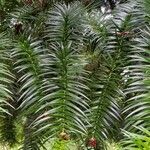
Cunninghamia lanceolata
Chinese-fir · China-fir · Cunninghamia · Alipa
Description
Source: leafsnapCunninghamia lanceolata is a species of tree in the cypress family, Cupressaceae. It is native to south-central and southeast China. Ornamentally C. lanceolata is commonly planted as a specimen tree in temperate zones.
🌳 Although it is commonly used for timber and furniture, china fir is notable for an aromatic resin that could be extracted for essential oils. This resin may have therapeutic uses and could also serve as a natural fragrance enhancer in perfumes. In addition, the wood’s rot-resistant properties make it suitable for outdoor construction and for crafting musical instruments because of its sound-resonating qualities. The tree’s foliage has likewise been investigated as a source of green pigment for natural dyeing.
Care Guide
💧 Water
Originating from subtropical regions, China fir thrives in environments with moderate moisture and consistent humidity, while also being able to tolerate brief periods of drought. It should be watered every 1 to 2 weeks. Typically grown outdoors, China fir benefits from mulching, which helps retain soil moisture and mimics its natural habitat.
How should I water my China fir to keep it healthy?
Watering your China fir is a simple task. One way to do it easily is by using a garden hose to slowly soak the soil. For mature trees, the garden hose is the best tool as they require a lot of water. However, smaller trees can be watered with a watering can or a smaller tool. It's important to avoid watering the leaves overhead, especially when the tree is young, as it can cause disease due to excessive moisture.
What do I do if I give my China fir tree too much or too little water?
Overwatering your China fir can be caused by poor soils that do not allow water to drain effectively. If this happens, your plant will likely start to decline. To fix this issue, you can either improve the soil's drainage by amending it or transplant your China fir to a better location. If you have your China fir in a pot, you may also need to repot it with looser soils and a container that has better drainage. Overwatering can lead to diseases, so you should treat them immediately if they occur. On the other hand, if your China fir is underwatered, simply water it more often and it will recover. To determine if your China fir is overwatered, look at the foliage, especially the new growth. Discolored or easily breakable new growth indicates too much moisture. Standing water or slow drainage in the plant's growing area is another sign of overly moist soil. Underwatered China fir trees will have sparse, brown leaves. Consider recent heavy rain or consistently high temperatures if you notice these symptoms.
How many times should I water my China fir?
The mature China fir tree is highly resistant to drought and can survive solely on rainfall. Typically, it only needs to be watered once a week during the hottest months. In other seasons, watering may not be necessary at all, unless the tree has been newly planted. Newly planted trees should receive regular watering to ensure stable soil moisture and promote root establishment. However, it is crucial to avoid overwatering, as the China fir cannot tolerate standing water. When uncertain, it is safer to refrain from watering rather than risking overwatering.
How much water does my China fir tree need?
During the peak of summer, watering your China fir becomes necessary. It is generally recommended to provide about one inch of water per week. However, this amount may vary if there has been significant rainfall. If it has rained one inch or more during that week, you can skip watering your China fir altogether. Additionally, newly planted China fir requires more water during the establishment period. In this case, watering once every one to two weeks for the first few growing seasons is typically sufficient.
How do I water my China fir tree in different seasons?
The China fir tree requires the most water during the summer when it's hot. During this time, water it once a week if there's no rain. In other seasons, the China fir can often survive without any water. In spring and fall, you might need to water it if it's unusually hot, but this is rare. Unlike most plants, the China fir keeps growing in winter and doesn't go dormant. However, it still requires little water during winter as the cool temperatures don't dry out the soil quickly.
☀️ Light Full sun
China fir flourishes in strong, intense sunlight but also tolerates somewhat reduced light. Its healthy growth is largely determined by how much light it gets. Conditions like its native environment—open spots in dense forests that receive abundant light—are best. Both too little and too much light can negatively affect its overall health.
What are the sunlight requirements for China fir?
China fir requires full sun, defined as above 6 hours of sunlight, but it can also tolerate partial sun, about 3-6 hours of sunlight. It's essential to observe how sunlight moves through your garden to select spots that provide the right balance of light and shade, ensuring the plants thrive. Originating from dense forest clearings that receive plenty of light, China fir achieves optimal growth under high-intensity sun exposure but can accept slightly less light, mimicking its natural habitat conditions.
What are the essentials for growing China fir indoors with artificial lighting?
Indoor China fir plants require adequate lighting to support their growth, especially when natural sunlight is limited. Artificial lighting can be a vital solution, with the recommendation to use LED lights for their ability to provide specific wavelengths of light needed by plants. Full sun plants should receive 30-50W/sq ft of artificial light, partial sun plants 20-30W/sq ft, and full shade plants 10-20W/sq ft. The artificial light source should be placed 12-36 inches above the plant to mimic sunlight and left on for 8-12 hours per day, depending on the plant species' natural daylight hours.
What are the signs of inadequate or excessive light exposure in China fir?
China fir can show several symptoms when the lighting conditions are not optimal. Inadequate light can lead to smaller new leaves, leggy growth, faster leaf drop, slower or stopped growth, and pale or irregularly colored new leaves. Conversely, excessive light can cause chlorosis, where leaves turn yellow due to chlorophyll breakdown, sunscald with pale or necrotic spots on leaves and stems, leaf curling as a defense against water loss, wilting from excessive transpiration, and leaf scorching with brown, dry edges or patches on leaves. These symptoms indicate the plant's struggle with its light environment.
How can I manage light exposure for China fir to ensure healthy growth?
To manage light exposure effectively for China fir, whether indoors or outdoors, gradual adaptation to sunlight is key. For indoor plants, gradually move them to sunnier locations to receive at least 6 hours of direct sunlight daily, use south-facing windows, and consider artificial lighting if moving the plant is not feasible. Outdoors, move plants to sunnier spots gradually to avoid sunburn. If light obstruction is an issue, prune trees or branches blocking the sunlight or transplant smaller plants to sunnier areas. Remember that parts of the plant damaged by inappropriate light may not recover, but new growth will be healthy with better light conditions.
🌡️ Temperature 10–35°C
China fir grows best in its natural temperature range of 50 to 95°F (10 to 35℃). To accommodate seasonal changes, it is recommended to keep the plant within that comfortable range, making gradual adjustments as necessary.
What is the optimal temperature range for the China fir?
The China fir, or Cunninghamia lanceolata, thrives best in its native temperature range of 50 to 95°F (10 to 35°C). It has adapted well to season changes and prefers to be kept within this temperature range, with incremental adjustments made as necessary to accommodate the changing seasons. The plant possesses strong cold resistance, making it generally unnecessary to take special frost protection measures during the winter months. However, if winter temperatures are expected to fall below -25°C, it's important to protect the plant from the cold by wrapping the trunk and branches with insulating materials such as non-woven fabric or cloth. To help prevent drought and ensure the plant has adequate water during winter and early spring, it's recommended to water the plant abundantly before the first freeze of autumn, ensuring the soil remains moist as it enters a frozen state.
How does low temperature affect the China fir and what can be done?
The China fir is notably cold-tolerant and performs best when the temperature remains above 10°C. Throughout winter, it is advised to keep the temperature above -15°C. If temperatures drop below -25°C, the China fir may not show immediate signs of distress during winter, but come spring, the branches might become brittle and dry, and new shoots may fail to emerge. To mitigate these effects, any dead branches that have failed to bush out with new leaves in spring should be pruned away, promoting healthier growth and recovery from the cold damage.
How does high temperature affect China fir and what are the solutions?
During the summer months, it is crucial to ensure that the China fir is not exposed to temperatures exceeding 35°C. Should the temperature rise above 38°C, the leaves may start to lighten in color, tips may become dry and withered, and the plant may become more susceptible to sunburn. To protect the China fir from these high-temperature stresses, trim away any sunburned and dried parts to promote healthy regrowth. Moving the plant to a location where it can enjoy shade during the intense midday and afternoon sun, or using a shade cloth, can offer further protection. Additionally, watering the plant in the morning and evening will help keep the soil moist and support the plant’s needs during hotter periods.
💨 Humidity normal (40-60%)
This plant will thrive in moderate humidity, which is probably the level in your home. However, misting it a few times a week can be very beneficial. Make sure the room has good ventilation.
🪴 Soil 5-7
🌱 Fertilizer
China fir has specific nutrient needs and does not require heavy fertilization. Fertilizing in spring is best for promoting its growth. Supplying nutrients enhances its health, increases its resistance to pests and diseases, and helps sustain its long lifespan.
Why should I put fertilizer on my China fir tree?
Spring is the best time to fertilize China fir, as it promotes strong and robust growth. Keep in mind that this plant has a long lifespan and requires proper support. By adding nutrients to the soil, you can enhance the plant's overall health, enabling it to better withstand threats from pests and diseases. This will, in turn, prevent stunted growth and maximize its lifespan.
When should I fertilize my China fir tree?
China fir is a type of plant that doesn't need a lot of extra nutrients, unlike typical garden plants. However, the growing medium may not always provide enough nutrients for healthy growth. To ensure optimal growth, it is recommended to fertilize China fir in the spring before new growth begins.
When is the best time to not use fertilizer on my China fir tree?
While many plants benefit from regular fertilization on a monthly or weekly basis, China fir is an exception. This particular plant does not need excessive nutrients, as it can actually suffer from overdosing on fertilizer. To ensure its well-being, it is important to only apply fertilizer during the spring season and refrain from doing so in the summer, fall, and winter. Additionally, it is advised to avoid adding any fertilizer or organic matter to the soil during these seasons.
What kind of fertilizer does my China fir tree need?
The age of your plant is important when choosing the right fertilizer. Although China fir doesn't need a lot of extra nutrients, it's still beneficial to use a balanced plant food to promote healthy root development and growth. Just avoid fertilizers with high nitrogen levels.
How can I put fertilizer on my China fir?
To ensure proper fertilization of China fir, it is crucial to consider both the timing and application process. Apply the fertilizer once during spring, specifically at the plant's base, taking care to avoid contact with the trunk. If you are using granulated fertilizer, cover the pellets with a thin layer of soil to enhance absorption into the soil.
🪴 Pot & Repot
✂️ Pruning
The China fir is an evergreen tree known for its conical shape and needle-like foliage. To improve its structure and promote growth, it is best to prune the China fir from early to late winter. During this time, remove any dead or diseased branches. Thinning the tree will enhance air circulation and light exposure, which supports its overall health. For more detailed guidance, consult reliable sources.
🌿 Propagating
🐛 Diseases & pets
☠️ Toxicity
Characteristics
- Plant Type
- Tree
- Life Cycle
- Perennial
- Genus
- Cunninghamia
- Family
- Cupressaceae
- Hardiness Zone
- 6-9
- Mature Height
- 29.87 m
- Mature Spread
- 6.1 m
- Leaf Color
- Green, Blue, White
- Leaf Type
- Evergreen
- Flower Color
- Yellow, Brown, Green
- Flower Size
- 2.54 cm
- Bloom Time
- Spring, Winter
- Planting Time
- Spring, Summer, Autumn
- Harvest Time
- Mid summer, Late summer, Early fall
- Native Area
- Laos, China