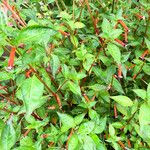
Cuphea ignea
Firecracker-plant · Cigar flower · Mexican cigar · Cigar plant · Cigarette Plant
Description
Source: leafsnapCuphea ignea, the cigar plant, cigar flower, firecracker plant, or Mexican cigar, is a species of flowering plant in the genus Cuphea of the family Lythraceae. It is a tropical, densely branched evergreen subshrub. This species, native to Mexico and the West Indies, produces small, tubular, bright red to orange flowers. Each flower is tipped with a thin white rim and two small purple-black petals. The flowers, which are attractive to hummingbirds and butterflies, resemble lit cigars, hence the name ignea, which is Latin for "fiery". The genus name Cuphea comes from the Greek word kyphos which means curved or humped; this is thought to refer to the shape of the seeds. The leaves are small, elliptical and of a bright green colour. It grows to about 60 cm (24 in).
🌳 Aside from its decorative appeal, the cigar plant serves an important ecological function as a principal nectar provider for hummingbirds and butterflies, making it a useful plant for gardeners who focus on pollinators. Its tubular, small cigar-like flowers are specifically adapted to attract these pollinators. Including them in gardens helps maintain environmental health and biodiversity by supporting various life cycles.
Care Guide
💧 Water Every 7 days
The cigar plant thrives in tropical climates and requires regular moisture and high humidity. Although it can tolerate some drought, it grows best in evenly moist soil, which means it benefits from weekly watering. Often grown outdoors as an evergreen, consistent watering during its growing season is crucial for achieving lush foliage and vibrant blooms.
How should I water my Cigar plant?
When watering your Cigar plant, you have flexibility in choosing the watering tools. Watering cans, hoses, or cups will all work effectively. It is important to water the plant directly to the soil, making sure to evenly moisten all areas to provide water to the entire root system. Using filtered water is recommended to avoid harmful particles in tap water. It is also beneficial to use water at room temperature or slightly warmer, as extremely cold or hot water may shock the plant. However, the Cigar plant generally responds well to any type of water.
What should I do if I give my Cigar plant too much or too little water?
Outdoor plants, especially newly planted ones or seedlings, are prone to lack of watering. Remember to water them sufficiently for a few months when they are small or newly planted. Once their roots are established, they can rely on rain most of the time. On the other hand, overwatering is more likely to happen when Cigar plants are potted. If you accidentally overwater your Cigar plant, take immediate action to minimize the damage. Stop watering the plant and check its roots by removing it from the pot. If the roots show no signs of root rot, you can return the plant to its container. However, if there are signs of root rot, trim the affected roots and consider applying a fungicide. Repot the plant in well-draining soil. For underwatered Cigar plants, simply increase the frequency of watering. When a Cigar plant is underwatered, its leaves will droop, dry out, and fall off. Water the plant adequately, and the leaves will quickly regain their fullness. Make sure to adjust your watering frequency promptly when underwatering occurs.
How often should I water my Cigar plant?
When watering your Cigar plant, it's important to remember that it doesn't always require a lot of water. If only a few inches of soil have dried since the last watering, you can give it about five to ten ounces of water each time. You can also determine how much water to give based on the moisture of the soil. Pay attention to how many inches of soil have dried out between waterings. To ensure your Cigar plant gets the right amount of moisture, water until all the dry soil layers have been moistened. If more than half of the soil is dry, give additional water until you see excess water draining from the pot's holes. If your Cigar plant is in an outdoor area with plenty of rain, it may not need extra watering. When it's young or establishing, it needs 1-2 inches of rain per week. As it grows, it can rely on rainwater alone, except during hot weather without rainfall for 2-3 weeks, when a full watering should be given to prevent stress.
How do I know if I'm giving my Cigar plant enough water?
The Cigar plant is often overwatered, which can be identified by yellowing leaves, leaf dropping, shriveling, and root rot. On the other hand, an underwatered Cigar plant will wilt and have brown or brittle leaves. Regardless of whether it is overwatered or underwatered, intervention is necessary to restore the plant's health.
How should I water my Cigar plant when it is growing at different stages?
When the Cigar plant is young, especially in its seedling stage, it requires more water than when it is mature. It is important to keep the soil consistently moist during the early stages to promote root development. This applies to any Cigar plant that has been transplanted to a new location. Additionally, providing the correct care can lead to the development of showy flowers and fruits in the Cigar plant. If your plant is in a flowering or fruiting phase, it will likely need slightly more water to support these structures.
☀️ Light Full sun
The cigar plant does best when given plentiful sunlight. While it can endure only part of the day's sun, a generous amount promotes its best growth. In its native habitats it adapted to prosper under such bright, sunlit conditions. Too little light may rob it of vigour, whereas too much can harm its foliage.
What are the sunlight requirements for a Cigar plant?
The Cigar plant, also known by its botanical name Cuphea ignea, thrives best in conditions of full sun, which means it requires more than 6 hours of sunlight daily. It can also grow in partial sun, approximately 3-6 hours of sunlight a day. It's crucial to watch how sunlight moves through your garden to find the perfect balance of light and shade for your plants, ensuring their growth and happiness.
What are the essential care tips for a Cigar plant regarding sunlight?
Cigar plants require extensive exposure to sunlight for optimal growth, as they are accustomed to sun-drenched conditions in their native environments. Inadequate sunlight can weaken the plant, while too much can damage its foliage. If natural light is insufficient, especially indoors or during winter, artificial lighting can be used to promote growth. LED lights are recommended for indoor plants; they should provide 30-50W/sq ft for full sun plants, 20-30W/sq ft for partial sun plants, and 10-20W/sq ft for full shade plants. The artificial light source should be placed 12-36 inches above the plant for 8-12 hours per day to mimic natural daylight as closely as possible.
What are the symptoms of insufficient or excessive sunlight in Cigar plants?
Cigar plants show various symptoms when they don't receive enough sunlight, including smaller new leaves, leggy or sparse growth, faster leaf drop, slower or no new growth, and pale new leaves. Excessive sunlight can cause chlorosis, sunscald, leaf curling, wilting, and leaf scorching, affecting the plant's ability to photosynthesize and overall health. Adjusting the light conditions by gradually moving plants to sunnier or shaded locations as appropriate can help mitigate these issues.
How can I address the lighting issues for my Cigar plant?
To address insufficient sunlight, gradually move your Cigar plant to a sunnier spot until it gets at least 6 hours of direct sunlight daily. Use south-facing windows and keep curtains open for maximum exposure. If moving the plant isn't feasible or for additional light, consider artificial lighting, keeping a lamp on for at least 8 hours a day or investing in plant grow lights. For outdoor plants, avoid sudden changes to prevent sunburn, and for ground-planted species, prune obstructions or transplant them during their dormant period to sunnier locations. Keep in mind that while parts of the plant that suffered from lack of light may not recover, new growth should be healthy with proper light adjustments.
🌡️ Temperature 20–37.8°C
Cigar plant is native to areas where temperatures remain between 68 and 100°F (20 to 38 ℃). It performs best within that temperature range, and adjustments may be needed during seasons when temperatures fall outside it.
What are the ideal temperature conditions for a Cigar plant?
The ideal temperature range for a Cigar plant, also known by its botanical name Cuphea ignea, is between 68 to 100\u00b0F (20 to 38 \u2103). These plants are native to environments that maintain these temperatures. They are extremely heat-loving, and exposure to cold can cause them damage. When temperatures start to drop, particularly in autumn, it's recommended to move outdoor-grown Cigar plants indoors. Placing them near a bright window while keeping them away from direct heat sources like heaters helps maintain the necessary warmth. During winter, ensuring the temperature stays above 20\u00b0C is crucial for their growth, as temperatures around 5\u00b0C or lower can be harmful.
How should you care for a Cigar plant in low temperatures?
Cigar plants prefer warm conditions and struggle with low temperatures. They thrive best when temperatures are kept above 20\u00b0C and require special care during winter to stay above 5\u00b0C. Exposure to temperatures below 1\u00b0C can lead to lighter leaf colors, and frost damage may cause the leaves to turn brown or black, accompanied by wilting and drooping. To care for a Cigar plant in low temperatures, you should trim off the frost-damaged parts and immediately move the plant to a warmer indoor environment. Placing the plant near a south-facing window ensures it receives ample sunlight, yet it's important to avoid placing it near heaters or air conditioning vents to prevent the air from getting too dry.
What should you do if a Cigar plant is exposed to high temperatures?
During the summer, it's important to ensure the Cigar plant's environment doesn't exceed 38\u00b0C, as temperatures above 43\u00b0C can lighten the color of the leaves and increase the risk of sunburn. To care for a Cigar plant exposed to high temperatures, trim away the parts of the plant that are sunburned or dried up. Moving the plant to a shaded location can protect it from the harsh midday and afternoon sun. Additionally, watering the plant in the morning and evening helps maintain soil moisture and prevents the plant from drying out.
💨 Humidity normal (40-60%)
This plant will thrive in moderate humidity, which is probably the level in your home. However, misting it a few times a week can be very beneficial. Make sure the room has good ventilation.
🪴 Soil 5-6
🌱 Fertilizer
The best time to fertilize a Cigar plant is in early spring, as it comes out of dormancy. This stimulates overall growth and flower development. Fertilizing improves foliage, stems, and branches, and encourages flowers that are large, vibrant, and long-lasting. It helps move nutrients from the roots to the flowers and enhances the plant's health and resistance to disease.
🪴 Pot & Repot 2-3 years
To support the growth of a cigar plant, which can reach up to two feet tall, it's important to repot it every two to three years. The ideal time for repotting is in the spring, using a pot that is slightly larger than the current one. Consistently maintain moisture and provide partial sunlight to prevent stress, which will help ensure that the plant's vibrant tubular flowers thrive.
✂️ Pruning
The cigar plant showcases tubular red flowers and thrives with regular pruning in late spring, after it has finished blooming. Pruning helps remove dead or damaged stems, encourages bushier growth, and prevents legginess. Additionally, it enhances the plant's appearance, reduces the risk of disease, and improves air circulation, resulting in healthier plants.
🌿 Propagating
🐛 Diseases & pets
☠️ Toxicity
Characteristics
- Plant Type
- Shrub
- Life Cycle
- Perennial
- Genus
- Cuphea
- Family
- Lythraceae
- Hardiness Zone
- 10-12
- Mature Height
- 46 cm to 61 cm
- Mature Spread
- 46 cm to 61 cm
- Leaf Color
- Green
- Leaf Type
- Evergreen
- Flower Color
- Red
- Flower Size
- 2.54 cm to 5.08 cm
- Bloom Time
- All year round
- Planting Time
- Spring, Autumn
- Harvest Time
- All year round
- Native Area
- Mexico