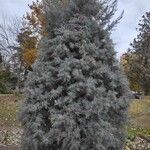
Cupressus arizonica
سرو نقره ای، سرو سیمین · Arizona cypress · Arizona smooth cypress · Cuyamaca cypress · Piute cypress
Description
Source: leafsnapCupressus arizonica, the Arizona cypress, is a North American species of tree in the cypress family Cupressaceae, native to the southwestern United States and Mexico. Populations may be scattered rather than in large, dense stands.
🌳 The Arizona cypress is a popular choice for gardeners due to its dense growth, which makes it ideal for blocking views and providing windbreaks. It can thrive in a wide range of soil types, light conditions, and watering regimes. Commonly used as garden hedges, Arizona cypresses also serve well as shade trees and striking specimen trees.
🎭 Endurance, Restoration, Ease
Care Guide
💧 Water Every 1-2 weeks
The Arizona cypress is well-suited to arid environments, demonstrating moderate drought tolerance. It thrives during dry spells with occasional watering. For optimal results, water the Arizona cypress once every 1-2 weeks, allowing the soil to dry slightly between waterings. As an evergreen, it retains moisture in its foliage, making it an excellent choice for water-conserving outdoor landscaping.
How should I water my Arizona cypress tree?
Watering your Arizona cypress is a simple task. To do it, you can use your garden hose to slowly soak the soil. This is especially suitable for mature trees that require a lot of water. However, for smaller trees, using a watering can or a smaller tool may be sufficient. It's important to avoid overhead watering, as it can cause disease, particularly in young trees.
What should I do if I give my Arizona cypress too much or too little water?
Sometimes, overwatering can happen because of poor soil conditions for your Arizona cypress. If the soil does not drain water properly, the plant will start to decline. In such cases, you can either improve the soil drainage by adding amendments or move the plant to a better location. If you have your Arizona cypress in a pot, you may need to use looser soil and a container that allows for better drainage. Overwatering can cause diseases, which should be treated right away. To fix an underwatered Arizona cypress, all you need to do is water it more frequently and it will recover. The easiest way to determine if your Arizona cypress has been overwatered is to look at its foliage, especially the new growth. If the new growth is discolored or fragile, it may indicate excessive moisture. You can also check for standing water or slow drainage in the plant's growing area as a sign of too much moisture. Underwatered Arizona cypress trees will show symptoms in their foliage too, with leaves becoming sparse and brown. Consider if there has been excessive rainfall or consistently high temperatures to help you assess the situation correctly.
How frequently should I water my Arizona cypress?
A mature Arizona cypress is drought-tolerant and can survive on rainfall alone. During the hottest months, watering once a week is sufficient, but in other seasons, it may not need any additional water. However, if you have recently planted a tree, regular watering is necessary to establish the roots. It's important to avoid overwatering because the Arizona cypress does not tolerate standing water.
How much water should I give my Arizona cypress tree?
During the summertime, it is necessary to water your Arizona cypress, usually giving it about one inch of water per week. However, if it has rained one inch or more in a particular week, you can skip watering. For newly planted Arizona cypress, it requires more water during the establishment period, which means watering approximately once every one to two weeks for the first few growing seasons.
How do I water my Arizona cypress tree throughout the year?
The Arizona cypress tree requires the most water in summer when it's hottest. During this time, it should be watered about once a week if there is no rainfall. In other seasons, it can often survive without any water. Occasionally, in spring and fall when it's exceptionally hot, you may need to give it some water, though this is rare. Unlike many other plants, the Arizona cypress doesn't fully enter dormancy in winter, so it continues to grow even in the coldest months. However, the water needs during winter are low because the cool temperatures don't cause the soil to dry out quickly.
☀️ Light Full sun
The arizona cypress does best when exposed to abundant light throughout the day, though it can also adapt to conditions with moderate light. It needs this exposure for vigorous growth and to remain healthy. Too much or too little light can stunt growth or cause disease. Its native habitat is characteristically sun-drenched.
What are the sunlight requirements for Arizona Cypress?
The Arizona Cypress thrives in environments that provide abundant daylight, necessitating over 6 hours of sunlight for what is termed 'full sun' exposure, and it can also adapt well to 'partial sun' conditions, which entail receiving about 3-6 hours of sunlight daily. Its health and growth are optimal under these conditions, and inadequate or excessive sunlight might lead to growth stunting or disease susceptibility. Observing how sunlight moves through your garden and choosing the right balance of light and shade is crucial for planting success, ensuring the plants get their essential light requirements while preventing the negative effects of too much direct sunlight.
How does the Arizona Cypress respond to artificial lighting?
Indoor Arizona Cypress plants can benefit significantly from artificial lighting, especially when natural sunlight is insufficient, like during winter or in less sunny indoor areas. Artificial lights should be chosen and positioned carefully to mimic natural sunlight conditions as closely as possible. LED lights are recommended because they can provide specific wavelengths needed by plants. Depending on the light requirements (full sun, partial sun, or full shade), artificial light should range between 10 to 50W per square foot. The light source should be placed 12-36 inches above the plant to simulate the sun’s position and kept on for 8-12 hours per day to mimic the natural length of daylight, promoting healthier and faster growth.
What symptoms indicate that Arizona Cypress is receiving inadequate sunlight?
Symptoms of inadequate sunlight in Arizona Cypress include smaller new leaves, leggy or sparse growth, faster leaf drop, slowed or halted new growth, lighter-colored new leaves, and conditions like chlorosis (leaves turning yellow), sunscald (pale or necrotic patches on leaves or stems due to intense sunlight), leaf curling, wilting from excessive water loss, and leaf scorching, indicating too much direct sunlight. These symptoms reflect the plant's struggle in suboptimal lighting conditions, either from too little or too much sunlight, hinting at the necessity for adjusting plant placement or lighting conditions to meet its ideal requirements.
What solutions can improve light conditions for indoor and outdoor Arizona Cypress plants?
To optimize growth for Arizona Cypress, gradually increase sunlight exposure to at least 6 hours daily by moving plants to sunnier locations each week, particularly for indoor plants. Using south-facing windows and keeping curtains open during the day can maximize sunlight exposure. For large or immovable plants indoors, consider artificial grow lights, keeping them on for at least 8 hours a day. Outdoors, ensure plants are moved to optimal spots, avoiding sudden changes that could cause sunburn. For plants in the ground, reduce sunlight obstructions by pruning trees or moving smaller plants during their dormant period to brighter areas with ample sunlight and good drainage. While parts of the plant affected by prior insufficient light may not recover, new growth should be healthy with improved light conditions.
🌡️ Temperature 0–35°C
The Arizona cypress is indigenous to Arizona, USA, where it grows in hot, dry conditions with temperatures from 10 to 35 ℃ (50 to 95℉). In cultivation it prefers temperatures between 0 and 35℃ (32 to 95℉) and can tolerate both severe cold and high heat. In winter, it is advisable to protect the plant from frost by applying a layer of mulch.
What is the native environment of the Arizona cypress?
The Arizona cypress is native to Arizona, USA, where it thrives in the hot and dry environment. It naturally grows in temperatures ranging from 10 to 35°C (50 to 95°F), perfectly adapted to its native landscape's challenging conditions.
What are the temperature preferences of the Arizona cypress in cultivation?
In cultivation, the Arizona cypress prefers a temperature range of 0 to 35°C (32 to 95°F). It has a strong cold resistance, capable of withstanding both extreme cold and heat. Despite its cold resistance, if winter temperatures are expected to drop below -35°C, cold protection measures like wrapping the trunk and branches with non-woven fabric or cloth are advisable.
How should the Arizona cypress be cared for during winter?
During winter, it's recommended to protect the Arizona cypress from frost with a layer of mulch, especially if winter temperatures are expected to be particularly severe. However, the tree usually doesn't require special frost protection measures. Before the first freeze in autumn, watering the plant abundantly to keep the soil moist can help prevent drought and water scarcity during the colder months.
How does low temperature affect Arizona cypress, and what are the solutions?
Arizona cypress is cold-tolerant and fares best when temperatures remain above -30°C. At temperatures falling below -35°C, the branches may not show immediate damage in winter but can become brittle, dry, and unlikely to produce new shoots by spring. To manage this, prune away any dead branches in spring that have failed to produce new leaves.
How does high temperature affect Arizona cypress, and what are the solutions?
During summer, it is essential to ensure that temperatures stay below 35°C for Arizona cypress. Exposure to temperatures above 38°C can cause the leaves to lighten in color and the tips to become dry and withered, increasing susceptibility to sunburn. Addressing this involves trimming away the damaged areas and possibly moving the plant to a shaded location or using a shade cloth to protect it from the midday and afternoon sun. Adequate watering in the morning and evening is also crucial to keep the soil moist and cool.
💨 Humidity dry (<40%)
This plant prefers dry conditions, so don't mist it. However, watering it less often can also thrive in higher humidity.
🪴 Soil 6-7
🌱 Fertilizer Every 30 days
Arizona cypress has particular nutrient needs and does not require heavy fertilization. Spring is the best time to feed it for optimal growth. Providing nutrients improves its health, increases its resistance to pests and diseases, and helps sustain a long lifespan.
Why should I put fertilizer on my Arizona cypress tree?
To promote healthy growth in Arizona cypress, it is important to fertilize it in the spring. Since the plant has a long lifespan, it requires support. Enhancing the soil with nutrients not only improves its overall health, but also helps it ward off common pests and diseases that can hinder growth or reduce its lifespan.
When should I fertilize my Arizona cypress for the best results?
In some cases, the growing medium might not provide sufficient nutrients for ideal growth. However, Arizona cypress is unique compared to typical garden plants. It doesn't need a lot of additional nutrients. It is best to fertilize Arizona cypress in the spring prior to new growth.
When is the best time to not add fertilizer to my Arizona cypress?
Arizona cypress does not need frequent fertilization like some other plants. Applying too much fertilizer can actually harm it and cause it to die back. If you want to fertilize, do it only in the spring and refrain from doing so in the summer, fall, or winter. Additionally, avoid adding any organic matter to the soil during those seasons.
Which fertilizer should I use for my Arizona cypress tree?
When choosing fertilizer for your Arizona cypress, remember that the age of your plant is important. Generally, this type of tree doesn't need a lot of extra nutrients. It's best to use a balanced plant food that promotes healthy root development and growth. Avoid fertilizers with high nitrogen contents.
How can I give nutrients to my Arizona cypress tree to help it grow?
Applying fertilizer to Arizona cypress is crucial, both in terms of timing and method. During springtime, apply the fertilizer at the base of the plant, being cautious not to get any on the trunk. If using granulated fertilizer, cover the pellets with a thin layer of soil to facilitate absorption into the soil.
🪴 Pot & Repot 2-3 years
When repotting Arizona cypress, select a pot that is 1–2 inches (2.5–5.1 cm) larger with good drainage. Use a well-draining potting mix. Repot in spring or fall, ensuring the root ball sits slightly below the rim of the flower pot. Water thoroughly after repotting and keep it in a warm spot with indirect sunlight.
✂️ Pruning
The Arizona cypress is known for its feathery, blue-green foliage and pyramidal shape. To keep it healthy and looking its best, prune it from early to late winter. Focus on removing dead branches and thinning out dense areas to improve air circulation. This process reduces stress on the tree, enhances its appearance, prevents disease, and encourages healthy growth. For specific pruning instructions, consult reliable guides.
🌿 Propagating
🐛 Diseases & pets
☠️ Toxicity
Characteristics
- Plant Type
- Tree
- Life Cycle
- Perennial
- Genus
- Cupressus
- Family
- Cupressaceae
- Hardiness Zone
- 3-9
- Mature Height
- 14.94 m
- Mature Spread
- 4.88 m
- Leaf Color
- Green, Blue, Gray, Silver
- Leaf Type
- Evergreen
- Flower Color
- Yellow, Green
- Bloom Time
- Late spring, Early summer, Mid summer
- Planting Time
- Spring, Autumn
- Harvest Time
- Mid summer, Late summer, Early fall
- Native Area
- Mexico