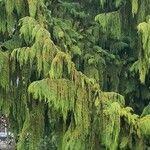
Cupressus nootkatensis
Alaska yellow-cedar · Alaska-cedar · Nootka cypress · Yellow cypress · Yellow-cedar
Description
Source: leafsnapCallitropsis nootkatensis, formerly known as Cupressus nootkatensis (syn. Xanthocyparis nootkatensis) is a species of trees in the cypress family native to the coastal regions of northwestern North America. This species goes by many common names including: Nootka cypress, yellow cypress, Alaska cypress, Nootka cedar, yellow cedar, Alaska cedar, and Alaska yellow cedar. The specific epithet "nootkatensis" is derived from its discovery by Europeans on the lands of a First Nation of Canada, those lands of the Nuu-chah-nulth people of Vancouver Island, British Columbia, who were formerly referred to as the Nootka.
🌳 Although nootka Cypress is commonly recognized for its stately presence in landscapes and as a source of high-quality lumber, its uses extend into other interesting areas. The essential oils extracted from its foliage have a distinctive fragrance profile, making them attractive for niche perfumery. Additionally, artisan craftsmen prize the wood for its resistance to decay, using it to create durable, intricately designed outdoor furniture. Beyond human use, nootka Cypress provides habitat for various bird species, including the threatened marbled murrelet.
Care Guide
💧 Water
☀️ Light Full sun
The Nootka cypress does best when it gets abundant sunlight throughout the day, though it can also survive in places with less daily light. Its native habitat is in regions with plentiful sunshine. Excessive or insufficient sun exposure can cause stress or damage to the plant.
🌡️ Temperature 5–32.2°C
Nootka Cypress is found naturally in Alaska and does best in cool temperatures from 41 to 90 ℉ (5 to 32 ℃). In winter, temperatures can reach as low as -40 ℉ (-40 ℃), so protecting the plant with mulch or burlap is important. In summer, excessive heat can harm the foliage, so providing shade or misting the plant to keep it cool is advisable.
💨 Humidity
🪴 Soil 5-6
🌱 Fertilizer
Nootka Cypress has specific nutrient needs and does not require heavy fertilization. Spring is the best time to apply fertilizer for optimal growth. Supplying nutrients improves its health, enhances its resistance to pests and diseases, and supports its long lifespan.
🪴 Pot & Repot
✂️ Pruning
🌿 Propagating
🐛 Diseases & pets
☠️ Toxicity
Characteristics
- Plant Type
- Tree
- Life Cycle
- Perennial
- Genus
- Cupressus
- Family
- Cupressaceae
- Hardiness Zone
- 4-8
- Mature Height
- 21.95 m to 30.48 m
- Mature Spread
- 4.57 m to 6.1 m
- Leaf Color
- Green
- Leaf Type
- Evergreen
- Flower Color
- Yellow
- Flower Size
- 2.54 cm
- Bloom Time
- Late spring, Early summer, Mid summer
- Planting Time
- Spring, Autumn
- Harvest Time
- Mid summer, Late summer, Early fall