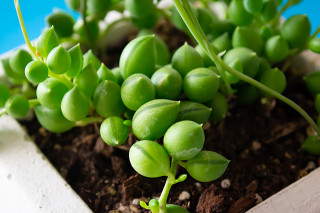
Curio herreanus
String of watermelons · String of Dolphins
Description
Source: leafsnapSenecio herreanus, which is also known as 'String of Watermelons, is a stunning succulent plant belonging to the Asteraceae family that is native to South Africa. It possesses trailing stems that grow over 12 inches long, and egg-shaped leaves that are large and elongated. The leaves are firm, bright-green, and coloured with purple stripes and translucent "window". This plant is beneficial in gardens and homes as it serves its function as a windowsill plant and hanging basket.
Care Guide
💧 Water Every 7-10 days
The string of pearls plant thrives in arid environments due to its high drought tolerance, needing water only once every three weeks. As an indoor plant, it prefers well-draining soil and carefully managed watering. Its bead-like leaves are designed to store moisture, demonstrating its adaptation for conserving water in dry conditions.
☀️ Light Partial sun
String of pearls grows best in moderate sunlight, matching its native habitat that gets a fair amount of sun. Intense sunlight can harm its leaves, while too little light may cause it to become leggy. It does not tolerate full sun exposure and can show signs of stress if placed in such conditions.
🌡️ Temperature 20–37.8°C
String of pearls is native to warm climates and naturally thrives in temperatures between 68 and 100 °F (20 to 38 ℃). In colder months, keep it in a room with temperatures above 68 °F (20 ℃) to prevent chilling damage.
💨 Humidity dry (<40%)
This plant prefers dry conditions, so don't mist it. However, watering it less often can also thrive in higher humidity.
🪴 Soil 6-7
🌱 Fertilizer
String of Pearls requires only light fertilizer applications 1-2 times a year during the growing season. Do not fertilize in winter or summer when the plant is dormant. Use reduced fertilizer on recently repotted plants and wait a couple of months after repotting before applying fertilizer. Fertilizing helps maintain healthy growth and encourages blooms.
🪴 Pot & Repot Every 2 years
When repotting String of pearls, choose a pot slightly bigger than the current one that has good drainage. Fill it with a gritty, well-draining succulent or cactus mix. Gently remove the plant from its old container, brush off excess soil, and place it at the same depth in the new pot. Wait a few days before watering to let any root damage heal. Repot in spring or fall and keep the plant in a brightly lit spot.
✂️ Pruning
To encourage healthy growth and prevent overcrowding, it’s beneficial to prune a string of pearls plant from early to late spring. Use sharp, sterilized scissors to trim away any long, spindly, or damaged stems. This promotes fuller growth and improves air circulation, reducing the risk of diseases and pests, while ensuring the plant maintains a vibrant appearance.
🌿 Propagating
🐛 Diseases & pets
☠️ Toxicity
String of watermelon plants are generally toxic to children, household pets and even livestock. The toxin can cause serious gastrointestinal disorders when ingested, so you will need to keep it out of reach of your pets and small children. Ensure to call a Veterinarian if you suspect ingestion of the plant by any member of your household.
Characteristics
- Plant Type
- Vine, Herb
- Life Cycle
- Perennial
- Genus
- Curio
- Family
- Asteraceae
- Hardiness Zone
- 9-12
- Mature Height
- 10 cm to 15 cm
- Mature Spread
- 49 cm
- Leaf Color
- Green
- Leaf Type
- Evergreen
- Flower Color
- Yellow
- Flower Size
- 2.54 cm
- Bloom Time
- Spring, Early summer
- Planting Time
- Spring, Summer, Autumn
- Harvest Time
- Late spring, Summer
- Native Area
- Namibia