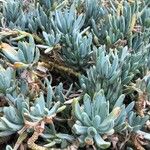
Curio talinoides
انگشت آبی · Blue fingers · Blue chalk sticks · Blue Chalksticks · Narrow-leaf Chalksticks
Description
Source: leafsnapCurio talinoides, commonly known as the pencil plant or silver torch, is a succulent native to South Africa. Belonging to the Asteraceae family, it is easily recognized by its long, thin, upright stems, which can grow up to 3 feet tall. The stems are adorned with small silver-grey leaves, providing the plant with its distinctive look. This pencil plant is notably low-maintenance and can thrive in various environments. It prefers well-draining soil and bright sunlight, although it can tolerate partial shade. Importantly, the soil should be allowed to dry out completely between waterings, as overwatering can cause root rot. Beyond its ornamental appeal, Curio talinoides also possesses medicinal properties. Its leaves have anti-inflammatory qualities and have traditionally been used to treat skin conditions such as eczema. In summary, Curio talinoides is a unique and easy-to-care-for succulent that is a favorite among gardeners seeking low-maintenance plants with striking features.
Care Guide
💧 Water Every 7 days
Narrow-Leaf Chalk Sticks, well-suited for arid regions, are highly drought-tolerant and only need watering every three weeks. Their slender leaves store water efficiently, allowing them to thrive in low-humidity environments. To prevent root rot, it is crucial to ensure proper drainage in containers, as these plants prefer dry soil over prolonged dampness.
☀️ Light Full sun
Narrow-Leaf Chalk Sticks, a species native to dry areas, flourishes in full sunlight, reflective of its origins which include intense light and scarcely any shade. It can also tolerate a bit of shade, demonstrating some versatility in its development.
What are the sunlight requirements for Narrow-Leaf Chalk Sticks (Curio talinoides)?
Narrow-Leaf Chalk Sticks (Curio talinoides) requires specific conditions regarding sunlight. For optimal growth, it needs full sun, which means it should receive above 6 hours of sunlight daily. However, it can also thrive in partial sun, with about 3-6 hours of sunlight. It's important to observe the movement of sunlight through your garden to find spots that offer a perfect balance of light and shade, ensuring the plant's wellbeing.
🌡️ Temperature 20–37.8°C
Although Narrow-Leaf Chalk Sticks can withstand some heat, it mainly flourishes and expands in the cooler seasons, becoming inactive in summer. It is crucial to shield it from scorching sun rays during the high summer temperatures. Moreover, watering must be reduced or even stopped in the peak heat periods to avoid root decay. The plant enjoys a robust growth phase during winter and spring seasons. As long as the temperatures remain above freezing, its growth momentum will continue undeterred.
💨 Humidity
🪴 Soil 6-7
🌱 Fertilizer
For the Narrow-Leaf Chalk Sticks, applying light amounts of fertilizer 1-2 occasions annually throughout the growth period is adequate. It is advisable to skip fertilizing during winter and summer when the plant is in a dormant state. Lower the amount of fertilizer for the plants that have been repotted and wait for a few months post repotting before you proceed with fertilizer application. The use of fertilizers contributes to robust growth and promotes flowering.
🪴 Pot & Repot Every 2 years
Repot narrow-leaf chalk sticks every two years in early spring. Use a slightly larger container to encourage growth. After repotting, place the plant in bright, indirect light and wait one week before resuming watering. This helps prevent root rot and ensures a successful transition.
✂️ Pruning
🌿 Propagating
🐛 Diseases & pets
☠️ Toxicity
All Senecio plants are toxic. Ingestion can cause fatal liver disease in animals when eaten in large quantities over a long period of time. Wear gloves when working with the plants; the sap can cause severe irritation. Be careful when planting Senecio species if you have children, pets, or livestock.
Characteristics
- Plant Type
- Succulent
- Life Cycle
- Perennial
- Genus
- Curio
- Family
- Asteraceae
- Hardiness Zone
- 9-12
- Mature Height
- 61 cm
- Mature Spread
- 91 cm
- Leaf Color
- Medium Sea Green, Dark Sea Green
- Leaf Type
- Evergreen
- Flower Color
- White
- Flower Size
- 1.02 cm to 1.52 cm
- Bloom Time
- Mid summer, Late summer, Early fall, Mid fall
- Planting Time
- Spring, Autumn
- Harvest Time
- Fall, Early winter
- Native Area
- South Africa