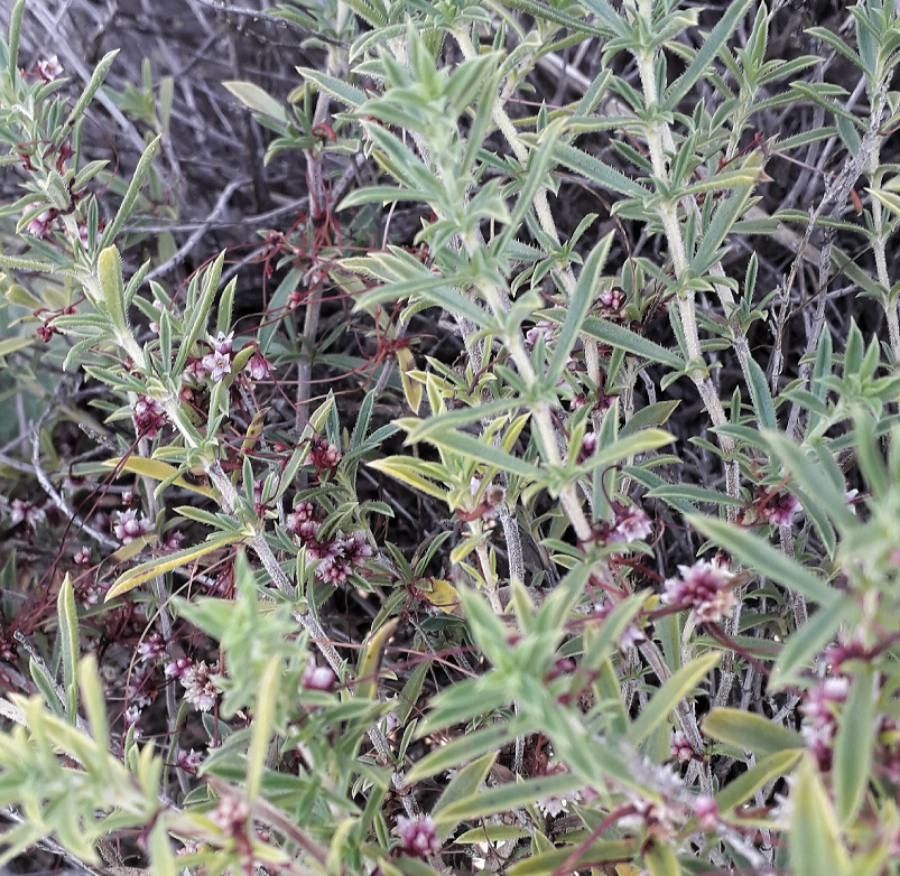
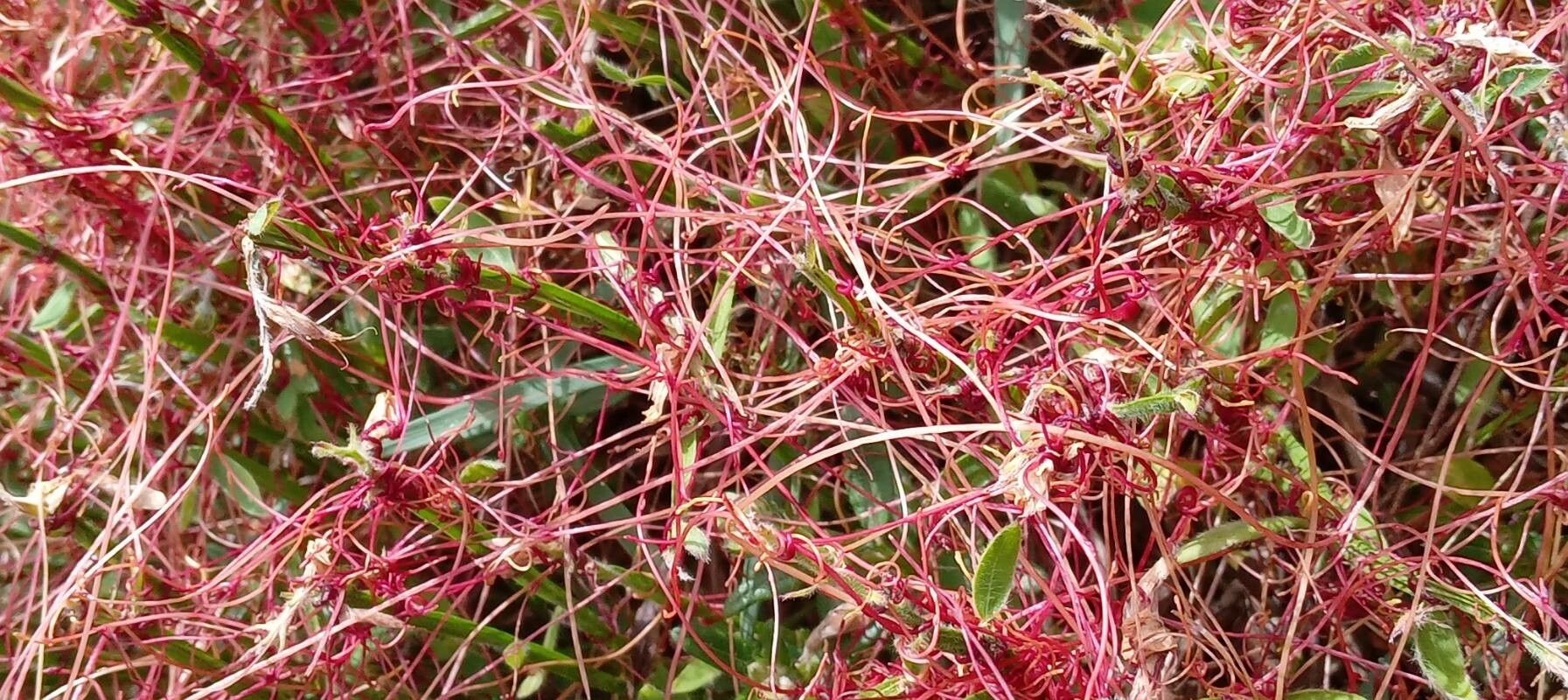
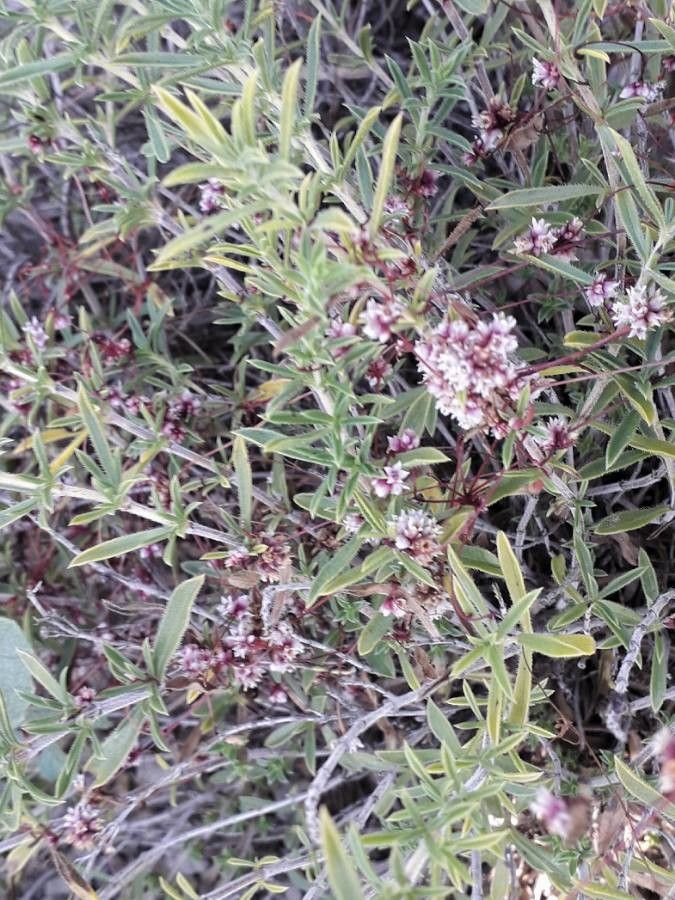
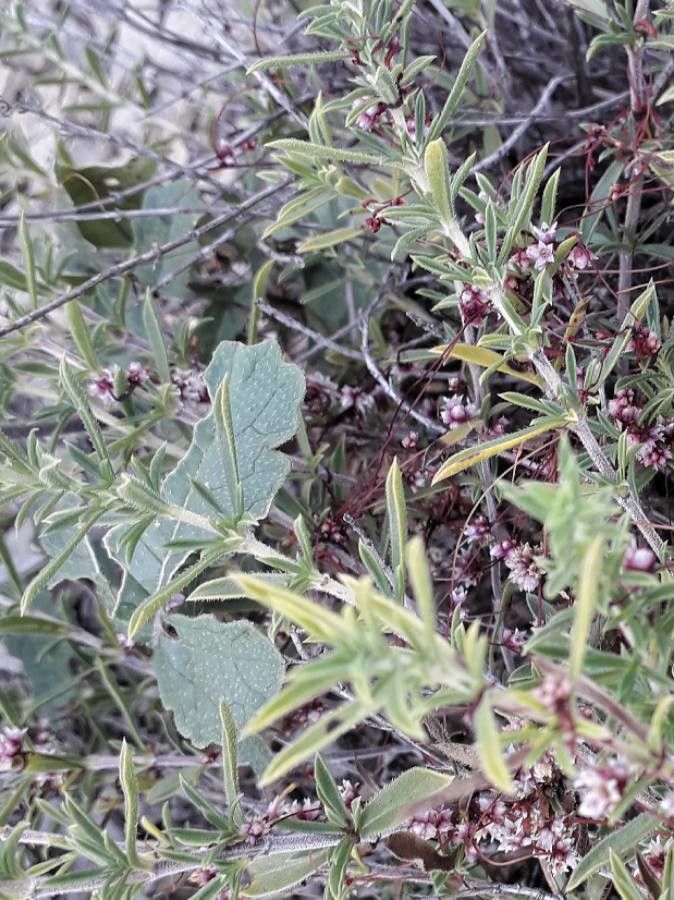
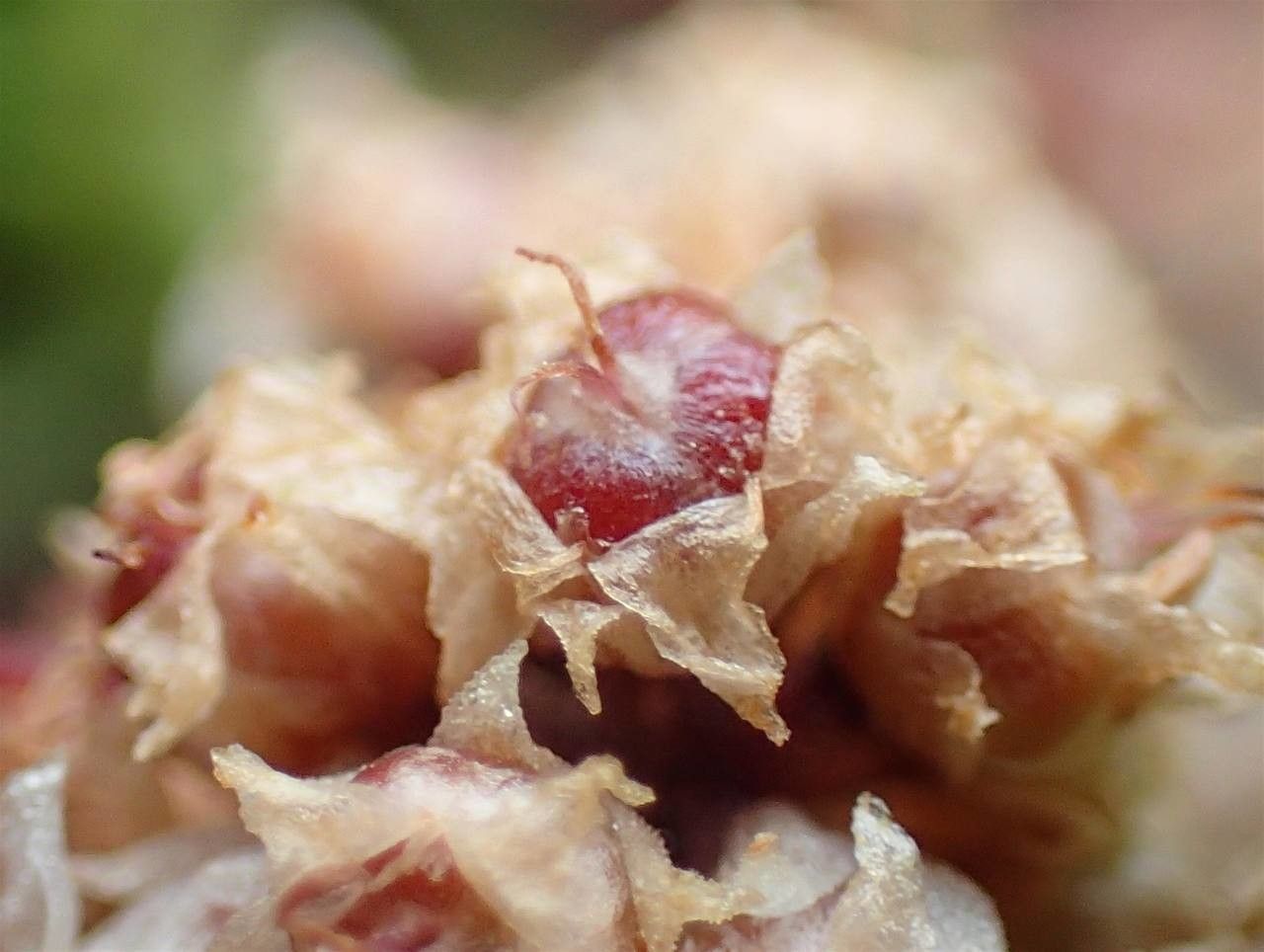
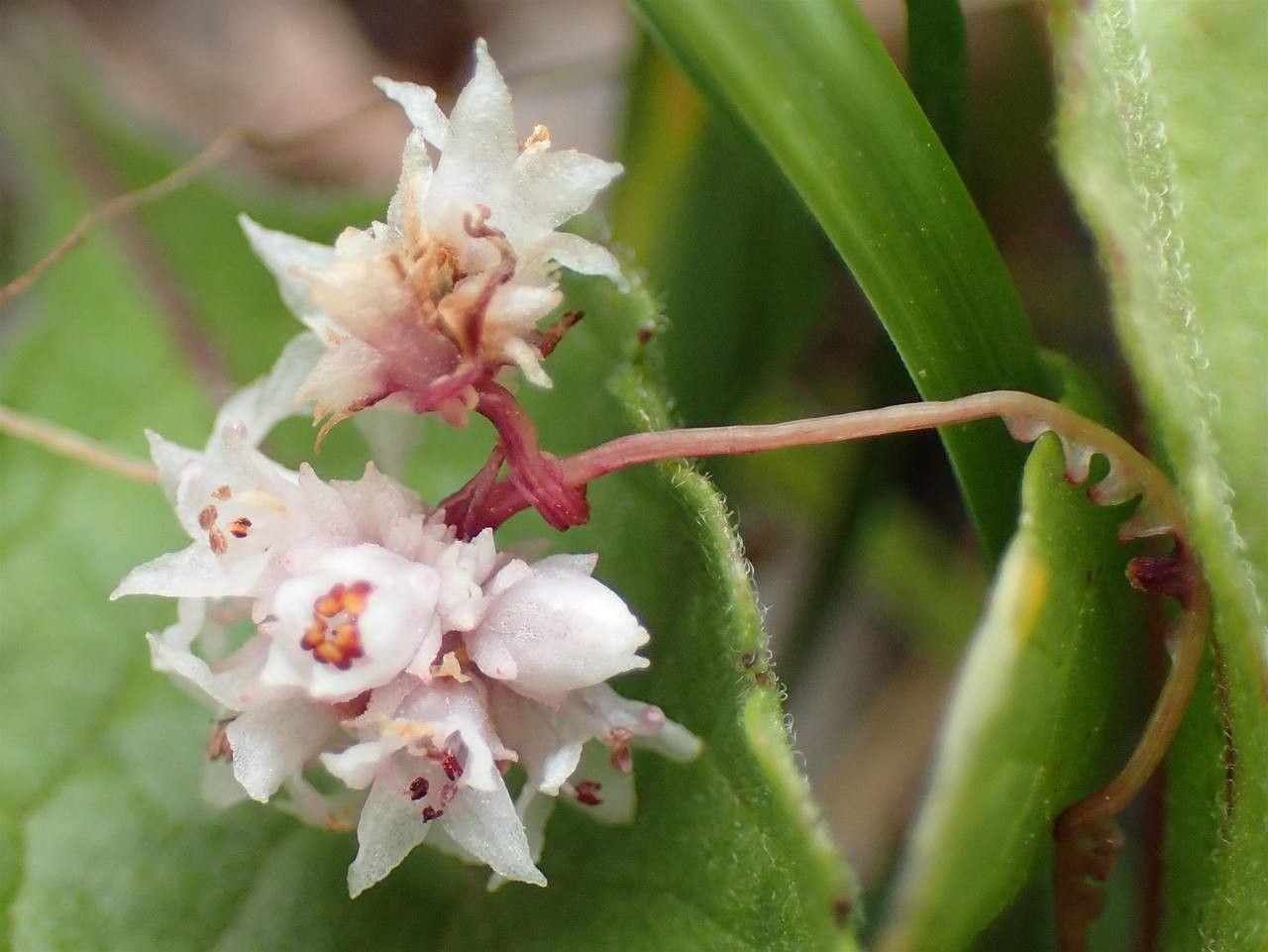
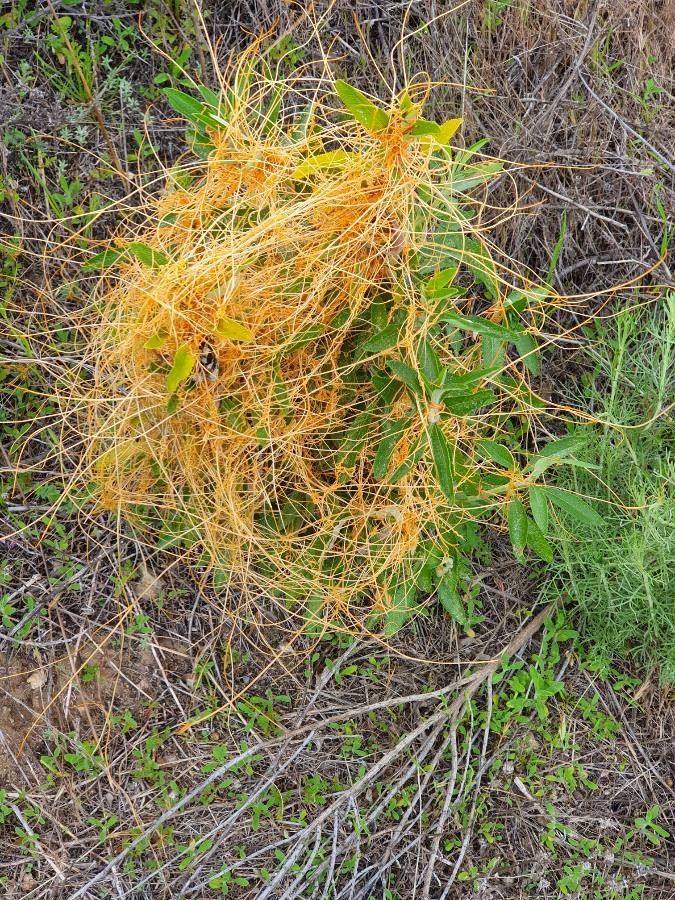
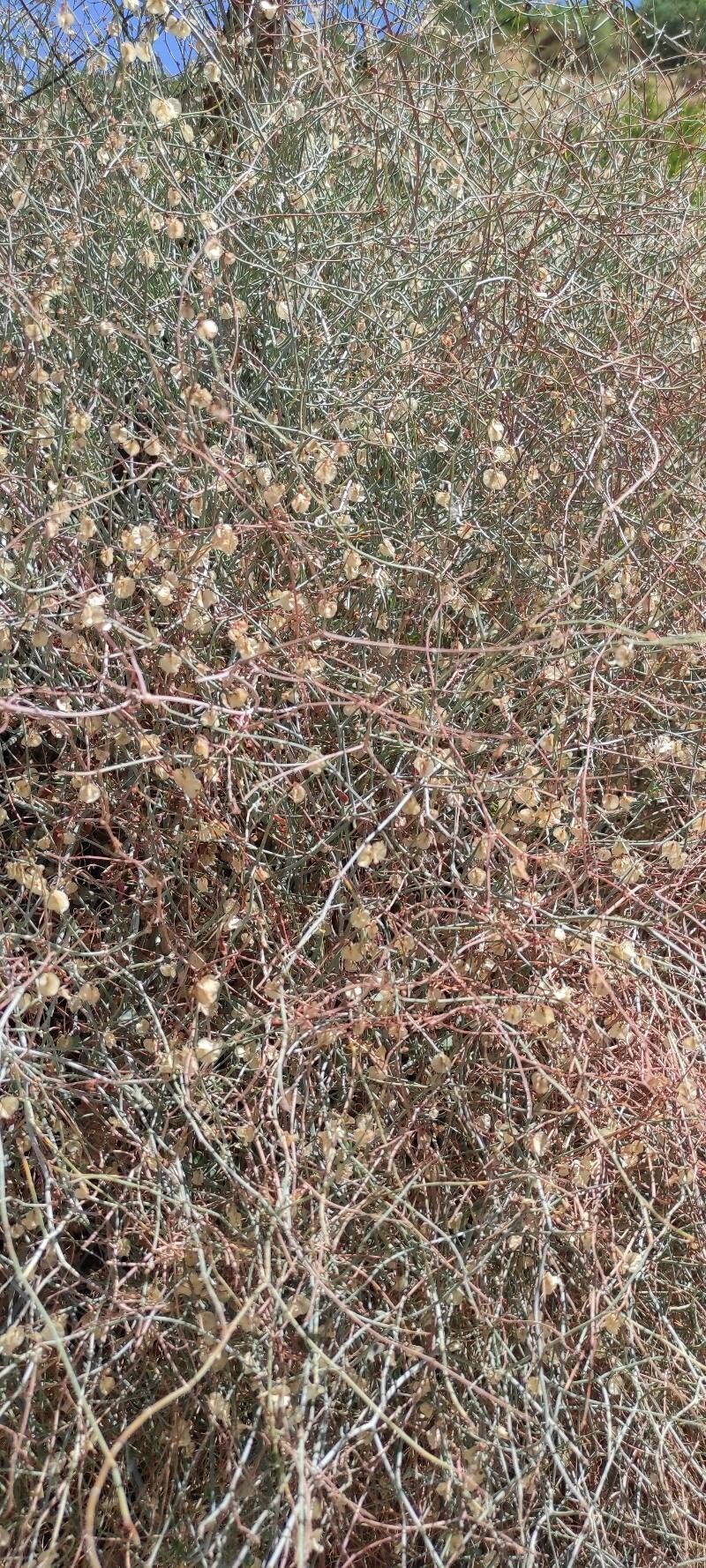
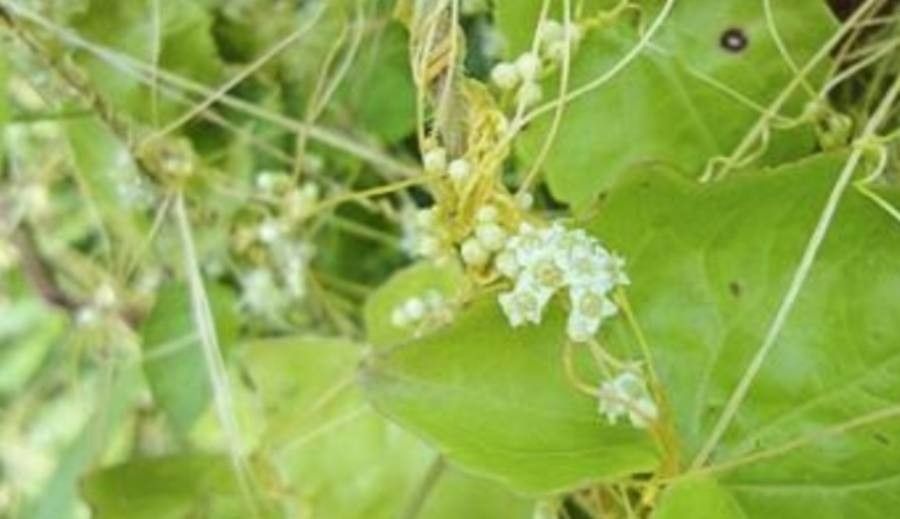
Cuscuta epithymum (dodder, lesser dodder, hellweed, strangle-tare) is a parasitic plant assigned to the family Cuscutaceae or Convolvulaceae, depending on the taxonomy. It is red-pigmented, not being photosynthetically active. It has a filiform habit, like a group of yarns. Its leaves are very small, like flakes. Its flowers, disposed in little glomerules, have a white corolla, with the androecium welded to the corolla. In Eurasia, this species of dodder would often attach itself to the Conehead thyme (Thymus capitatus), taking on the plant's pungency and from whence it also derived its host's Arabic name, al-ṣaʿitrah. During medieval times, dodder was often used as a medicinal cure in treating depression, but causes thirst and dryness of the mouth when consumed.
Clover dodder has strong resistance to disease and is generally not easily affected by illnesses. However, it can still be vulnerable to pests and diseases present in its environment. Such infections are typically minor. Regarding care, this plant needs moderate maintenance. It should be pruned regularly to preserve a neat appearance and encourage healthy growth. Fertilizing can also support increased flowering. Clover dodder is well suited for anyone with outdoor space, like a garden or patio, and does not demand extensive gardening experience. It may need more attention if grown indoors.
How to keep Cuscuta Epithymum.
Light
Clover dodder does best with ample sunlight but can cope in spots with reduced sun, tolerating lower light intensity. Originating from habitats with strong brightness, it grows vigorously in those conditions. Either too much or too little sun can stress the plant and affect its development.
Water
Clover dodder thrives in conditions of consistent moisture without becoming waterlogged, benefiting from weekly watering to stay healthy. Its resilience and ability to draw water from host plants allow it to survive in a range of climates. It can adapt to moderate hydration and withstand both drought and excessive rainfall.
Temperature
Clover dodder can tolerate a wide range of temperatures, but its distribution can still be restricted by different combinations of moisture and heat. It does best in warm summer climates with sufficient rainfall or watering. Extended periods of cloudy, rainy weather, as well as prolonged high temperatures, can increase the chance of Clover dodder dying. In winter, appropriate protection from cold can enhance the plant's survival.
Fertilizer
Usually a single fertilizer application in spring is enough for Clover dodder, though repeated feedings can maximize growth. Feed every one to one-and-a-half months. Fertilization improves the leaves’ appearance and function, helping maintain even color and a healthy texture. It also promotes root development and nutrient uptake for the plant’s long-term health.
Pruning
To control the spread of clover dodder and prevent it from overtaking host plants, it is important to prune it from early to late spring. Focus on trimming tangled or damaged sections at the nodes to encourage healthier regrowth. This practice also helps limit seed production and preserves the biodiversity of your garden.
Botanical profile.
- Plant Type
- Herb, Vine
- Life Cycle
- Perennial, Annual
- Genus
- Cuscuta
- Family
- Convolvulaceae
- Hardiness Zone
- 5-9
- Mature Height
- 91 cm
- Mature Spread
- 30 cm to 91 cm
- Leaf Color
- Yellow, Gold
- Leaf Type
- Evergreen
- Flower Color
- White, Pink
- Flower Size
- 0.25 cm
- Bloom Time
- Summer
- Planting Time
- Spring, Summer, Autumn
- Harvest Time
- Late summer, Early fall, Mid fall
- Native Area
- Libya, Egypt, Turkey, Morocco, Belarus, Germany, Jordan, Estonia, Romania, Latvia, Belgium, France, Netherlands, Tunisia, Bulgaria, Armenia, Poland, Greece, Ukraine, Lebanon, Lithuania, Norway, Afghanistan, Syria, Italy, Kazakhstan, Spain, Switzerland, Denmark, Finland, Israel, Iran, Albania, Ireland, United Kingdom, Hungary, Algeria, Azerbaijan
Other names.
Reader questions.
How should I water my Clover dodder plant so it grows best?
When watering the Clover dodder, it is important to use filtered water at room temperature. Tap water may contain harmful particles for this plant. The Clover dodder originates from a warm environment, so colder water may shock its system. Avoid overhead watering, as it can cause issues with the foliage. Instead, apply filtered room temperature water to the soil until it is fully soaked. This will benefit the plant by moisturizing the roots and helping them spread and collect nutrients in the soil.
What are the sunlight requirements for Clover dodder?
Clover dodder benefits greatly from generous sunlight exposure, thriving best in conditions where it can receive full sun for more than 6 hours a day or partial sun, ranging from about 3-6 hours. It originates from naturally bright habitats and shows robust growth under ample light. However, both excessive and insufficient sunlight can stress the plant, affecting its development. It's vital to observe the movement of sunlight through your garden, selecting locations that offer the right balance of light and shade to ensure your plants' well-being.
What should I do if I give my Clover dodder too much or too little water?
Both overwatering and underwatering can harm your Clover dodder plant, but overwatering is more common. When the plant gets too much water, its stems and leaves can wilt and turn yellow. Overwatering for a long time can also cause diseases like root rot, mold, and mildew, which can kill the plant. Clover dodder has good tolerance for drought, so underwatering is less likely. However, it can still happen and you will notice brittle, brown leaves if it does. It's important to recognize signs of overwatering promptly. Some diseases caused by overwatering, like root rot, may not be fixable if you wait too long. If you spot early signs of overwatering, reduce your watering right away. Check the soil quality where your Clover dodder grows. If it drains poorly, replace it with loose, well-draining potting mix. If you see signs of underwatering, simply water more regularly until the signs improve.
How should indoor plants be managed for optimal growth?
Indoor plants require sufficient lighting to grow optimally, especially when natural sunlight is limited, such as during winter or in less sunny spaces. Artificial lights, such as LED lights, provide a crucial alternative by offering the specific wavelengths needed for plant growth. For full sun plants, 30-50W/sq ft of artificial light is recommended; partial sun plants need 20-30W/sq ft, while full shade plants require 10-20W/sq ft. The artificial light source should be placed 12-36 inches above the plant to mimic natural sunlight conditions. Most plants benefit from 8-12 hours of light per day, imitating the natural daylight duration for the species.
How often should I water my Clover dodder plant?
If your Clover dodder plant is in a pot, the most precise way to determine if it needs water is by checking the soil moisture. Simply stick your finger into the soil and if the top two to three inches are dry, then it's time to water. For Clover dodder plants grown outdoors in the ground, you can use a similar method to test the soil moisture. When the first few inches of soil have dried out, it's a sign that it needs watering. Typically, during the spring and early fall, you'll need to water this plant about once a week using this method. However, in extremely hot weather, you may need to increase the watering frequency to about twice a week or even more. It's worth noting that mature and well-established Clover dodder plants have a commendable ability to withstand drought.
What are the signs of inadequate lighting for Clover dodder?
Clover dodder exhibits several symptoms when exposed to poor light conditions. These include smaller new leaves, leggy or sparse growth, quicker leaf drop, slowed or ceased growth, lighter-colored new leaves, chlorosis (yellowing leaves due to chlorophyll breakdown), sunscald (damage from intense light exposure), leaf curling (a defense against excessive sunlight), wilting (due to water loss from overexposure), and leaf scorching (brown, dry leaf edges). These symptoms indicate the need for a change in the plant's light environment.
How much water does my Clover dodder require?
When watering your Clover dodder, it's important to be generous with the amount of water you give. Make sure the first two to three inches of soil are dry before watering, and then give the plant a thorough watering that soaks the soil completely. You'll want to add enough water that it flows through the drainage holes at the bottom of the pot. If you don't see any excess water draining, it means you haven't given enough water. However, be careful not to let the water accumulate in the soil, as this can harm the plant. On the other hand, if water isn't draining properly, it could mean the soil isn't draining well, which is not good for the plant's health. If the plant is outside, it should receive about 1 inch of rain per week.
What are the strategies for improving light conditions for Clover dodder?
To enhance light conditions for Clover dodder, consider gradually relocating plants to sunnier spots, providing at least 6 hours of sunlight daily. For indoor plants difficult to move or lacking natural light, use artificial lighting like desk or ceiling lamps for a minimum of 8 hours a day, or invest in grow lights. When moving plants outdoors, ensure a gradual transition to avoid sunburn. If natural light is obstructed, identify and reduce these barriers, such as by pruning trees. For ground-planted species, transplanting during the dormant phase can also help achieve better light exposure.
How do I water my Clover dodder when it is at different stages of growth?
The water needs of the Clover dodder change depending on its growth stages. In the first few years of its life or when transplanting to a new location, it requires more water than usual. This is because it focuses on growing new roots to support future growth, which need extra moisture. As the plant matures, it requires less water. Additionally, during the bloom period, the Clover dodder may need more water since flower development relies on moisture.
How do I water my Clover dodder throughout the year?
The Clover dodder has different water needs in different seasons. In the hottest months of the year, it will need the most water. You may have to water it more than once a week, depending on how quickly the soil dries out. On the other hand, during the winter, the plant goes into a dormant phase where it requires much less water. In fact, you may not need to water it at all during this time. If you do choose to water it in winter, make sure not to do it more than once a month. Overwatering during this time can increase the risk of disease for your Clover dodder.
What's the difference in how I should water my Clover dodder inside versus outside?
When growing the Clover dodder indoors, it is important to consider that the soil in a container can dry out faster compared to ground soil. Additionally, if there are drying elements like air conditioning units present, the Clover dodder will need to be watered more frequently compared to if it was planted outside. In such cases, watering the Clover dodder outside may not be necessary, especially if there is regular rainfall to keep the plant alive. On the other hand, if the plant is grown indoors, it will need more watering since it won't have the option of soaking up rainwater from the soil.