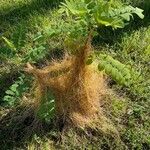
Cuscuta salina
Saltmarsh dodder · Goldenthread
Description
Source: leafsnapCuscuta salina is a species of dodder known by the English name salt marsh dodder and is a native plant of western North America. The habitat includes coastal tidal wetlands in California, as well as saline habitats away from the coast, such as vernal pools and salt flats. Salt Marsh Dodder is a parasitic plant, wrapping orange-colored stems around natural wetland vegetation and absorbing nutrients of host plants via their specialized structures called haustoria.
🎭 Affection, Fortune-telling, Knot-based magic
Care Guide
💧 Water
Salt marsh dodder flourishes in high-salinity environments like salt marshes and prefers humid conditions while being tolerant to drought. To ensure it receives sufficient moisture during the growing season, water the plants weekly. This practice helps to mimic its natural outdoor conditions, whether grown in containers or gardens.
How should I water my Salt marsh dodder to keep it healthy?
To ensure the health of the Salt marsh dodder, it is recommended to water it with filtered water that is at room temperature. Tap water can contain harmful particles for this plant, so filtered water is preferred. Since the Salt marsh dodder is used to warm environments, it is best to avoid using cold water as it can shock the plant. Additionally, overhead watering should be avoided to prevent foliage issues. Instead, water the plant by applying filtered room temperature water directly to the soil until it is completely soaked. This method benefits the plant by providing moisture to the roots and assisting them in spreading and absorbing nutrients from the soil.
What should I do if I give my Salt marsh dodder too much or too little water?
Both overwatering and underwatering can harm the health of your Salt marsh dodder, but overwatering is more common. When the plant gets too much water, its stems and leaves may wilt and turn yellow. Overwatering for a long time can also cause diseases like root rot, mold, and mildew, which can be deadly. Underwatering is less likely for the Salt marsh dodder since it can tolerate drought. However, it can still happen, and when it does, the plant's leaves become brittle and brown. It's important to watch for signs of overwatering when caring for your Salt marsh dodder. Some diseases caused by overwatering, like root rot, can't be fixed if you wait too long. If you notice early signs of overwatering, reduce your watering schedule immediately. Also, check the soil quality where your plant is growing. If drainage is poor, replace the soil with loose, well-draining potting mix. On the other hand, if your Salt marsh dodder shows signs of not getting enough water, simply water it more regularly until the signs go away.
How much should I water my Salt marsh dodder?
If your Salt marsh dodder is potted, the most accurate way to determine if it needs water is by checking the soil moisture. Insert your finger into the soil and if the top two to three inches feel dry, it's time to water. If you're growing the Salt marsh dodder outdoors in the ground, you can use the same method to test the soil. Once the first few inches of soil have dried out, it's time to water. Typically, during the spring and early fall, you'll need to water about once a week using this method. However, in extremely hot weather, you may need to increase watering to twice or more a week. It's worth noting that mature, well-established Salt marsh dodder plants have a remarkable ability to withstand drought.
How much water does my Salt marsh dodder require?
To ensure your Salt marsh dodder plant stays healthy, it's important to water it properly. Make sure the top two to three inches of soil are dry before watering. Give the plant a good soak, making sure the water reaches all the way down to the bottom of the pot. The amount of water should be enough to cause excess water to drain out of the pot's drainage holes. If you don't see any excess water draining, that means you haven't watered enough. However, be careful not to let water accumulate in the soil, as that can harm the plant. On the other hand, if water doesn't drain through the pot, it could indicate that the soil doesn't drain well, which is not good for the plant's health. If the plant is outside, it typically needs about 1 inch of rainfall per week.
How do I water my Salt marsh dodder as it grows?
The water requirements of the Salt marsh dodder can vary depending on its growth stages. In the early years and after transplanting, more water is needed to support the development of new roots and future growth. These roots require extra moisture to perform optimally. As the plant matures, less water is needed. Additionally, during the bloom period, the Salt marsh dodder may require more water due to the increased moisture requirements for flower development.
☀️ Light Full sun
Salt marsh dodder is a sun-loving perennial herbaceous plant native to open habitats, frequently found growing in meadows and grasslands. It favors full sun but can also withstand partial sun conditions.
🌡️ Temperature 15–35°C
Salt marsh dodder is well adapted to temperature and can tolerate high heat and large temperature fluctuations. During hot periods, attention should be paid to watering and providing proper shade to prevent sunburn. Conversely, salt marsh dodder has fairly poor cold tolerance. It can endure some cold, but overly low temperatures may cause frost damage.
What is Salt Marsh Dodder and what are its temperature adaptations?
Salt Marsh Dodder, scientifically known as Cuscuta salina, is a plant known for its good adaptability to temperature variations. It can tolerate higher temperatures well by requiring careful watering and appropriate shading to prevent sunburn. However, its tolerance to low temperatures is relatively poor. While it can withstand mild cold to some extent, extremely cold environments leading to temperatures below -5°C necessitate temporary protective measures to prevent frost damage. Methods such as wrapping the plant in plastic film, fabric, or other materials can help, but these should be removed once temperatures rise to safeguard the plant's health.
How does Salt Marsh Dodder react to low temperatures?
Salt Marsh Dodder exhibits a moderate tolerance to low temperatures and thrives best when temperatures are above 15°C. It ideally should be kept above -5°C during winter. Exposure to temperatures below -10°C can cause the leaves to droop; they may recover in mild cases, but severe exposure leads to leaves wilting and dropping. To prevent damage from low temperatures, it's recommended to trim off frost-damaged parts and wrap the plant in non-woven fabric or cloth, as well as erect a wind barrier for protection against cold winds.
What should be done when Salt Marsh Dodder faces high temperatures?
During the summer, it’s crucial to ensure that the Salt Marsh Dodder is kept below 35°C to prevent stress from high temperatures. Exceeding 41°C can alter leaf coloration to a lighter shade, cause leaf tips to dry and wither, curl the leaves, and make the plant more prone to sunburn. To mitigate these effects, sunburned and dried-up parts should be trimmed away. Relocating the plant to a shaded area or using a shade cloth can protect it from harsh midday and afternoon sun. Additionally, watering the plant in the morning and evening helps keep the soil sufficiently moist, further helping the plant cope with high temperatures.
💨 Humidity
🪴 Soil 6-8
🌱 Fertilizer
A single fertilizer application in spring is typically enough for Salt marsh dodder, though several feedings can improve growth. Feed once every month to a month and a half. Fertilizing improves leaf appearance and function, encouraging even color and healthy texture. It also promotes root development and nutrient uptake, supporting long-term plant health.
🪴 Pot & Repot
✂️ Pruning
Salt marsh dodder is a parasitic plant known for its thin stems. To control its spread, prune it from early to late spring. Trim the infested parts of the host plant and remove any visible strands of the dodder. It's important to dispose of the pruned material properly to prevent reinfestation. Be sure to consult local guidelines for specific techniques on how to effectively manage this plant.
🌿 Propagating
🐛 Diseases & pets
☠️ Toxicity
Characteristics
- Plant Type
- Herb, Vine
- Life Cycle
- Perennial
- Genus
- Cuscuta
- Family
- Convolvulaceae
- Hardiness Zone
- 8-10
- Mature Height
- 30 cm to 91 cm
- Mature Spread
- 30 cm to 91 cm
- Leaf Color
- Yellow, Orange
- Leaf Type
- Semi-evergreen
- Flower Color
- White
- Flower Size
- 0.20 cm to 0.51 cm
- Bloom Time
- Summer
- Planting Time
- Spring, Summer, Autumn
- Harvest Time
- Late summer, Early fall, Mid fall
- Native Area
- Mexico