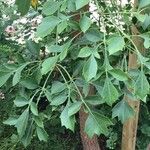
Cussonia spicata
Common cabbagetree · Common Cabbage Tree · Cabbage tree · Spiky Cabbage Tree
Description
Source: leafsnapCussonia spicata, known as spiked cabbage tree, lowveld cabbage tree or common cabbage tree, is a tree in the family Araliaceae, which is native to the moister regions of Sub-Saharan Africa. It is cultivated as a garden plant in areas without extreme degrees of frost. It is one of the favorite foods of wild elephants.
Care Guide
💧 Water
Originating from the arid regions of South Africa, the cabbage tree thrives in dry environments with little rainfall. It has a high tolerance for drought and prefers to be watered only every 2 to 3 weeks. Its succulent-like leaves are efficient at storing water, making the cabbage tree an excellent choice for xeriscaping and water conservation in outdoor landscapes.
☀️ Light Full sun
Cabbage tree grows best in places that receive abundant sunlight, though it can adjust to locations with somewhat less sun. It comes from open woodlands where light is plentiful. Excessive sun can scorch its leaves, while too little light can limit its growth.
What are the sunlight requirements for a Cabbage tree?
Cabbage trees require full sun, which means they need above 6 hours of sunlight daily, though they can also adapt to partial sun, receiving about 3-6 hours of sunlight. It's important to watch how sunlight moves through your garden to ensure your plants receive the ideal balance of light and shade for optimal growth. Cabbage trees originate from open woodlands, benefiting from plenty of light, but excessive exposure can lead to leaf scorching, while insufficient light impedes growth.
How can artificial lighting be used for indoor Cabbage trees?
Indoor Cabbage trees require adequate lighting for optimal growth, especially when natural sunlight is insufficient. Artificial lights, such as LED, are beneficial because they can provide specific wavelengths needed for growth. The required intensity varies: full sun plants need 30-50W/sq ft, partial sun plants 20-30W/sq ft, and full shade plants 10-20W/sq ft of light. The light source should be 12-36 inches above the plant and left on for 8-12 hours per day to mimic natural sunlight conditions.
What symptoms indicate a Cabbage tree is getting too much or too little light?
Symptoms of light deficiency in Cabbage trees include smaller new leaves, leggy or sparse growth, faster leaf drop, slower or no new growth, and leaves turning paler or displaying chlorosis. Excessive sunlight can cause symptoms like sunscald, leaf curling, wilting, and leaf scorching. These symptoms highlight the plant's struggle with adapting to its light conditions, either in seeking more light or being damaged by too much direct exposure.
What solutions are available for optimizing the Cabbage tree's exposure to light?
To optimize light exposure for Cabbage trees, gradually move them to locations that receive at least 6 hours of direct sunlight daily. For indoor plants, use a south-facing window or artificial light, such as desk or ceiling lamps or professional grow lights, for at least 8 hours a day. Outdoor plants should be moved gradually to prevent sunburn. If necessary, reduce obstructions by pruning or transplant smaller plants to sunnier spots with good drainage. Note that parts of the plant already affected might not recover, but new growth should be healthy with improved light conditions.
🌡️ Temperature 15–37.8°C
The cabbage tree is suited to its native habitat with temperatures ranging from 59 to 100 °F (15 to 38 ℃). It prefers moderate to high heat. Seasonal care may require supplying warmth during colder months.
What are the essential growth conditions for Cabbage trees?
Cabbage trees (Cussonia spicata) thrive in their native growth environment with temperatures ranging between 59 to 100°F (15 to 38°C), preferring moderate to high temperatures. They have some tolerance to cold and usually don't need extra protection if temperatures stay above -5°C. However, in colder conditions below -5°C, temporary protective measures like wrapping the plant in plastic film, fabric, or similar materials are recommended, and these should be removed once temperatures rise.
How does the Cabbage tree respond to low temperatures?
The Cabbage tree has a moderate tolerance to low temperatures and performs best when the temperature remains above 15°C. During winter, it's crucial to keep it above -5°C to prevent damage. If temperatures fall below -10°C, the tree's leaves may droop, and in severe cases, they might wilt and fall off. To protect the tree during cold spells, trim any frost-damaged parts and wrap the plant with materials like non-woven fabric or cloth, additionally creating a wind barrier.
What should be done when a Cabbage tree is exposed to high temperatures?
In the summer, it's important to ensure that the Cabbage tree does not endure temperatures above 38°C. Exposure to temperatures exceeding 43°C can lead to lighter leaf color, dry and withered leaf tips, leaf curling, and an increased risk of sunburn. To mitigate these effects, trim away the sunburned and dried-up parts of the plant. Moreover, relocating the plant to a shaded area during midday and afternoon hours, or using a shade cloth, can help, along with watering the plant in the morning and evening to maintain soil moisture.
💨 Humidity normal (40-60%)
This plant will thrive in moderate humidity, which is probably the level in your home. However, misting it a few times a week can be very beneficial. Make sure the room has good ventilation.
🪴 Soil 6-7
🌱 Fertilizer
Correct timing is essential when fertilizing the Cabbage tree. Apply fertilizer in early spring and continue monthly until early summer. Fertilizer promotes attractive blooms and supplies energy during both dormant and active growth phases.
🪴 Pot & Repot Every 12 months
✂️ Pruning
The cabbage tree features a distinctive umbrella-shaped canopy and a gnarled trunk. For optimal health, prune any dead or crossing branches from early to late winter. This practice improves air circulation and encourages growth, while reducing the risk of disease. Be sure to sterilize your tools to prevent infection, preserving the plant's integrity and appearance.
🌿 Propagating
🐛 Diseases & pets
☠️ Toxicity
Characteristics
- Plant Type
- Tree
- Life Cycle
- Perennial
- Genus
- Cussonia
- Family
- Araliaceae
- Hardiness Zone
- 8-11
- Mature Height
- 14.94 m
- Mature Spread
- 4.57 m to 9.14 m
- Leaf Color
- Green
- Leaf Type
- Evergreen
- Flower Color
- Green
- Flower Size
- 20.32 cm
- Bloom Time
- Early summer, Mid summer
- Planting Time
- Spring, Summer, Autumn
- Harvest Time
- Late summer, Early fall, Mid fall
- Native Area
- Malawi, Lesotho, Mozambique, Tanzania, South Africa, Zambia, Eswatini, Sudan, Kenya, Congo (DRC), Uganda, Botswana, Zimbabwe