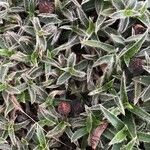
Cyanotis somaliensis
Pussy Ears · Furry kitten · Kitten's ears · Furry Kittens
Description
Source: leafsnapCyanotis somaliensis is a perennial herbaceous plant belonging to the Commelinaceae family. Native to Somalia, it thrives in rocky areas and on hillsides. The plant has a trailing growth habit, with stems extending up to 30 cm in length. Its small, narrow, lance-shaped leaves are bluish-green in color. This plant produces small, pink or purple flowers with three petals, which bloom from spring to summer. These flowers attract pollinators like bees and butterflies. Cyanotis somaliensis is noted for its medicinal properties. It contains compounds such as flavonoids, alkaloids, and saponins, which possess anti-inflammatory properties. Traditionally, it has been used to treat various ailments, including reducing fever and promoting wound healing. The plant requires well-draining soil and moderate watering. It prefers full sun but can tolerate partial shade. Due to its trailing nature, Cyanotis somaliensis is ideal for rock gardens or hanging baskets and is easy to grow. Overall, Cyanotis somaliensis is an attractive ornamental herbaceous perennial with medicinal benefits, making it a valuable addition to any garden or landscape design project.
Care Guide
💧 Water Every 7 days
Pussy ears, a plant native to the dry regions of Somalia, is highly drought-tolerant and thrives with minimal moisture. For optimal growth, it should be watered once a week and planted in well-draining soil. To avoid overwatering, ensure the plant receives bright light, which improves its water efficiency and helps it adapt to conditions similar to its native environment, where rainfall is sporadic.
☀️ Light Partial sun
Pussy ears is native to environments with dappled light, such as the understory of forests or rocky areas that provide natural shade. It prefers partial sun but can also tolerate full sun.
🌡️ Temperature 20–37.8°C
Pussy ears prefers warm conditions and needs relatively high temperatures during the growing season to support growth and metabolic activity. It does well with abundant sunlight, proper moisture levels, and good airflow. However, it can be damaged by very low temperatures and by overwatering. It’s also important to maintain balance and avoid temperatures that are too high or conditions that are too dry.
💨 Humidity normal (40-60%)
This plant will thrive in moderate humidity, which is probably the level in your home. However, misting it a few times a week can be very beneficial. Make sure the room has good ventilation.
🪴 Soil 6-6
🌱 Fertilizer
For Pussy ears, apply light doses of fertilizer once or twice a year during the growing season. Avoid fertilizing in winter and in summer when the plant is dormant. Reduce fertilization for plants that have been repotted and wait a couple of months after repotting before you start feeding them. Fertilizing helps maintain healthy growth and promotes flowering.
🪴 Pot & Repot Every 2 years
When repotting Pussy ears, choose a pot slightly larger than the current one that has good drainage. Use a gritty, well-draining succulent or cactus mix. Gently remove the plant from its old pot, brush away excess soil, and place it at the same depth in the new container. Wait a few days before watering to allow any root injury to heal. Repot in spring or fall and keep it in a brightly lit spot.
✂️ Pruning
Pussy ears, a plant with fuzzy, ear-like leaves, benefits from regular pruning to encourage bushier growth. To maintain its health and appearance, focus on removing dead foliage and lightly trimming the plant to improve air circulation. Pruning should be done from early to late spring to prevent the plant from becoming leggy. Always use clean, sharp tools to minimize stress on the plant and reduce the risk of disease.
🌿 Propagating
🐛 Diseases & pets
☠️ Toxicity
This plant is toxic to cats and dogs.
Characteristics
- Plant Type
- Herb, Vine, Succulent
- Life Cycle
- Perennial
- Genus
- Cyanotis
- Family
- Commelinaceae
- Hardiness Zone
- 10-11
- Mature Height
- 15 cm
- Mature Spread
- 40 cm
- Leaf Color
- Green
- Leaf Type
- Evergreen
- Flower Color
- Purple, Lavender
- Flower Size
- 1.02 cm to 1.52 cm
- Bloom Time
- Summer, Early fall, Mid fall
- Planting Time
- Spring
- Harvest Time
- Late summer, Fall, Early winter
- Native Area
- Saudi Arabia, Yemen, Somalia