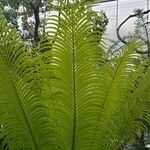
Cycas circinalis
Queen sago · Crozier cycas · Fern-palm · False sago · Cycad
Description
Source: leafsnapCycas circinalis, commonly known as the Queen Sago or Indian Cycad, is a slow-growing evergreen plant belonging to the Cycadaceae family. Native to India and Southeast Asia, it can grow up to 6 meters tall. The plant features a stout trunk that can reach a diameter of up to 30 cm, adorned with a crown of large, glossy green leaves arranged in a circular pattern. The leaves of the Cycas circinalis are pinnate, with numerous leaflets aligned along either side of the rachis. These dark green, leathery leaflets have pointed tips and spiny margins. The plant produces male and female cones on separate plants, which are pollinated by insects. Cycas circinalis is often used as an ornamental plant in gardens due to its attractive foliage. It prefers well-drained soil but can tolerate some drought once established. However, regular watering is necessary during its initial growth period. Historically, the Queen Sago has been used for medicinal purposes by indigenous people because of its anti-inflammatory properties. However, it is important to note that all parts of this plant contain toxins that can be harmful if ingested or improperly handled. In summary, Cycas circinalis is an impressive ornamental cycad species known for its appealing foliage. Nevertheless, it should be handled with care due to its toxic nature, especially when consumed or touched without proper precautions.
Care Guide
💧 Water Every 7 days
Queen sago thrives in semi-arid regions due to its drought tolerance, requiring watering only every 2 to 3 weeks. It prefers the soil to be slightly dry between waterings and retains its foliage year-round. During hot months, it is important to water the plant carefully to prevent it from drying out.
☀️ Light Partial sun
Queen sago grows best with moderate sunlight. Too much sun or too little light can put the plant under stress, impacting its health and growth. Native to places with bright but dappled light, this species can tolerate reduced light to a limited degree, though that is not its ideal situation.
What are the sunlight requirements for Queen Sago?
Queen sago, scientifically known as Cycas circinalis, thrives best in areas with moderate sun exposure, requiring about 3-6 hours of sunlight daily. It originates from habitats that offer strong yet dappled sunlight, tolerating mild sun deprivation but not considering it optimal. It's essential to observe the movement of sunlight through the garden carefully and select spots that provide a healthy balance of light and shade, ensuring the plant's well-being. Excessive sun exposure or insufficient light can stress the plant, impacting its health and growth negatively.
How can artificial lighting benefit indoor Queen Sago plants?
Indoor Queen Sago plants necessitate adequate lighting to grow optimally. When natural sunlight is not enough, especially during winter or in spaces that receive less sunlight, artificial lights provide an essential solution. They promote faster, healthier growth by supplying the specific wavelengths of light that plants require. LED lights, popular for indoor plant lighting, can be customized to suit your plants' needs, with full sun plants needing 30-50W/sq ft, partial sun plants 20-30W/sq ft, and full shade plants 10-20W/sq ft. The light source should be placed 12-36 inches above the plant, mimicking natural sunlight as much as possible, and ensuring the plants receive 8-12 hours of light per day.
What are the symptoms of inadequate sunlight in Queen Sago?
When Queen Sago doesn't receive sufficient sunlight, it shows specific symptoms indicating light deficiency. These include smaller new leaves, leggy or sparse growth, faster leaf drop, slower or no new growth, lighter-colored new leaves, and conditions like chlorosis (yellowing leaves), sunscald, leaf curling, wilting, and leaf scorching. These symptoms reflect the plant's struggle to adapt to inadequate light conditions, which can significantly affect its overall health.
What solutions can help Queen Sago plants with insufficient sunlight?
To address insufficient sunlight for Queen Sago plants, consider gradually moving them to sunnier spots, enabling them to adapt to changing light conditions. Indoor plants can benefit from additional artificial light sources if relocation isn't feasible. Positioning a desk or ceiling lamp to stay on for at least 8 hours daily or investing in professional plant grow lights can help. Outdoors, choosing the best sunlight spot and avoiding drastic light intensity changes are crucial to avoid sunburn. If sunlight is obstructed, pruning trees or relocating the plant might be necessary. It's important to remember that while some parts of the plant may not recover from light deficiency, new growth will be healthy with improved conditions.
🌡️ Temperature 20–37.8°C
Queen sago comes from tropical areas, which generally have warm, humid climates. Consequently, it is well adapted to high temperatures and humidity. It does not tolerate abrupt temperature changes and prefers a stable thermal environment, so it is important to avoid temperature fluctuations indoors. It typically cannot tolerate cold and needs relatively high temperatures for growth. If the ambient temperature falls too low, the plant may stop growing or even die.
What is the name and botanical name of Queen sago?
Queen sago is commonly referred to by its name 'Queen sago,' with the botanical name Cycas circinalis.
💨 Humidity
🪴 Soil 5-7
🌱 Fertilizer
Queen sago has specific nutrient needs and does not require heavy fertilization. Spring is the best time to apply fertilizer for optimal growth. Supplying nutrients enhances its health, raises its resistance to pests and diseases, and helps sustain its long lifespan.
🪴 Pot & Repot
✂️ Pruning
The queen sago is a slow-growing and evergreen cycad that benefits from pruning between early and late winter to stay healthy. By removing damaged or old leaves, you can enhance air circulation and light penetration. Regular maintenance is essential to keep the plant vibrant, but exercise caution, as it recovers slowly from pruning.
🌿 Propagating
🐛 Diseases & pets
☠️ Toxicity
Characteristics
- Plant Type
- Tree, Shrub
- Life Cycle
- Perennial
- Genus
- Cycas
- Family
- Cycadaceae
- Hardiness Zone
- 10-11
- Mature Height
- 1.83 m to 4.57 m
- Mature Spread
- 2.44 m to 3.66 m
- Leaf Color
- Green
- Leaf Type
- Evergreen
- Bloom Time
- Late spring, Early summer, Mid summer
- Planting Time
- Spring, Summer, Autumn
- Harvest Time
- Late summer, Early fall, Mid fall
- Native Area
- Sri Lanka, India