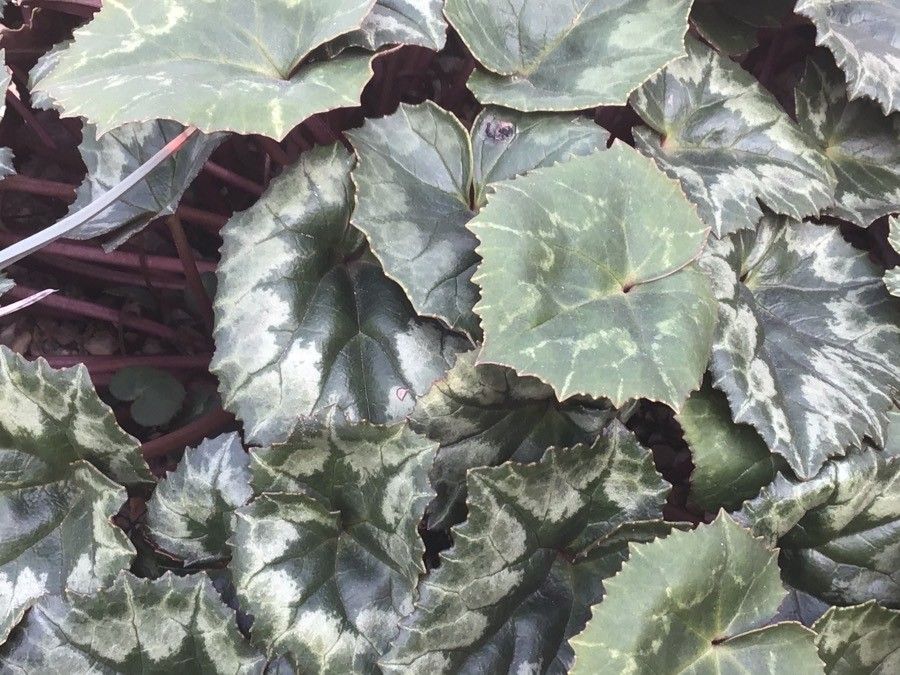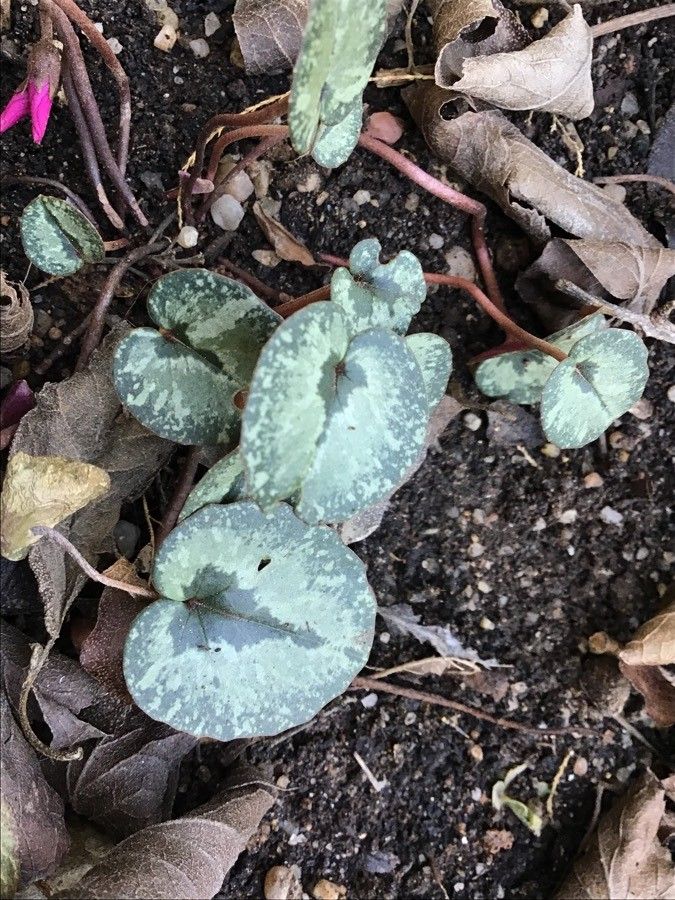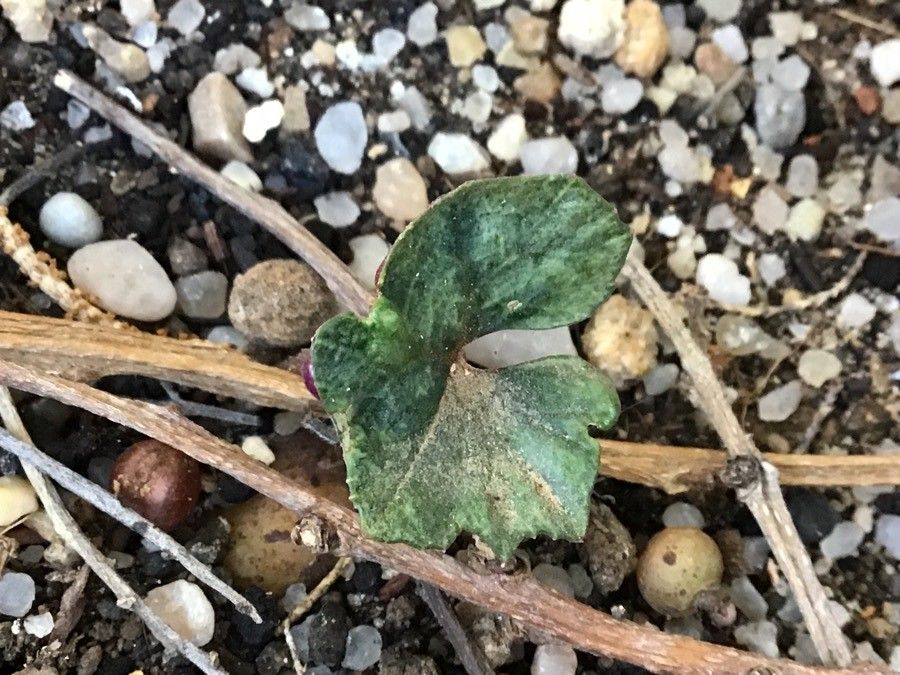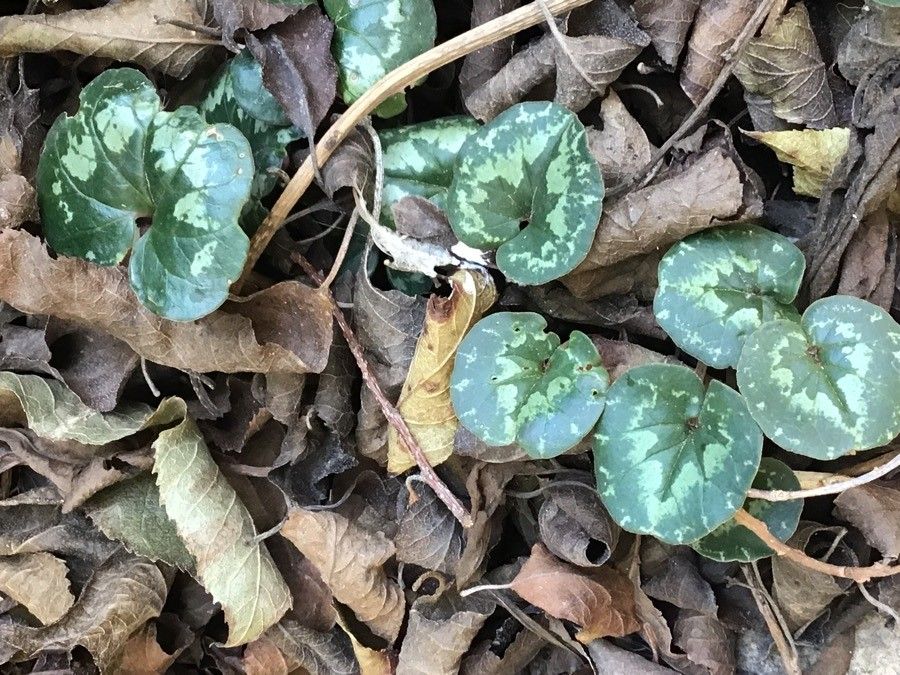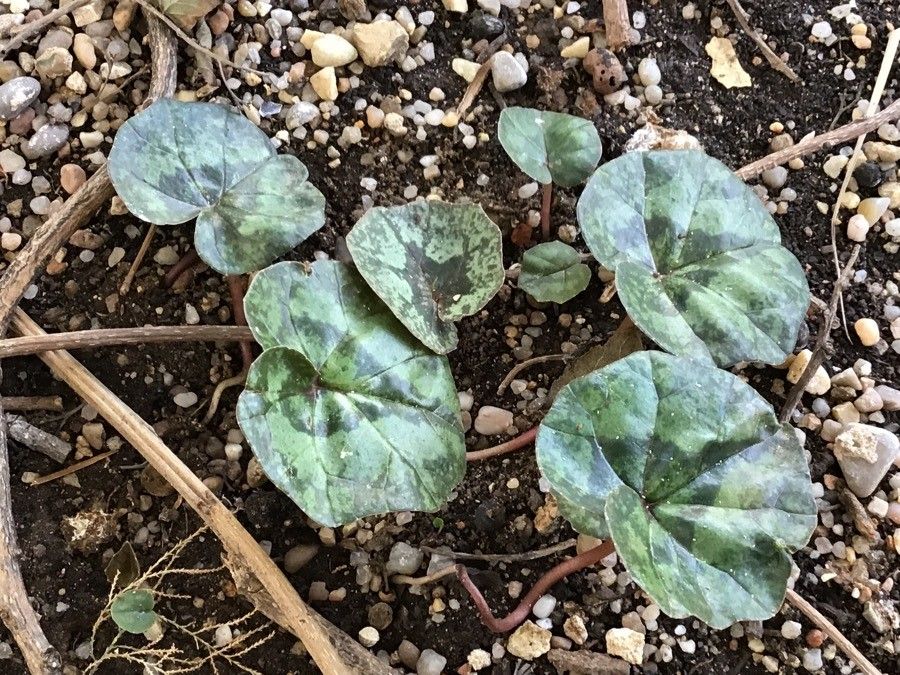
Cyclamen libanoticum (Lebanon cyclamen) is a species of flowering plant in the family Primulaceae. It is native to a small area in the mountains of Lebanon northeast of Beirut at 750–1,400 m (2,460–4,590 ft) elevation, in and around Jabal Moussa Biosphere Reserve. From winter to spring, it bears peppery-smelling flowers with 5 oval petals opening white, then turning pale pink, usually with an irregular crimson-magenta mark at the base. Leaves are heart-shaped, gray-green with a darker arrowhead pattern. The tuber only produces roots from one side of the bottom. Cyclamen ×wellensiekii Iets. is a hybrid obtained in 1969 in the Netherlands between this species and Cyclamen cyprium – another species of subgenus Gyrophoebe. This fertile hybrid has pink flowers from November till March. Cyclamen ×schwarzii Grey-Wilson is a fertile hybrid Cyclamen pseudibericum × Cyclamen libanoticum. This hybrid can cross back with one of the parents.
The Lebanon cyclamen is fairly resistant to disease and typically does not suffer from serious illnesses. Still, it can be affected by pests and diseases present in its environment. When infections do occur, they are generally mild. Regarding upkeep, this plant needs a moderate level of care. Regular pruning is necessary to preserve its appearance and encourage healthy growth. Applying fertilizer can also aid in increasing blooms. The Lebanon cyclamen is well suited for anyone who has outdoor space, like a garden or patio, and it does not demand extensive gardening experience. It may, however, need more attention if grown indoors.
How to keep Cyclamen Libanoticum.
Light
Lebanon cyclamen is native to habitats like forest understories or rocky sites, where it grows in natural shade. It prefers partial sun but can adjust to full sun or full shade, showing a versatile and hardy nature.
Water
Water your Lebanon cyclamen when the soil feels dry, but be careful not to overwater, as excess moisture at the base can cause root rot. In the spring and fall, water the plant every 1-2 days. During periods of dormancy, especially in extreme temperatures, reduce the frequency of watering. Aim to keep the soil slightly moist for the best growth and overall health of your plant.
Temperature
Lebanon cyclamen can tolerate a broad range of temperatures, but its distribution may still be restricted by different mixes of moisture and heat. It performs best in warm summers with sufficient rainfall or watering. Prolonged stretches of cloudy, rainy weather, as well as extended high temperatures, can raise the risk of the plant dying. In winter, adequate protection from the cold can increase its survival rate.
Fertilizer
For Lebanon cyclamen, the primary time to fertilize is early spring when the flowers are developing. Using the proper fertilizer promotes stronger blooms and helps Lebanon cyclamen produce attractive flowers. Fertilizing in early spring ensures good flowers throughout the season and supplies energy for the plant's dormant growth phases.
Pruning
The Lebanon cyclamen is known for its heart-shaped leaves and fragrant pink blooms. For optimal growth and flowering, it is best to prune this plant in early spring. Be sure to use clean, sharp tools to remove any damaged leaves, and make sure the plant is dry to prevent disease. To maintain its natural shape and vigor, avoid over-pruning.
Pot & Repot
When repotting Lebanon cyclamen, select a pot 1-2 inches (2.5–5.1 cm) larger with ample drainage. Use a well-draining potting mix. Repot in spring or fall, making sure the root ball is slightly lower than the rim of the flower pot. Water thoroughly after repotting and place it in a warm spot with indirect sunlight.
Botanical profile.
- Plant Type
- Herb
- Life Cycle
- Perennial
- Genus
- Cyclamen
- Family
- Primulaceae
- Hardiness Zone
- 7-9
- Mature Height
- 15 cm
- Mature Spread
- 20 cm
- Leaf Color
- Green
- Leaf Type
- Semi-evergreen
- Flower Color
- Pink
- Flower Size
- 2.03 cm to 3.05 cm
- Bloom Time
- Late winter, Early spring
- Planting Time
- Autumn, Winter
- Harvest Time
- Mid spring, Late spring
- Native Area
- Lebanon