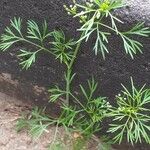
Cyclospermum leptophyllum
Celery · Marsh Parsley · Slender-celery · Fine-leaved marsh parsley · Wild celery
Description
Source: leafsnapCyclospermum leptophyllum, commonly known as American hogweed or toothpickweed, is a small annual herbaceous plant belonging to the Apiaceae family. It is native to North and South America and thrives in various habitats, including fields, roadsides, and disturbed areas. The plant can grow up to 60 cm tall and features thin, often reddish stems. Its leaves are intricately divided into thread-like segments, giving them a feathery appearance. The flowers are small, white, and have five petals arranged in an umbrella-like shape. For centuries, indigenous people have used Cyclospermum leptophyllum for medicinal purposes. Traditionally, it has been utilized as a diuretic, antispasmodic, carminative, emmenagogue (to stimulate menstrual flow), and antiseptic agent for wounds or skin infections. Besides its medicinal properties, the plant is an important food source for wildlife such as birds and insects. Birds can consume its seeds, while its flowers attract various pollinators like bees. It is important to note that Cyclospermum leptophyllum contains toxic compounds that may cause skin irritation or allergic reactions if handled improperly. Therefore, caution should always be exercised when handling this plant species.
🎭 Helpful knowledge
Care Guide
💧 Water Every 7 days
Marsh parsley flourishes in moist environments and needs consistently damp soil, requiring watering each week. It can tolerate short periods of water saturation and benefits from being grown outdoors, where it can receive natural rainfall. Ensuring adequate moisture during its active growth season encourages vigorous development and enhances its resilience in different conditions.
How should I water my Marsh parsley?
To water Marsh parsley, there are several options available. You can use a garden hose with a spray nozzle, a watering can, or any other common watering tool. The good news is that Marsh parsley is not too particular about the type of water it receives. It can thrive with rainwater, tap water, or even filtered water. However, it's generally recommended to avoid watering this plant from above as it can harm the leaves and flowers and potentially lead to diseases. Instead, a drip irrigation system is often the best choice. These systems provide water evenly and directly to the soil, which Marsh parsley loves. If you have a Marsh parsley growing in a container, you can follow a similar approach but adapt the tools you use. A cup, watering can, or tap can be used to water the soil directly in the container.
What should I do if I give too much or too little water to my Marsh parsley?
To remedy underwatering Marsh parsley, simply water it more regularly when you notice it lacks moisture. On the other hand, overwatering can be a serious problem if not caught early. Overwatered Marsh parsley is prone to diseases that can lead to decline and death. To prevent this, choose a suitable growing location with ample sunlight to dry the soil and good drainage to avoid waterlogging. If your potted Marsh parsley is overwatered, consider changing it to a new pot with better drainage and loose soils.
How many times do I need to water my Marsh parsley?
To successfully care for Marsh parsley, it is important to provide regular water throughout its growing season. In the spring, watering once a week should suffice. However, as the weather gets warmer, you may need to increase watering to two or three times per week. It is crucial to avoid overwatering, as it can harm the Marsh parsley. Additionally, the soil should be kept relatively moist but not overly wet, regardless of the watering frequency. When it comes to pot-grown Marsh parsley, the watering routine needs slight adjustment. Since potted soil tends to heat up and dry out quicker than ground soil, watering frequency should be increased to a few times per week. Comparatively, in-ground plants only require watering once a week.
How much water does my Marsh parsley require?
Determining how much water to give your Marsh parsley can be approached in a few different ways. Some gardeners choose to assess soil moisture by feeling the soil, suggesting that watering should continue until the first six inches of soil feels moist. Another option is to use a set measurement, such as providing approximately two gallons of water per week, taking into consideration factors like the weather and soil drying speed. However, adhering strictly to such guidelines may result in overwatering if your plant requires less than two gallons per week. When growing Marsh parsley in a container, a different method is necessary. It is recommended to water enough to moisten all dry layers of soil, which can be checked by inserting a finger into the soil or observing a slight trickle of excess water from the drainage holes.
How do I know if I'm giving enough water to my Marsh parsley?
Avoiding overwatering your Marsh parsley can be somewhat difficult due to their deep roots requiring weekly soil moisture. However, Marsh parsley is highly susceptible to root rot and browning when overwatered. Underwatering is less likely to occur, as these plants can survive without supplemental watering for a while. However, if you wait too long to water, the plant may wilt and develop dry leaves.
☀️ Light Full sun
Marsh parsley does best in places that get a lot of sun. This contributes to the plant's health and vigor. Its native habitat has abundant sunlight, and fluctuations in light intensity influence its growth processes. Both too little and too much sun can harm the plant.
What are the sunlight requirements for Marsh parsley?
Marsh parsley thrives in conditions where it receives more than 6 hours of sunlight per day. This abundant exposure to sunlight is crucial for the health and vitality of the plant, reflecting its natural habitat's conditions. It's essential to observe the movement of sunlight through your garden to find spots that offer a perfect balance of light and shade, ensuring your plants' well-being and happiness. However, too little or too much sunlight can adversely affect the plant, so adjustments may be necessary, including the use of artificial lighting when natural light is insufficient. Artificial lights, especially LED lights, can be customized to provide specific wavelengths necessary for optimal plant growth.
What are the essentials for growing Marsh parsley?
Marsh parsley requires ample sunlight to flourish, as its growth processes are heavily influenced by variations in light intensity. In cases where natural sunlight is lacking, such as during winter or in less sunny indoor spaces, artificial lighting becomes a vital solution. For optimal growth, indoor plants may need between 10 to 50W/sq ft of artificial light, depending on whether they are full sun, partial sun, or full shade plants. The distance between the light source and the plant should be adjusted appropriately, and the duration should mimic natural daylight hours, typically between 8 to 12 hours per day.
What symptoms indicate insufficient light in Marsh parsley?
When Marsh parsley is grown indoors or under inadequate light conditions, several symptoms might appear. These include smaller new leaves, a leggy or sparse growth pattern, early leaf drop, halted growth, paler new leaves, the occurrence of chlorosis (yellowing leaves), sunscald, leaf curling, wilting, and leaf scorching. These symptoms indicate either an excess of sunlight or insufficient light, and making adjustments to the lighting conditions can help the plant recover. However, parts of the plant that have been severely affected might not recover, but new growth should be healthy once proper light exposure is achieved.
How can I address light-related issues in Marsh parsley?
For indoor Marsh parsley plants suffering from insufficient light, gradually increasing daily sunlight exposure to a minimum of 6 hours can be beneficial. Using a south-facing window or artificial lighting, such as desk, ceiling lamps, or professional grow lights, can provide the additional light needed. For outdoor plants, a gradual transition to sunnier spots helps avoid sunburn. Removing obstructions that block sunlight or transplanting smaller plants to brighter locations can also immensely improve light availability. It's essential to adapt these solutions to your specific situation, ensuring new growth remains healthy and vibrant.
🌡️ Temperature 20–37.8°C
Marsh parsley comes from tropical areas where the weather is generally warm and humid. Consequently, it is suited to high temperatures and humidity. It does not tolerate sudden temperature shifts and favors a steady temperature, so indoor temperature fluctuations should be avoided. It typically cannot endure cold and needs warmer conditions to grow. If the surrounding temperature falls too low, the plant may stop growing or even die.
What is Marsh Parsley?
Marsh Parsley, known botanically as Cyclospermum leptophyllum, does not have further information provided in terms of its essentials, content, or additional details. Its description, symptoms, or other related facts are not available in the data provided.
💨 Humidity
🪴 Soil 6-7
🌱 Fertilizer
Marsh parsley benefits from frequent, weak fertilizer applications to encourage healthy leaf growth. You should feed Marsh parsley roughly once a month during the summer. Nitrogen is important for foliage, and supplying nitrogen-rich sources helps Marsh parsley thrive.
🪴 Pot & Repot
✂️ Pruning
To ensure marsh parsley thrives, it's important to use proper pruning techniques, ideally from early to late spring. Begin by removing any damaged stems and thinning out overcrowded areas to improve air circulation and sunlight exposure. Regular pruning not only encourages growth but also prevents disease, enhancing the plant's overall health and appearance in the garden.
🌿 Propagating
🐛 Diseases & pets
☠️ Toxicity
Characteristics
- Plant Type
- Herb
- Life Cycle
- Annual
- Genus
- Cyclospermum
- Family
- Apiaceae
- Hardiness Zone
- 9-11
- Mature Height
- 25 cm to 46 cm
- Mature Spread
- 15 cm to 46 cm
- Leaf Color
- Green, Blue
- Leaf Type
- Semi-evergreen
- Flower Color
- White
- Flower Size
- 2.54 cm
- Bloom Time
- Late spring, Early summer, Mid summer
- Planting Time
- Spring, Summer, Autumn
- Harvest Time
- Early summer, Mid summer
- Native Area
- Colombia, Bahamas, Cuba, Honduras, Mexico, Guatemala, Bolivia, Venezuela, Peru, El Salvador, Nicaragua, Costa Rica, Panama, Jamaica