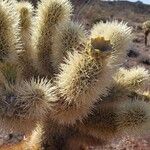
Cylindropuntia bigelovii
Teddy-bear Cholla · Teddy-bear cactus · Golden-spined jumping cholla · Jumping cholla
Description
Source: leafsnapCylindropuntia bigelovii, commonly known as the teddy bear cholla, is a cactus species native to the southwestern United States and northern Mexico. This plant is highly recognizable due to its distinctive appearance, featuring dense clusters of spiny stems that resemble fuzzy teddy bears. The stems are covered in sharp spines that easily detach and can cling to clothing or skin. The teddy bear cholla typically thrives in arid desert regions and can grow up to 6 feet tall. It produces small yellow flowers during the spring and summer, which are followed by edible fruit that is often utilized by Native American tribes for food. Despite its cute appearance, the teddy bear cholla should be approached with caution, as its spines can cause painful injuries if not handled carefully. Nevertheless, it remains a popular choice for landscaping due to its unique texture and striking visual appeal.
Care Guide
💧 Water Every 14 days
The Teddy Bear Cholla is a drought-tolerant plant well-suited for arid environments, as it stores water in its fleshy stems. To care for it, water the plant every four weeks, and ensure it receives full sun and has well-draining soil to prevent root rot. This routine highlights its low-maintenance nature.
What's the best way to water my Teddy bear cactus?
To ensure proper watering for this species, it is recommended to water from the bottom. This helps the roots absorb water effectively and allows nutrients to circulate throughout the plant. Be cautious of spilling water on the top part, as this can lead to diseases and fungi. If you have an irrigation system, use small sprinklers, especially if you have Teddy bear cholla in your garden. Opt for revolving sprinklers that can be adjusted to different water delivery patterns. Avoid using sprinklers on windy days. Regardless of whether the Teddy bear cholla is in a pot or in your garden, the soak and dry method should be used. This method evenly distributes moisture across the root system, resulting in healthier growth. Some owners may consider a built-in drainage system for their succulents. This involves placing layers of porous materials (such as recycled glass or hydro stones) beneath the soil. These layers act as reservoirs for excess water, but be careful not to overwater these systems.
What should I do if I give too much or too little water to my Teddy bear cholla plant?
If you notice that the Teddy bear cholla is turning yellow, it could be due to underwatering or overwatering. Overly wet soil can lead to fungal infections, so it's important to let everything dry out and avoid overwatering. Browning and dropping leaves indicate too much moisture, while yellow tips on stems and branches suggest not enough water. Before buying a Teddy bear cholla, make sure to inquire about the soil's drainage. If the topsoil doesn't drain properly, the plant may not receive enough water in the future. Overwatering or excessive rain can cause the Teddy bear cholla to die, so using rainwater or distilled water is recommended. Squishy stems, drooping growth, and discolored parts are signs of excess moisture. To help the plant recover, allow the pot to dry and consider transferring it to a different container to prevent root rot and dripping. If planted outside, transferring it to a pot during winter can aid in its recovery.
How frequently do I need to water my Teddy bear cholla?
Watering frequency for succulents can vary depending on the season. In the summer and spring, you typically only need to water them once every two to three weeks. However, during the winter and fall, it's best to reduce or avoid watering altogether since these plants become dormant. It's important to let the soil dry completely before watering again. It's better to slightly underwater than to overwater. When potted, deep watering at intervals promotes healthier soil growth. When planted outdoors, avoid watering lightly as this encourages shallow root growth. Instead, wait a few weeks and only water when the surrounding soil is too dry.
How much water does my Teddy bear cholla plant need?
To efficiently water this succulent, ensure that you cover the entire pot. Place a saucer at the bottom of the pot to provide enough moisture to the roots. Once you observe the soil becoming saturated, promptly remove the saucer. The frequency and quantity of water needed depend on the pot's holes and the amount of soil. Teddy bear cholla plants typically require just a can of water when planted in pots. In garden or outdoor plantings, consider the rainwater they receive. Around an inch of rainwater should sustain them for a few weeks, so avoid watering. If the plants are outside, water them in the morning using approximately a gallon of water once the soil has completely dried out, allowing the excess moisture to evaporate with the help of sunlight.
Why should I water my Teddy bear cactus?
Watering the Teddy bear cholla is essential for providing the plant with the necessary nutrients from the soil. Without enough moisture, the plant may become malnourished or unhealthy. It is important to water the plant when you notice signs of thirst, but be cautious not to overwater, as this can harm them. The recommended watering method for Teddy bear cholla is the soak and dry method. When the soil becomes too dry, soak the plant until water is dripping from the pot. Then, allow the soil to rest for a few weeks without watering.
☀️ Light Full sun
Teddy bear cholla does best in situations where it gets a steady, ample amount of light throughout the day. Its photosynthesis becomes more efficient with increased light exposure, which aids its growth and development. However, too much light can lead to higher water loss and possible damage. This cactus species evolved in an environment that receives strong daily light exposure, which its photosynthetic process strictly requires.
How much sun does Teddy bear cholla need to grow?
Teddy bear cholla thrives with at least 6 hours of sunlight each day, although more is even better. The exact minimum hours can vary due to the intensity of sunlight and other environmental factors, but it is unlikely that the Teddy bear cholla will receive excessive sunlight. In fact, they can handle up to 14 hours of sunlight daily without any issues.
What kind of sunlight does Teddy bear cholla plants need?
Teddy bear cholla thrives in bright sunlight, making them ideal full-sun plants that can handle both direct light and bright indirect sun. While some varieties may tolerate partial sun, it is generally best to provide them with as much sunlight as possible for optimal growth.
Should I keep my Teddy bear cactus out of the sun?
Teddy bear cholla thrives in hot, sunny environments and doesn't require sun protection. However, it's important to introduce the plant gradually to increased sunlight if it's not accustomed to it. Start by exposing it to a couple of hours of sun per day and gradually extend the duration. Once adapted, most Teddy bear cholla varieties can handle full sun without any need for protection.
What happens if Teddy bear cholla doesn't get enough sunlight?
Teddy bear cholla relies heavily on sunlight to thrive and grow. If it doesn't get enough sunlight, you'll notice signs like pale coloring, wilting leaves, and leaf drop. Another symptom to watch out for is etiolation (also known as legginess), where the plant tries to reach for the light causing it to look sparse and have weak stems.
What happens to Teddy bear cholla if it gets too much sunlight?
Teddy bear cholla plants change color to protect themselves from too much sunlight. Many people purposely expose these plants to mild sun stress in the summer, which causes them to turn shades of red, pink, or orange. This process is not harmful and the plants will return to their normal coloring when there is less sunlight from autumn to spring. However, if a Teddy bear cholla is moved too quickly into direct sunlight, it can get sunburned. Sunburned leaves show as white or brown spots on the top leaves that were exposed to the most sun. If this happens, the plant should be moved to a shadier spot and watered if necessary. Leaves that are damaged from the sun can be removed, and new growth will replace them over time.
🌡️ Temperature 15–37.8°C
Teddy bear cholla is native to hot desert environments with temperatures ranging from 59 to 100°F (15 to 38℃). It does best within this range, so mimic these conditions for optimal growth. Periodic adjustments for seasonality may be necessary.
What temperature is best for your Teddy bear cholla?
To keep the Teddy bear cholla plant healthy, it is best to maintain specific temperature conditions. Ideally, temperatures between 75-90℉ (25-32℃) are recommended. During the early winter season, it is important to ensure that the temperature does not drop below 75℉ (25℃). In such cases, it is advisable to bring the plant indoors as it will provide better protection against extreme conditions. While the Teddy bear cholla can tolerate some extreme temperatures, it is not preferable for it to endure temperatures as low as 50℉ (15℃). Therefore, if winter conditions are expected to be adverse, it is recommended to bring the plant indoors.
How do I change the temperature for my Teddy bear cholla as it grows?
The growing phases of the Teddy bear cholla plant have different stages. First, the dormant seed begins to grow and becomes a seedling. To germinate, these dormant seeds require specific conditions in their environment, such as a temperature between 75-90℉ (25-32℃). The best time for robust growth is during the summer when the temperature is around 85℉ (30℃). To ensure adequate sunlight, you can move your Teddy bear cholla plant from indoors to a sunny location during the hot summer months.
How do I keep my Teddy bear cactus warm in the cold?
To protect your Teddy bear cholla from winter conditions, it's best to bring them indoors. Some people buy grow lights to provide enough sunlight for their plants, but if your home is already fairly bright, buying these lights may not be necessary. Instead, place your plants in areas with the most sunlight to ensure they thrive during winter. If you have multiple Teddy bear cholla, rotate their positions so they all get enough sunlight. However, if you live in northern areas with freezing temperatures, avoid placing your plants too close to the window as the extreme cold could damage them.
What happens to my Teddy bear cactus when it's really hot or really cold?
To help your Teddy bear cholla plant thrive, it's best to keep it in warm temperatures around 90℉(32℃) during the summer. However, be cautious of extreme temperature changes during hot climates. In the winter, it's recommended to keep the plant dry. Teddy bear cholla plants tend to do well in temperatures between 75-90℉ (25-32℃) in moderate climates. It's important to note that exposing these plants to extreme temperatures can cause stress. While temperatures between 90℉ and 95℉(32-35℃) can enhance the plant's vibrant colors, it's crucial to be cautious when experimenting with higher temperatures. During the hot summer months, excessively high temperatures can harm the plant's stem and root system. To protect the plant during the hottest times of the day, consider moving it to a shaded area or cover it with a shade cloth.
How do I change the temperature for my Teddy bear cactus in different seasons?
During summers, the high temperatures slow down the growth of Teddy bear cholla as a survival mechanism. However, when cooler periods begin and rainfall occurs, Teddy bear cholla resumes growing. If you live in an area with hot summers, warm winters, and ample rainfall, there is no need to make any changes. However, if you reside in a place with cold winters, it is advisable to allow your Teddy bear cholla to grow more during summer and rest during winter. This is because insufficient sunlight during winter inhibits its growth. In colder regions, you can help your Teddy bear cholla enter dormancy by reducing the temperature to a range of 50℉ to 75℉ (15℃ to 25℃).
💨 Humidity
🪴 Soil 6-7
🌱 Fertilizer
Light applications of fertilizer once or twice a year during the active growing season are enough for Teddy bear cholla. Do not fertilize in winter and in summer when the plant is dormant. Cut back on feeding newly repotted plants and wait a couple of months after repotting before applying fertilizer. Feeding helps sustain healthy growth and encourages flowering.
Why should I put fertilizer on my Teddy bear cholla?
Fertilizing Teddy bear cholla helps add nutrients to the soil it grows in. Although it already stores water and nutrients, applying plant food during the growing season is beneficial for promoting healthy growth. Additionally, fertilizing can stimulate mature specimens to produce blooms during this time.
When should I fertilize my Teddy bear cholla plant?
Teddy bear cholla plants only require a light dose of fertilizer during the growing season, typically 1-2 times a year. To ensure optimal growth, it is recommended to fertilize these plants in the spring and autumn, avoiding the dormant winter and summer periods. When repotting, reduce the amount of fertilizer applied and wait a few months before starting to fertilize again.
When should I not put fertilizer on my Teddy bear cactus?
Teddy bear cholla, like other plants, goes through a dormancy period. During this time, it is best to refrain from using fertilizer. Both in the summer and winter, the plant stops its growth, so it is important to avoid applying fertilizer. Additionally, after repotting in the spring, it is recommended to wait a couple of months before resuming fertilization.
What kind of fertilizer does my Teddy bear cactus need?
To ensure proper fertilization of Teddy bear cholla, it is recommended to use a liquid plant food specifically designed for succulents and cacti. When applying the fertilizer, it is important to dilute it with water to half-strength to prevent buildup in the soil. Apply the fertilizer to the base of the plant, making sure to water it thoroughly. Ensure any excess moisture drains from the container or seeps into the ground.
How do I give my Teddy bear cholla plant the nutrients it needs?
When fertilizing Teddy bear cholla, it is easier to use liquid plant food, but you can also use granules. Make sure to follow the directions on the packaging and dilute liquid fertilizers to half-strength. Whether you choose granules or liquid plant food, always apply it to the soil. After applying, cover the granules with a thin layer of soil and water the plant, regardless of which type of plant food you used.
🪴 Pot & Repot 2-3 years
Repot your teddy bear cholla every 2 to 3 years during its active growth period. Use a slightly larger container with proper drainage. After repotting, place the teddy bear cholla in bright light and reduce watering. This will help the plant acclimate and reduce stress, promoting optimal growth.
✂️ Pruning
Teddy bear cholla needs very little pruning. Concentrate on removing any wilted flowers and dead branches to ensure the plant directs its nutrients toward healthy growth.
🌿 Propagating
🐛 Diseases & pets
☠️ Toxicity
Characteristics
- Plant Type
- Shrub
- Life Cycle
- Perennial
- Genus
- Cylindropuntia
- Family
- Cactaceae
- Hardiness Zone
- 8-11
- Mature Height
- 0.3 m to 1.52 m
- Mature Spread
- 1.52 m
- Leaf Color
- Light Green, Pale Green
- Leaf Type
- Evergreen
- Flower Color
- Yellow, Green, White, Pink, Purple, Red
- Flower Size
- 2.54 cm to 5.08 cm
- Bloom Time
- Mid spring, Late spring
- Planting Time
- Spring, Summer, Autumn
- Harvest Time
- Summer