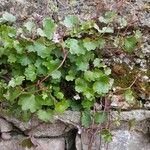
Cymbalaria muralis
Ivy-leaved Toadflax · Kenilworth Ivy · Coliseum-ivy · Ivy-leaf-toadflax · Oxford Ivy
Description
Source: leafsnapCymbalaria muralis, commonly known as Ivy-leaved toadflax or Kenilworth ivy, is a low-growing perennial plant in the Plantaginaceae family. Native to Europe, it has been introduced and naturalized in various regions worldwide. This plant features small, delicate leaves that resemble ivy, as well as small purple or pink flowers with yellow throats. It thrives in shady areas and is often found growing on walls, rocks, and other surfaces, using its thin stems to climb. Cymbalaria muralis is a popular ornamental plant due to its attractive appearance and its ability to grow in challenging areas such as cracks between paving stones or on walls where other plants struggle. In addition to its ornamental use, it has medicinal properties; it was traditionally used to treat respiratory issues like coughs and asthma. Although Cymbalaria muralis is an introduced species in many regions, it generally does not pose a significant threat to native plants due to its low growth habit. However, it can become invasive if left unchecked in certain environments. Overall, Cymbalaria muralis is an interesting plant with ornamental value for gardeners and medicinal properties for those interested in natural remedies.
🎭 Protection, Hex removal
Care Guide
💧 Water Every 3 days
Kenilworth ivy flourishes in moist environments and requires regular watering, ideally twice a week, for optimal growth. As an evergreen, it can absorb moisture from the humid air, which means you may need to water the soil less frequently during rainy seasons. This plant is native to damp walls and shaded areas.
How should I water my Kenilworth ivy?
To water your Kenilworth ivy effectively, it is recommended to use filtered water at room temperature. Tap water may contain harmful particles, so filtered water is a preferable choice. The ivy prefers slightly warm water since it is native to warm environments. Cold water can be a shock to its system. Additionally, avoid overhead watering as it can lead to leaf problems. Instead, generously water the soil with your filtered room temperature water until it is completely soaked. This method helps the roots stay moist and allows them to continue spreading through the soil to absorb the necessary nutrients.
What should I do if I give my Kenilworth ivy too much water or too little water?
When caring for your Kenilworth ivy, it is important to be cautious about both overwatering and underwatering. Overwatering is a more common issue and can cause the stems and leaves to wilt and turn yellow. It can also lead to diseases like root rot, mold, and mildew, which can be fatal for your plant. On the other hand, underwatering is less likely to occur as the Kenilworth ivy can tolerate drought fairly well. However, it is still possible, and in such cases, the leaves may become brittle and brown. To take care of your Kenilworth ivy, it is crucial to recognize the signs of overwatering early on. Diseases like root rot may not be reversible if left unaddressed for too long. If you notice early signs of overwatering, reduce your watering schedule immediately. You should also check the soil drainage and replace it with a loose, well-draining potting mix if it is not draining properly. If you suspect that your Kenilworth ivy is not receiving enough water, increase your watering frequency until the signs of dehydration have subsided.
How much should I water my Kenilworth ivy?
If your Kenilworth ivy is in a pot, check the soil moisture by sticking your finger into the soil. If the top two to three inches are dry, it's time to water. If you're growing the ivy outside in the ground, use the same method to test the soil. Water when the top few inches are dry. In the spring and early fall, watering once a week is usually sufficient. During very hot weather, watering twice a week or more may be necessary. Mature and well-established Kenilworth ivies can withstand drought well.
How much water does my Kenilworth ivy require?
To give your Kenilworth ivy the right amount of water, don't be afraid to water it generously. Make sure the top two to three inches of soil are dry before watering, then give it a thorough watering so that the soil is completely soaked. The water should flow through the drainage holes at the bottom of the pot. If you don't see excess water draining, you probably haven't watered enough. However, be careful not to let the water accumulate in the soil, as this can harm the plant. On the other hand, if water doesn't drain properly, it could mean the soil doesn't drain well, which is bad for the plant's health. If the plant is outdoors, one inch of rain per week is enough.
How should I water my Kenilworth ivy as it grows?
The water needs of Kenilworth ivy can change depending on its growth stage. In the first few years of its life or after transplanting, it requires more water to support the growth of new roots. These roots need extra moisture to ensure future growth. As the plant matures, it will require less water. Another stage that may require increased watering is during the bloom period, as flower development uses a significant amount of moisture.
☀️ Light Partial sun
The kenilworth ivy grows best with moderate sunlight but can tolerate a broad range of light conditions, from strong sun to deep shade. Originating in environments with variable light, it has developed this adaptability. However, too much sun can harm the plant by scorching its leaves, while very low light will stunt its growth.
What are the sunlight requirements for Kenilworth ivy?
Kenilworth ivy (Cymbalaria muralis) grows best under moderate sunlight exposure but is notable for its adaptability to different light conditions, thriving in environments ranging from intense sun to densely shaded areas. However, exposure to excessive sunlight can cause leaf burn, while insufficient light stunts its growth. It's important to observe your garden's sunlight patterns to place your plants in locations where they can receive the optimal balance of light. For indoor plants, artificial lighting such as LED lights can be used to supplement natural sunlight, with the amount of light adjusted according to the plant's needs — 30-50W/sq ft for full sun plants, 20-30W/sq ft for partial sun plants, and 10-20W/sq ft for full shade plants. Plants typically require 8-12 hours of light daily, with the light source placed 12-36 inches above the plant.
What are the signs of inadequate light exposure in Kenilworth ivy, and how can I address them?
Signs of inadequate light in Kenilworth ivy include smaller new leaves, leggy or sparse growth, premature leaf drop, halted or slowed growth, paler or irregularly colored new leaves, chlorosis, sunscald, leaf curling, wilting, and leaf scorching. To address inadequate light, gradually acclimate your plant to receive 3-6 hours of direct sunlight daily by shifting it to sunnier spots each week. If moving the plant is not feasible, using artificial lighting, such as desk, ceiling, or professional plant grow lights, for at least 8 hours daily can provide additional light. Outdoors, gradually relocating your plants to sunnier locations helps avoid sunburn. For ground-planted species, reducing obstructions like pruning branches or transplanting during the dormant period can improve sunlight exposure. It’s essential to allow the plant to adapt gradually to prevent stress.
🌡️ Temperature 20–37.8°C
Kenilworth ivy does best in warm conditions of 68 to 100 °F (20 to 38 °C). During colder months, adjust its environment to recreate the temperature conditions it prefers.
What is the ideal temperature range for Kenilworth ivy?
Kenilworth ivy, also known by its botanical name Cymbalaria muralis, flourishes in warm temperatures, ideally between 68°F and 100°F (20°C and 38°C). It is crucial to maintain this temperature range, especially during colder seasons, by adjusting the plant's environment to mimic its preferred conditions. For instance, in the autumn, it's advisable to move outdoor Kenilworth ivy plants indoors, placing them near a bright window but at a distance from direct heat sources to avoid damage. Ensuring that the temperature remains above 20°C during winter is essential for the plant's health, as temperatures nearing 0°C are harmful.
How does low temperature affect Kenilworth ivy and what are the solutions?
Kenilworth ivy is sensitive to low temperatures and thrives when the temperature remains above 20°C. Exposure to temperatures below 0°C can lead to discoloration of the leaves, which may turn lighter and eventually darken to brown or black after frost damage. Symptoms such as wilting and drooping are common under such conditions. To protect the plant from cold damage, it's recommended to trim off frost-damaged parts and immediately move the plant to a warmer indoor setting. Placing the plant near a south-facing window can ensure it receives sufficient sunlight, but it should not be placed near heaters or air conditioning vents to avoid excessive dryness.
What should be done if Kenilworth ivy experiences high temperatures?
During the summer, it's essential to keep Kenilworth ivy's temperature below 38°C to prevent heat stress. When temperatures exceed 43°C, the plant's leaves may lighten and become prone to sunburn. To alleviate the effects of high temperature, affected leaves should be trimmed away and the plant should be relocated to a shaded area, especially from the midday and afternoon sun. Furthermore, watering the plant in the morning and evening will help maintain soil moisture and aid in keeping the plant healthy under high temperature conditions.
💨 Humidity dry (<40%)
This plant prefers dry conditions, so don't mist it. However, watering it less often can also thrive in higher humidity.
🪴 Soil 6-7
🌱 Fertilizer
Correct feeding is vital for Kenilworth ivy’s health and appearance. Feed Kenilworth ivy in summer, repeating the treatment monthly throughout the season. Nutrients supply energy for growth and sustain the plant’s parts. Fertilizing boosts the ivy’s floral display, ensuring the best blooms.
🪴 Pot & Repot 2-3 years
To ensure optimal growth, repot Kenilworth Ivy every 2-3 years during the spring. Choose a shallow, wide pot with excellent drainage to accommodate its trailing habit. After repotting, keep the soil consistently moist and place the plant in bright, indirect light to help it recover and thrive.
✂️ Pruning
Pruning Kenilworth ivy from early to late spring helps it thrive by promoting bushier growth and improving air circulation. To encourage flowering and keep the plant looking its best, trim the tips and remove any dead stems. Be sure to use sharp, clean tools to reduce stress on the plant and ensure its health and visual appeal.
🌿 Propagating
🐛 Diseases & pets
☠️ Toxicity
Characteristics
- Plant Type
- Herb
- Life Cycle
- Perennial, Annual
- Genus
- Cymbalaria
- Family
- Plantaginaceae
- Hardiness Zone
- 9-11
- Mature Height
- 5 cm
- Mature Spread
- 30 cm to 46 cm
- Leaf Color
- Green
- Leaf Type
- Deciduous
- Flower Color
- Lavender
- Flower Size
- 2.54 cm
- Bloom Time
- Mid spring, Late spring, Summer
- Planting Time
- Spring
- Harvest Time
- Late spring, Summer, Early fall