Cynanchum laeve
Honeyvine · Climbing-milkweed · Sandvine · Honeyvine milkweed · Smooth swallowwort
Description
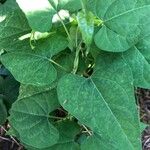
Source: leafsnapCynanchum laeve, commonly known as honeyvine milkweed, is a perennial plant belonging to the Apocynaceae family. Native to North America, it thrives in diverse habitats such as prairies, meadows, and open woods. The plant can reach a height of up to 6 feet and features a twining stem that relies on other plants for support. The leaves of Cynanchum laeve are opposite, ovate, and pointed, with a dark green, smooth surface. Its small flowers are either white or greenish-yellow, each with five petals forming a star shape. Blooming from June to September, honeyvine milkweed attracts a variety of pollinators, including bees, butterflies, moths, and hummingbirds. It is also a crucial food source for monarch butterfly larvae. Traditionally, Native Americans used Cynanchum laeve for medicinal purposes, treating ailments such as snake bites and stomach issues. However, it's important to note that the plant contains toxic compounds that can be harmful if ingested. In summary, Cynanchum laeve is a significant native species that provides ecological benefits and holds cultural importance through its traditional medicinal uses by Native Americans.
🌳 The often overlooked honeyvine has a fascinating role beyond being dismissed as just a weed. This ordinary-looking creeper is surprisingly effective at phytoextraction. It can take up large amounts of hazardous substances like lead from contaminated soils, offering an eco-friendly way to decontaminate the ground.
🎭 Remedy for Heartache
Care Guide
💧 Water Every 7 days
Honeyvine flourishes in environments with consistent moisture and high humidity, as long as it is not waterlogged. For optimal growth, particularly outdoors, weekly watering is recommended. During the growing season, rainwater can effectively meet its needs, as the plant often climbs fences and trellises, minimizing the requirement for additional watering.
How should I water my Honeyvine?
To properly water the Honeyvine plant, it is recommended to use filtered water at room temperature. Tap water may contain harmful particles, so filtered water is preferable. The water should be at room temperature or slightly warmer because the Honeyvine is accustomed to warm environments and cold water can be a shock to its system. It is advised to avoid overhead watering, as it can lead to issues with the foliage. Instead, gently apply filtered room temperature water directly to the soil until it is fully soaked. This helps to keep the roots moist and allows them to spread and absorb the necessary nutrients from the soil.
What should I do if I give my Honeyvine plant too much or too little water?
Overwatering is a more common problem for Honeyvine plants and can cause wilting, yellowing, and various diseases that can be fatal. Underwatering is less common but can cause brittleness and browning of the leaves. It is important to recognize the signs of overwatering early and reduce watering immediately. Additionally, it is recommended to check the soil's drainage and replace it with well-draining soil if necessary. If underwatering is suspected, simply water more regularly until the signs improve.
How frequently should I water my Honeyvine plant?
If your Honeyvine plant is in a pot, the most precise way to tell if it needs water is to stick your finger into the soil. When you find that the first two to three inches of soil are dry, it's time to water it. If you're growing your Honeyvine outdoors in the ground, you can use the same method. When the first few inches of soil have dried out, it's time to water the plant. Typically, during the spring and early fall, you'll need to water about once a week. But during extremely hot weather, you may need to water twice or more per week. However, mature and well-established Honeyvines have an admirable ability to withstand drought.
How much water does my Honeyvine plant need?
Here are some tips for watering your Honeyvine plant effectively: 1. Don't be afraid to give it a generous amount of water. When the top two to three inches of soil are dry, it's time to water. 2. Make sure to thoroughly soak the soil. The water should completely penetrate the soil. 3. To determine if you've added enough water, check if excess water flows out through the drainage holes at the bottom of the pot. If no excess water drains out, you may have not given enough water. 4. Be cautious of water accumulating inside the soil, as it can harm the plant. Avoid overwatering. 5. Poorly draining soil can be harmful to the plant's health. Ensure your pot has good drainage to prevent this issue. 6. If your Honeyvine plant is outdoors, approximately 1 inch of rain per week should be enough.
How do I water my Honeyvine when it's growing?
The water needs of the Honeyvine can vary based on its growth stages. In the first few years or after transplanting, the Honeyvine will require more water due to the energy it expends on developing new roots for future growth. These new roots perform best when they receive slightly more moisture. As the Honeyvine matures, it will require less water. Additionally, during the bloom period, the plant may need increased water as flower development utilizes a significant amount of moisture. Therefore, you may need to provide more water for your Honeyvine during this time.
☀️ Light Full sun
Honeyvine grows vigorously with unrestricted sunlight. Its healthy growth and blooming are affected by that full exposure, although it can tolerate periods of lower light. Unwanted sunlight can inhibit its flowering potential and may cause leaf scalding.
What are the sunlight requirements for Honeyvine?
Honeyvine thrives best under full sun, requiring more than 6 hours of sunlight daily, but it can also grow in partial sun, with about 3-6 hours of sunlight. It's essential to observe how sunlight moves through your garden to find the optimal spots for your plants, balancing light and shade to ensure their growth and happiness.
How does sunlight affect Honeyvine's growth?
Sunlight plays a crucial role in the growth and blooming of Honeyvine. It flourishes robustly with unhindered exposure to the sun, promoting healthful growth and blooming. Although Honeyvine can endure less light, insufficient sun exposure may stunt its flowering potential and lead to leaf scalding.
Can artificial lighting be used for Honeyvine? If so, how?
Yes, artificial lighting can be beneficial for Honeyvine, especially when natural sunlight is insufficient, like during winter or in less sunny spaces. Optimal growth can be achieved through adequate lighting, with LED lights being a popular choice due to their ability to provide specific wavelengths needed by plants. Full sun plants require 30-50W/sq ft, partial sun plants 20-30W/sq ft, and full shade plants 10-20W/sq ft of artificial light. The light source should be placed 12-36 inches above the plant, mimicking natural sunlight conditions for 8-12 hours per day.
What are the symptoms of light deficiency in Honeyvine?
Symptoms of light deficiency in Honeyvine include smaller new leaves, leggy or sparse growth, faster leaf drop, slower or no new growth, lighter-colored new leaves, chlorosis (yellowing leaves), sunscald, leaf curling, wilting, and leaf scorching. These symptoms indicate that the plant isn't receiving adequate sunlight, affecting its growth and health.
How can I address light deficiency in Honeyvine?
To address light deficiency in Honeyvine, gradually move plants to sunnier locations, ensuring they receive at least 6 hours of direct sunlight daily. For indoor plants, use a south-facing window, keep curtains open during the day, or use artificial lights like desk or grow lights for at least 8 hours daily. Outdoors, consider the gradual adaptation to brighter spots to avoid sunburn. Reducing obstructions, such as pruning trees or relocating plants to areas with more sunlight and better drainage, can also help. Remember, parts of the plant that have suffered due to insufficient light may not recover, but new growth will be healthy once light conditions improve.
🌡️ Temperature 5–35°C
Honeyvine grows best in a moderate temperature range of 41 to 95℉ (5 to 35℃). Its native habitat matches these temperature needs, and it adapts well to temperature fluctuations. In colder months, providing frost protection is advised if temperatures fall below 32℉ (0℃).
What is the preferred temperature range for Honeyvine?
Honeyvine thrives in a moderate temperature range, specifically between 41 to 95°F (5 to 35°C). Its native growth environment is designed to adapt well to fluctuating temperatures. To ensure the plant's health during cooler months, it's recommended to protect it from frost if temperatures are expected to drop below 32°F (0°C). Despite its strong cold resistance, special frost protection measures should be considered when winter temperatures fall below the plant's tolerance limit. This can include wrapping the trunk and branches with insulating materials, such as non-woven fabric or cloth, and watering the plant abundantly before the first freeze in autumn to help the soil retain moisture.
How should Honeyvine be cared for in cold and high temperatures?
For cold temperatures, Honeyvine is notably cold-tolerant and thrives best when kept above a certain minimum temperature. It is important to keep it above this minimum during winter to prevent damage. If the temperature falls below this limit, there might not be immediate noticeable changes, but the branches could become brittle and dry by spring, with no new shoots emerging. The recommended solution is to prune away any dead branches in the spring. In contrast, during high temperatures, especially in summer, Honeyvine should be kept below a certain maximum temperature. Exceeding this can result in lighter leaf color, dry and withered tips, and increased susceptibility to sunburn. Solutions include trimming away sunburned and dried-up parts, relocating the plant to a shaded area, and ensuring the soil is kept moist through appropriate watering.
💨 Humidity
🪴 Soil 6-7
🌱 Fertilizer
A single fertilizer application in spring is typically adequate for Honeyvine, though repeated feedings can maximize its growth. Apply fertilizer every one to one and a half months. Fertilization improves the leaves' appearance and function, helping maintain even color and a healthy texture. It also promotes root development and nutrient uptake, supporting long-term plant health.
🪴 Pot & Repot Every 12 months
✂️ Pruning
🌿 Propagating
🐛 Diseases & pets
☠️ Toxicity
Characteristics
- Plant Type
- Vine, Herb
- Life Cycle
- Perennial
- Genus
- Cynanchum
- Family
- Apocynaceae
- Hardiness Zone
- 4-9
- Mature Height
- 2.13 m to 10.06 m
- Mature Spread
- 91 cm
- Leaf Color
- Green, Blue
- Leaf Type
- Deciduous
- Flower Color
- White, Cream
- Flower Size
- 2.54 cm
- Bloom Time
- Late spring, Early summer, Mid summer
- Planting Time
- Autumn
- Harvest Time
- Mid summer, Late summer