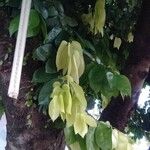
Cynometra ramiflora
Balitbitan
Description
Source: leafsnapA tree in the family Fabaceae, Cynometra ramiflora is found in mangroves and flooded forests from New Caledonia in the western Pacific west to Queensland in Australia, New Guinea, Island Southeast Asia, and Tropical Asia as far west as India. Its wood is used for construction and fuel, and parts of plant are ascribed medicinal use.
Care Guide
💧 Water
Cynometra plants thrive in high humidity and require consistently moist soil. To keep the soil evenly moist, water the plant every 2-3 weeks, ensuring that it never dries out completely. Since it is an evergreen, indoor misting can help maintain the high humidity levels it prefers.
How should I water my Cynometra plant?
Your Cynometra plant is not particular about how you water it. You can use any common watering tool, like watering cans, hoses, or even cups. The key is to water it directly on the soil. It's important to make sure all areas of the soil are moistened evenly to give the entire root system the water it needs. Using filtered water is a good idea to avoid harmful particles found in tap water. It's also best to use water that is at or slightly above room temperature, as extremely hot or cold water can be a bit shocking to the Cynometra. However, generally speaking, the Cynometra is adaptable and responds well to any type of water.
What do I need to do if I give too much or too little water to my Cynometra plant?
Outdoor plants, especially newly planted ones or seedlings, can easily suffer from lack of watering. It's important to consistently water them for a few months when they are small or newly planted until their roots are established and can rely on rainwater. When Cynometra is planted in pots, the risk of overwatering increases. If you accidentally overwater your Cynometra, take immediate action to minimize the impact. Stop watering the plant right away and check its roots by removing it from the pot. If there are no signs of root rot, you can safely return the plant to its container. However, if you find any affected roots, trim them and consider using a fungicide to prevent further damage. Repot the Cynometra in well-draining soil. On the other hand, if you have underwatered your Cynometra, simply water it more frequently. The signs of underwatering include drooping, dryness, and leaf loss, but the plant will recover quickly after sufficient watering. It's important to adjust your watering frequency promptly when you notice signs of underwatering.
How frequently do I need to water my Cynometra?
If you live in an area with regular rainfall, most outdoor plants will be fine growing naturally. However, if your area doesn't get much rainfall, you'll need to water your plants every 2 weeks in the spring and fall, and more frequently in the summer. In the winter, when plants don't need as much water, you can water them less often or not at all. For young or newly planted Cynometra plants, you should water them more often to help them establish and become more drought tolerant. When it comes to potted plants, there are two ways you can determine how often to water your Cynometra. The first way is to have a set watering schedule, either once a week or every other week. However, this may not always work since it doesn't consider the specific conditions of your growing environment. Another option is to base your watering frequency on soil moisture. It's a good idea to wait until the top 2 to 4 inches of soil (about ⅓ to ½ depth of the pot) have completely dried out before watering again.
How much water does my Cynometra plant need?
Watering your Cynometra requires a bit of attention. It doesn't always need a lot of water - just five to ten ounces if only a few inches of soil have dried since the last watering. You can determine how much water to give based on the soil moisture. Take note of how many inches of soil have dried out between waterings. To ensure it gets enough moisture, water until all the dry soil layers are moistened. If over half of the soil is dry, give more water and keep adding until excess water drains from the pot. If your Cynometra is outside and gets plenty of rain, it may not need additional watering. Young or newly established plants should receive 1-2 inches of rain per week. Once it's more established, it can rely solely on rainwater except during prolonged hot and rainless periods, where a full watering is necessary to avoid stress.
How can I know if I'm giving my Cynometra tree enough water?
Overwatering is a common problem for the Cynometra, and there are clear signs to look out for. An overwatered Cynometra will have yellowing leaves, and may lose some leaves altogether. Additionally, overwatering can lead to a shriveled overall structure and root rot. Conversely, an underwatered Cynometra will start to wilt and may have brown or brittle leaves. If you see signs of either overwatering or underwatering, it's important to intervene promptly and restore the health of your Cynometra.
☀️ Light Full sun
Cynometra is native to open habitats, such as bright meadows and forest margins, where light is plentiful. It prefers Full Sun but can also tolerate Partial Sun, adapting well to a range of sunlight conditions.
How many hours of sunlight per day does Cynometra need for healthy growth?
To ensure healthy growth, it's important to give Cynometra at least 3–6 hours of sunlight daily. This is the minimum requirement for the plant to thrive. However, plants that can tolerate partial sunlight can also do well in full sunlight. These plants are more adaptable because they need less light for photosynthesis compared to plants that specifically need either full sunlight or partial shade.
What kind of sunlight does Cynometra need?
Cynometra plants thrive in full or part sun, but they prefer direct morning light. However, during summer, it is important to shield them from the intense afternoon sun to prevent leaf burn and maintain the plant's appearance and overall health.
Can the sun harm Cynometra? How can we keep Cynometra safe from the sun and heat damage?
Indoor Cynometra plants are vulnerable to sun damage when being taken outdoors. To prevent overexposure and sunburn, it's best to move the pots slowly from a shaded spot to a brighter area. However, even plants used to the summer sun can be harmed by intense heat. When there's a heatwave, it's important to keep the soil consistently moist to help the plants handle the excessive heat. To protect delicate Cynometra during extreme weather, consider moving potted plants to shaded areas in the afternoon or using a shade cloth to cover them.
Does Cynometra need to stay away from the sun?
Cynometra benefits from bright morning sun and some full sun exposure, but it cannot handle the harsh, hot midday sun of summer. If it is planted in the ground, it can gradually adapt to the increasing intensity of the summer sun. However, if it is a potted plant that has been indoors or in a protected location, it may get injured when suddenly exposed to direct summer sun in the hottest part of the day. To protect the plant from the strong afternoon sun, it is best to plant or place it in an understory location where it can be shaded at midday by taller trees, plants, a building, or landscape feature.
What will happen if Cynometra doesn't get enough sunlight?
When Cynometra doesn't get enough sunlight, it can turn pale green or have drooping, yellow leaves. It's normal for some leaves to fall off, but if no new ones grow back, it means something is wrong. If Cynometra does manage to grow in low light, the new growth is usually weak, pale, and attracts insects. Paying attention to these signs and adjusting the lighting will make a big difference.
🌡️ Temperature 20–37.8°C
Cynometra comes from tropical areas, where the climate is usually warm and humid. Consequently, it is adapted to high heat and moisture. It does not tolerate sudden temperature shifts and prefers a steady thermal environment, so avoiding indoor temperature fluctuations is important. It generally cannot withstand cold and needs higher temperatures to grow. If the surrounding temperature falls too low, the plant may stop growing or even die.
💨 Humidity
🪴 Soil 5-6
🌱 Fertilizer
The best time to fertilize a Cynometra is in early spring, as it comes out of dormancy. This encourages overall growth and flower development. Fertilization improves the foliage, stems, and branches, while encouraging large, vibrant, and long-lasting flowers. It helps move nutrients from the roots to the flowers and enhances the plant's health and resistance to disease.
🪴 Pot & Repot
✂️ Pruning
Cynometra trees are known for their glossy leaves and beautiful canopy. To keep them healthy and looking their best, it's important to use key pruning techniques. These include removing dead branches, thinning the branches to improve airflow, and shaping the tree for a pleasing appearance. It's best to prune the tree from early to late winter when it is dormant, as this promotes health and enhances its blooming potential.
🌿 Propagating
🐛 Diseases & pets
☠️ Toxicity
Characteristics
- Plant Type
- Tree
- Life Cycle
- Perennial
- Genus
- Cynometra
- Family
- Fabaceae
- Hardiness Zone
- 10-12
- Mature Height
- 3.96 m to 25.91 m
- Mature Spread
- 30 cm
- Leaf Color
- Dark Green, Forest Green
- Leaf Type
- Evergreen
- Flower Color
- White
- Flower Size
- 0.51 cm to 0.76 cm
- Bloom Time
- Late spring, Early summer, Mid summer
- Planting Time
- Autumn
- Harvest Time
- Late summer, Early fall, Mid fall
- Native Area
- India, Malaysia, Indonesia, Cambodia, Vietnam, Myanmar, Philippines, Singapore, Bangladesh, Laos