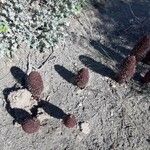
Cynomorium coccineum
Maltese-mushroom · Scarlet synomorium · General's root · Cynomorium · Red Thumb
Description
Source: leafsnapCynomorium is a genus of parasitic perennial flowering plants in the family Cynomoriaceae. The genus consists of only one species, Cynomorium coccineum (although one of its subspecies is sometimes treated as a separate species). Its placement in the Saxifragales was resolved in 2016 with the help of nuclear, plastid, and mitochondrial sequences obtained from next-generation sequencing. Common names include the misleading Maltese fungus or Maltese mushroom; also desert thumb, red thumb, tarthuth (Bedouin) and suoyang (Chinese). A rare or local species, it grows in dry, rocky or sandy soils, often in salt marshes or other saline habitats close to the coast. It has had a wide variety of uses in European, Arabian and Chinese herbal medicine.
Care Guide
💧 Water Every 7 days
The Maltese mushroom is well adapted to arid environments, exhibiting excellent drought tolerance by conserving water efficiently. It needs only weekly watering and thrives in harsh climates, which allows it to survive with infrequent rainfall. This makes the Maltese mushroom ideal for outdoor cultivation, as it requires minimal moisture to flourish.
How should I water my Maltese mushroom?
For the Maltese mushroom, it is recommended to water it with filtered water at room temperature. Tap water may have harmful particles, so filtered water is preferable. The water should not be cold, as the mushroom is used to warm environments. Avoid overhead watering and instead, water the soil directly until it is soaked. This helps the roots to spread and collect nutrients.
What do I need to do if I give my Maltese mushroom too much water or too little water?
Both overwatering and underwatering can harm your Maltese mushroom's health, but overwatering is more common. Excessive water can cause wilting and yellowing of the stems and leaves. Extended overwatering can also lead to diseases like root rot, mold, and mildew, which are fatal to the plant. While underwatering is less likely due to the Maltese mushroom's decent drought tolerance, it can still occur, resulting in brittle and brown leaves. To care for your Maltese mushroom, it's crucial to recognize the signs of overwatering promptly. Some diseases arising from overwatering, like root rot, may be irreversible if left unaddressed. If you notice early signs of overwatering, reduce your watering frequency immediately. Additionally, assess the soil quality where your plant grows. If it drains poorly, replace it with a loose, well-draining potting mix. Conversely, if your Maltese mushroom shows signs of insufficient water, simply water it more regularly until those signs improve.
How often do I need to water my Maltese mushroom?
If your Maltese mushroom plant is in a pot, the most precise way to determine if it needs water is by checking the soil with your finger. If the top two to three inches of soil feels dry, it's time to water it. The same method can be used for mushrooms grown outdoors in the ground. If you find that the top few inches of soil are dry, it's time to water. During spring and early fall, watering once a week using this method is usually sufficient. However, during extremely hot weather, you may need to water two or more times a week. It's important to note that mature, well-established Maltese mushrooms have a remarkable ability to withstand drought.
How much water does my Maltese mushroom require?
To properly water your Maltese mushroom, make sure the top two to three inches of soil are dry before watering. Give the plant a thorough and long watering, making sure to soak the soil completely. The water should flow out of the drainage holes at the bottom of the pot. If there's no excess water draining, you might have not given enough water. However, be careful not to let water accumulate in the soil, as it can harm the plant. If there's no water draining through the pot, it could indicate poorly draining soil, which is harmful to the plant. If the plant is outdoors, one inch of rain per week should be enough.
How do I water my Maltese mushroom as it grows?
The water needs of the Maltese mushroom can vary depending on its growth stages. During the first few years or after transplanting to a new location, it requires more water than usual because it is focusing on developing new roots for future growth. These roots function best with slightly more moisture. As the mushroom matures, it will require less water. Additionally, during the bloom period, the mushroom may need more water to support flower development.
☀️ Light Full sun
The Maltese mushroom performs best in bright, strong sunlight for the majority of the day, but it can tolerate less intense light. Seasonal changes may necessitate relocating it, especially when it is grown in a container. A lack of adequate sunlight can reduce its growth and vigor.
What are the sunlight requirements for Maltese mushroom?
The Maltese mushroom, a sun-loving perennial herbaceous plant, flourishes in full sun conditions, thriving in environments that provide more than 6 hours of sunlight daily. It can also adapt to partial sun settings, where it receives approximately 3 to 6 hours of sunlight. This plant's adaptability makes it suitable for various garden spots, ensuring its growth and happiness by selecting locations with the perfect balance of light and shade.
How important is artificial lighting for indoor Maltese mushroom plants?
Artificial lighting plays a crucial role in the growth of indoor Maltese mushroom plants, especially when natural sunlight is insufficient, such as during winter or in less sunlit spaces. Adequate lighting is essential for promoting healthier, faster plant growth. Utilizing LED lights is recommended as they can be tailored to provide specific light wavelengths needed by the plant. For optimal growth, the amount of artificial light required varies: full sun plants need 30-50W/sq ft, partial sun plants need 20-30W/sq ft, and full shade plants require 10-20W/sq ft. It's also important to place the artificial light source 12-36 inches above the plant, mimicking natural sunlight, and to ensure the plant receives 8-12 hours of light per day.
What symptoms indicate insufficient lighting for Maltese mushrooms?
Symptoms of insufficient lighting in Maltese mushrooms include smaller new leaves compared to older ones, leggy or sparse growth with longer spaces between leaves or stems, faster leaf drop as the plant conserves resources, delayed or halted growth as the plant enters survival mode, pale or irregularly colored new leaves indicating a lack of chlorophyll, and conditions like chlorosis, sunscald, leaf curling, wilting, and leaf scorching which arise from improper light exposure. These symptoms demonstrate the plant's struggle with inadequate sunlight or overexposure.
How can you address insufficient lighting for Maltese mushrooms?
Addressing insufficient lighting for Maltese mushrooms involves several strategies depending on the setting. Indoors, gradually moving plants to sunnier spots to achieve at least 6 hours of direct sunlight daily, using a south-facing window for natural light, or employing artificial lighting such as desk or ceiling lamps for at least 8 hours daily can help. For outdoor plants, it's crucial to adapt them to sunnier locations gradually while avoiding sudden light intensity changes to prevent sunburn. If sunlight is obstructed, pruning surrounding trees or transplanting the plant during its dormant period to a location with better sunlight and drainage is recommended. It's important to note that while parts of the plant affected by insufficient sunlight may not recover, new growth should be healthy once optimal light conditions are established.
🌡️ Temperature 15–37.8°C
The Maltese mushroom comes from tropical regions, where the climate is generally warm and humid. Consequently, it is well suited to high temperatures and moisture. It does not tolerate abrupt temperature changes and prefers a constant thermal environment, so keeping indoor temperature fluctuations to a minimum is important. It typically cannot endure cold temperatures and needs warmer conditions to grow. If the ambient temperature falls too low, the plant may stop growing or even die.
What is the Maltese mushroom?
The Maltese mushroom, known botanically as Cynomorium coccineum, is a unique plant species. Despite its common name, it is not a true mushroom but rather a parasitic plant with a rich history and a variety of traditional uses.
💨 Humidity
🪴 Soil 7-8
🌱 Fertilizer
Maltese mushroom requires the most fertilizer during its active growth phase, which takes place mainly in spring, summer, and early fall. Fertilizing supplies essential nutrients the soil may lack, supporting healthy root and stem growth and the attractive foliage that is a notable characteristic of this plant.
🪴 Pot & Repot
✂️ Pruning
Prune Maltese mushrooms from early to late spring to encourage healthy growth and control their spread. Remove any damaged stems and thin out crowded areas to improve air circulation. Light, regular trimming helps maintain their vigor and appearance while reducing the risk of pests. Consult horticultural guides for advice specific to your region.
🌿 Propagating
🐛 Diseases & pets
☠️ Toxicity
Characteristics
- Plant Type
- Herb
- Life Cycle
- Perennial
- Genus
- Cynomorium
- Family
- Cynomoriaceae
- Hardiness Zone
- 8-11
- Mature Height
- 10 cm to 30 cm
- Mature Spread
- 5 cm to 15 cm
- Leaf Color
- Red, Dark Red
- Leaf Type
- Deciduous
- Flower Size
- 0.20 cm to 0.51 cm
- Bloom Time
- Mid spring, Late spring
- Planting Time
- Spring, Autumn
- Harvest Time
- Early summer, Mid summer