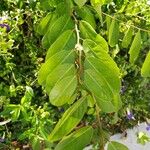
Cynophalla flexuosa
Falseteeth · Capertree · Mustard Tree · Man Of War Bush · Nightwood
Description
Source: leafsnapCynophalla flexuosa is a 2–4 meter high shrub.Cynophalla flexuosa flowers from early summer to mid summer. The flowers are white to pink, the thin petals are 1.5 cm long. The fruits are green and cylindrical, up to 15 cm long and contain numerous white seeds which are displayed when the ripe fruits splits open. The pulp is bright pink.Cynophalla flexuosa grows in coastal regions from Florida, the West Indies, Mexico, Central America to South America.
Care Guide
💧 Water
The bay-leaved caper is a drought-tolerant plant that thrives with minimal moisture. It only needs watering every 2-3 weeks. This plant prefers drier conditions, making it well-suited for outdoor cultivation. It benefits from natural rainfall and requires well-draining soil to prevent overwatering.
How should I water my Bay-leaved caper plant in the best way?
To promote excellent root development, consider placing a garden hose at the base of the plant. Avoid directly spraying the leaves, as they may need more watering if they are exposed to direct sunlight outdoors. You can also use bubblers or soaker hoses to moisten the roots. When adding or removing plants, use soaker hoses that cover the entire garden or bed to encourage deep root growth. After watering, drain any excess water and allow the soil to dry before watering again. To prevent diseases, it is best to water at ground level. On sunny days, you can spray the entire bush with water. Whether the Bay-leaved caper is potted or in the ground, remember to prioritize deep watering instead of light sprinkling.
What should I do if I give too much/not enough water to the Bay-leaved caper plant?
An overwatered Bay-leaved caper can have yellow leaves, leaf drop, and wilting. The plant will also look dull and unhealthy, with mushy stems. When these signs start to appear, it's important to adjust your watering schedule. Wilting can also be a sign of under watering, indicated by crispy and dry leaves. If the soil is dry and watering alone is not enough, give the plant a thorough watering. This will help the Bay-leaved caper recover, although the plant may still have dry and yellow leaves due to the damaged root system. Once the plant returns to normal, the yellowing of leaves will stop. Check the moisture levels of the soil when growing Bay-leaved caper indoors. Avoid overwatering and look for signs of black spots. If present, allow the soil to dry out by refraining from watering for a few days. Overwatering can lead to root rot, so if you notice discolored and slimy roots, consider transferring the plant to a different pot. It's important to prevent root rot by avoiding overly soggy soil. When planting Bay-leaved caper outdoors, make sure to dig deep and check the moisture of the soil. If it feels too dry, it may be a sign of underwatering. Adequate watering is necessary to help the plant recover.
How often do I need to water my Bay-leaved caper plant?
The Bay-leaved caper prefers deep and infrequent watering. When planted in pots, it is important to soak them in a gallon of water each time, as the water storage in pots is limited and the soil dries out faster. In cold regions, watering should be done every 3 to 5 days. It is best to water the plant early in the morning when the soil is dry, whether it is outdoors or indoors. You can also check the soil inside the pot to determine if watering is needed. When the top 2-3 inches of soil are dry, it is time to give the plant a full watering. On hot days, it is necessary to check the moisture daily as the heat can quickly dry out the soil in the pot. If you have a garden, irrigation of the soil is also necessary. In hot climates, watering once a week is recommended. Only water if about 2 to 3 inches of soil are too dry, both outdoors and indoors. Take into consideration the amount of rainfall and avoid adding water to prevent root rot. If there is ample rainfall, additional watering may not be needed. Bay-leaved caper plants generally grow during spring and fall. When they are outdoors, it is advisable to add mulch that is 3 to 4 inches deep to conserve water. Sandy soil requires more frequent watering as it drains faster. On the other hand, clay soil requires less frequent watering, allowing the plant to dry for 2-3 days without developing root rot. Keeping track of watering dates on a calendar can help ensure timely watering. If the leaves start to droop, it may indicate that watering is overdue.
How much water should I give my Bay-leaved caper plant?
The Bay-leaved caper generally needs about a gallon of water on a regular schedule. For potted plants, water them deeply until the water is dripping out of the bottom of the pot. Allow the soil to dry before watering again. To determine how much water you've given your plant in a week, you can use a water calculator or a moisture meter. During the flowering period, provide plenty of water and then allow the moisture to evaporate to prevent root rot. If the Bay-leaved caper is planted outdoors with adequate rainfall, additional watering may not be necessary. However, when the Bay-leaved caper is young or newly planted, it should receive 1-2 inches of rain per week. As the plant grows, it can rely solely on rainfall. Only during very hot weather or if there is no rainfall for 2-3 weeks, consider watering the Bay-leaved caper thoroughly during the cooler part of the day to prevent heat damage. Additional watering may be needed during prolonged dry periods.
Should I change how often I water my Bay-leaved caper plant depending on the time of year or the weather?
The Bay-leaved caper prefers to be outdoors and relies on rain for watering, although it may need additional watering during periods of persistent dry weather. In the spring and fall, the soil should be kept moist but not overly wet, and alternating between dry and moist soil conditions will promote healthy growth. In the summer, hot weather can cause water to evaporate quickly, so regular watering is necessary, especially if there is a lack of rainfall. In winter, the Bay-leaved caper requires less water as it becomes dormant. Using a well-draining yet moisture-retentive soil mixture, such as terracotta, can help with water absorption. Once the plant begins to leaf out and go dormant, watering can be skipped, relying on fall and winter rains. During flowering, good drainage is crucial, especially in winter. If the plant is in a pot, its root growth is restricted, so regular watering is important, especially during summer. It is best to water deeply, ensuring the entire root system is soaked, and avoid shallow sprinkles that don't reach the roots and promote fungi growth. In fall and winter, even during dormancy, the plant should not be allowed to completely dry out. Avoid overwatering, as sitting in water for too long can be harmful, especially in winter. Mulching is recommended to reduce stress, conserve water, and promote healthy blooming.
☀️ Light Full sun
The bay-leaved caper comes from open habitats, such as sunny meadows and forest edges, where light is plentiful. It thrives in Full Sun but can also tolerate Partial Sun, showing adaptability to various sunlight conditions.
How much sunlight does Bay-leaved caper need to grow?
To thrive, bay-leaved caper needs 3-6 hours of direct sunlight each day. However, it is important to provide some shade during the hottest parts of the day to avoid sun damage. Morning sunlight is best, but the plant can also tolerate some afternoon sun if the temperature is not extremely hot. To achieve the right balance, consider planting bay-leaved caper in an area with partial sun, like under a tree or on the east side of a building.
What happens if the Bay-leaved caper doesn't get enough sunlight?
If Bay-leaved caper is exposed to excessive direct sunlight, its leaves may yellow, dry out, or burn. You may also observe wilting or stunted growth in the plant. To avoid sun damage, it's important to provide some shade for Bay-leaved caper during the hottest times of the day. This can be achieved by using a shade cloth or planting it near taller plants that can offer natural shade.
What happens if Bay-leaved caper gets too much sunlight?
If the Bay-leaved caper doesn't receive sufficient sunlight, it may become tall and skinny with less foliage. Additionally, the leaves may become yellow or pale green, which indicates that the plant is not producing enough chlorophyll because of the lack of sunlight. To fix this issue, consider relocating the Bay-leaved caper to a sunnier area or trimming nearby foliage to allow more light to reach the plant.
🌡️ Temperature 20–37.8°C
Bay-leaved caper comes from tropical areas, where the weather is usually warm and humid. Consequently, it is suited to high temperatures and moisture. It is sensitive to sudden temperature changes and prefers a steady thermal environment, so avoiding indoor temperature swings is important. It generally does not tolerate cold and needs warmer conditions to grow. If the ambient temperature falls too low, the plant may stop growing or even die.
💨 Humidity
🪴 Soil 6-8
🌱 Fertilizer
The best time to fertilize a Bay-leaved caper is in early spring as it breaks dormancy. This supports overall growth and flower development. Fertilization improves foliage, stems, and branches, and encourages flowers that are larger, more vivid, and longer-lasting. It helps move nutrients from the roots to the blooms and enhances the plant’s health and resistance to disease.
🪴 Pot & Repot
✂️ Pruning
To promote healthy growth and enhance its appearance, the bay-leaved caper should be pruned in early spring. This involves removing damaged branches and shaping the plant. These techniques help improve air circulation and light penetration, supporting vigorous new shoots and enhancing flowering.
🌿 Propagating
🐛 Diseases & pets
☠️ Toxicity
Characteristics
- Plant Type
- Tree, Vine, Shrub
- Life Cycle
- Perennial
- Genus
- Cynophalla
- Family
- Capparaceae
- Hardiness Zone
- 10-12
- Mature Height
- 3.05 m to 7.92 m
- Mature Spread
- 2.13 m to 3.96 m
- Leaf Color
- Dark Green, Forest Green
- Leaf Type
- Deciduous
- Flower Size
- 3.05 cm to 5.08 cm
- Bloom Time
- Late spring, Summer, Early fall
- Planting Time
- Spring, Summer
- Harvest Time
- Late summer, Fall
- Native Area
- Colombia, Bahamas, Belize, Cuba, Honduras, Mexico, Guatemala, Bolivia, Venezuela, Peru, Brazil, El Salvador, Nicaragua, Ecuador, Panama, Jamaica