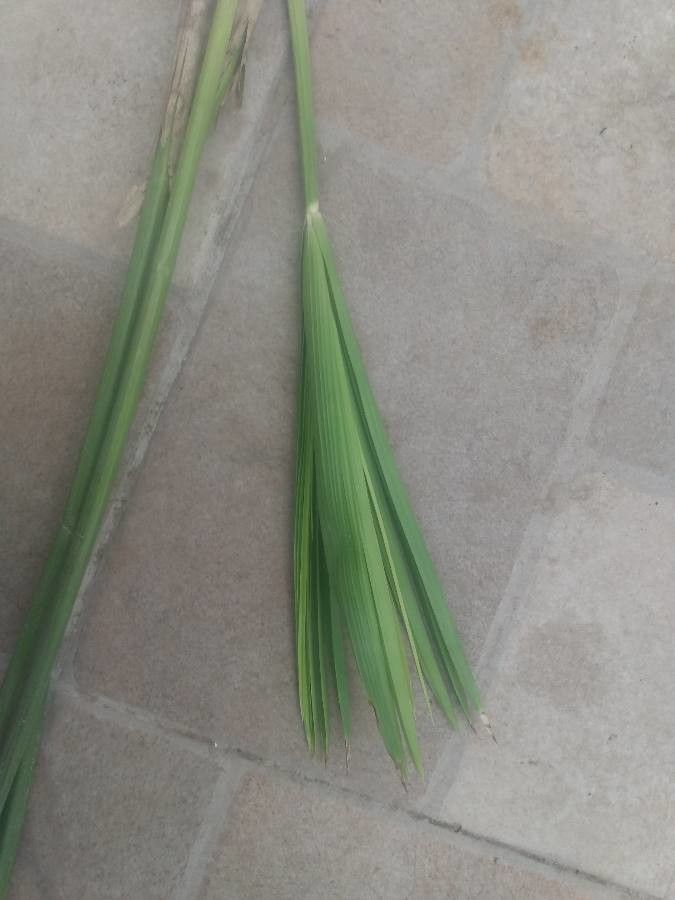
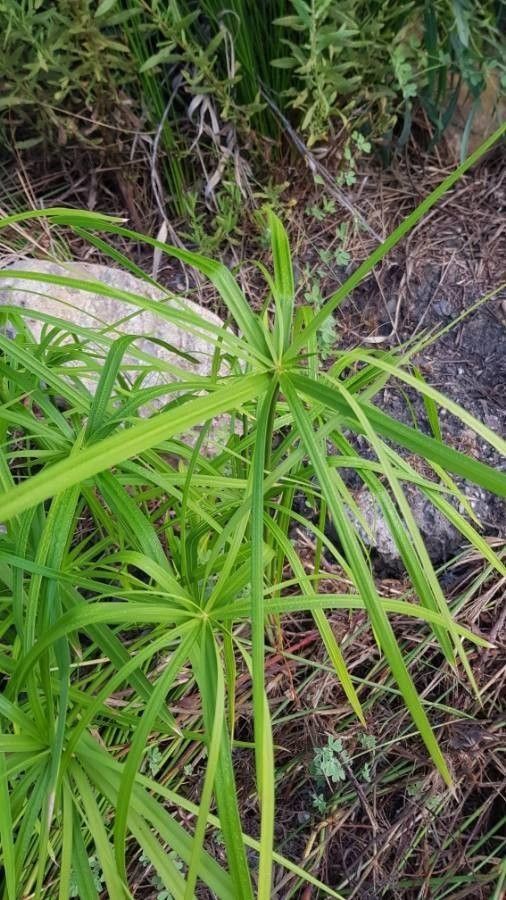
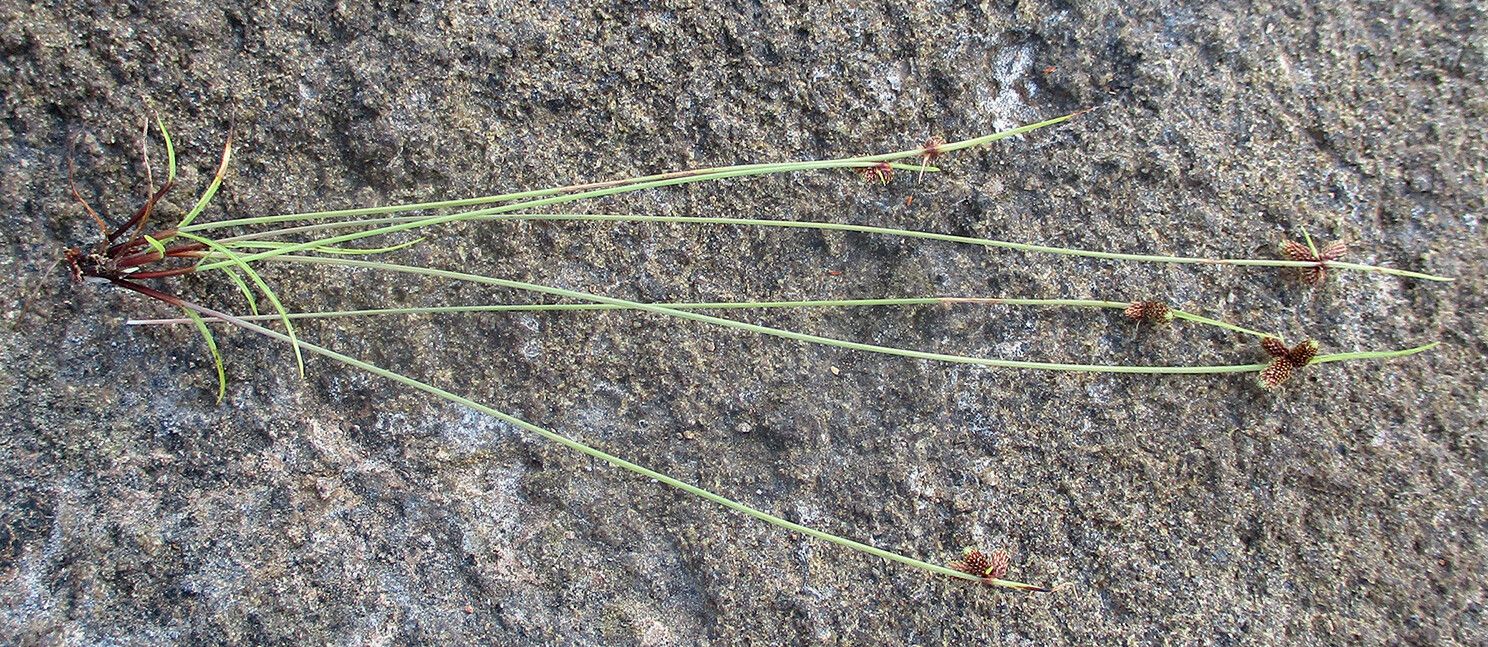
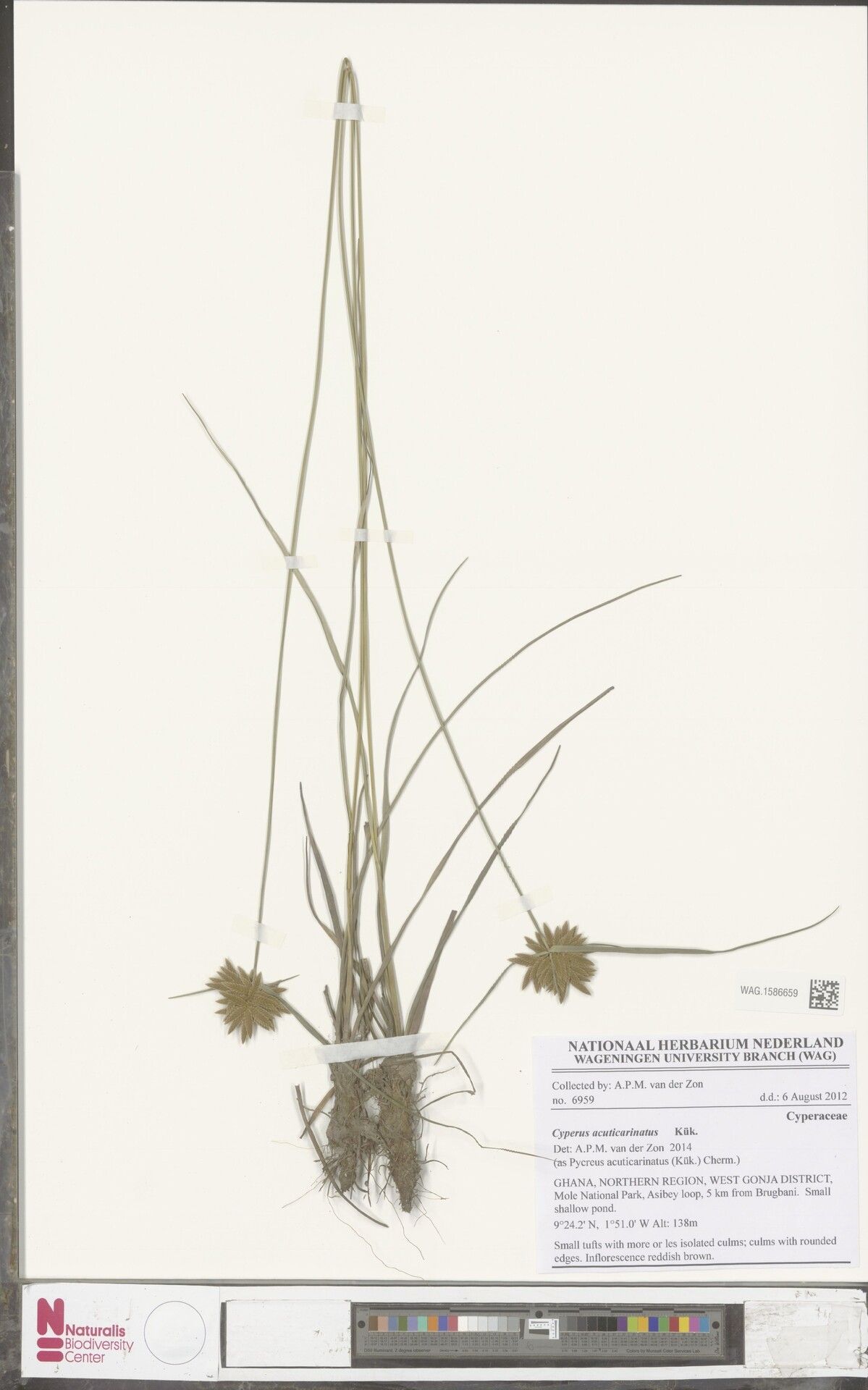
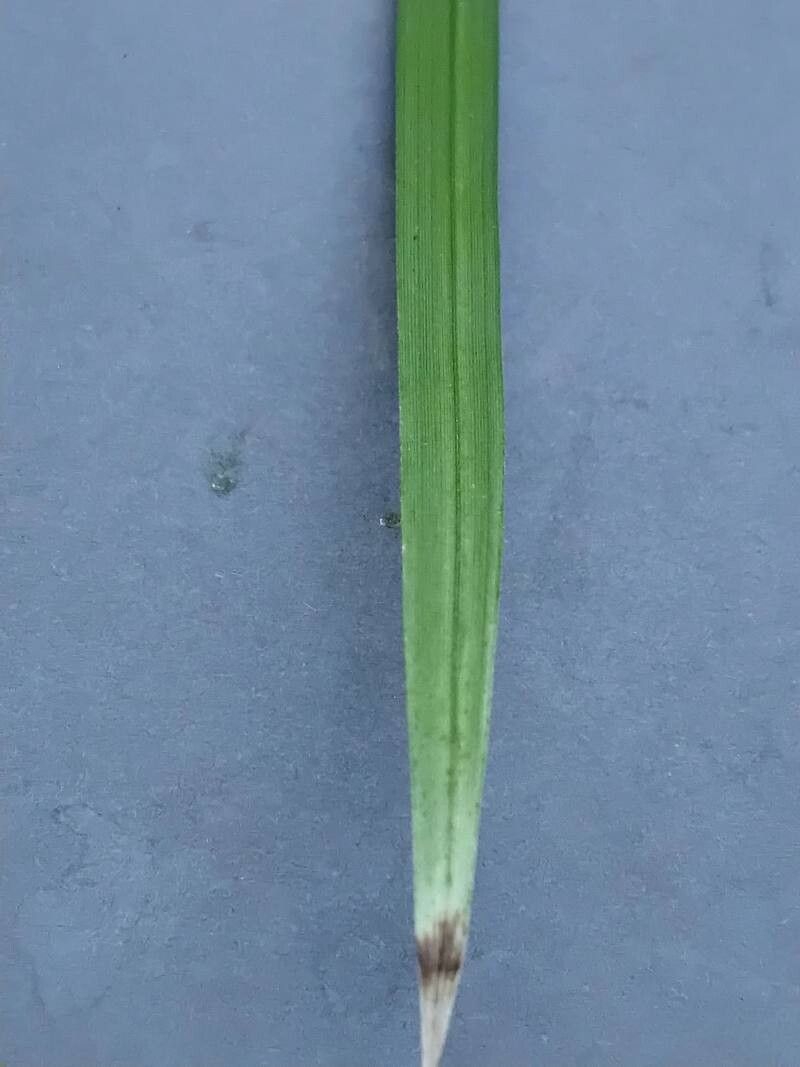
Cyperus alterniflorus, commonly known as umbrella flat-sedge, is a sedge of the family Cyperaceae that is native to Australia.The perennial and rhizomatous sedge has a robust tufted or tussock-like habit and typically grows to a height of 0.3 to 2 metres (1.0 to 6.6 ft). The plant blooms between June and October producing yellow-green-brown flowers. The plant has a short thick rhizome with triquetrous, smooth to scabrous culms that are 0.4 to 1.4 m (1.3 to 4.6 ft) long with a diameter of 5 centimetres (2.0 in). Leaves are usually longer than the culms and are strongly septate to nodulose and around 12 millimetres (0.47 in) wide. The compound to decompound inflorescence has three to eight primary branches up to 15 centimetres (5.9 in) in length in dense clusters. Following flowering it will form a trigonous pale red-brown to dark brown nut. The nut is narrow-ellipsoid in shape with a length of 1.6 to 2.3 millimetres (0.06 to 0.09 in) and a diameter of 0.5 to 0.7 mm (0.020 to 0.028 in).In Western Australia it is found around creeks and swamps in the Mid West, Wheatbelt and Goldfields-Esperance regions where it grows in sandy-clay soils. It is also found in inland areas of New South Wales, Queensland and South Australia.
Schweinitz's flatsedge zeigt eine gute Krankheitsresistenz und ist im Allgemeinen nicht anfällig für Krankheiten. Was die Pflege angeht, ist diese Pflanze relativ anspruchslos. Im Freien braucht sie nur wenig Wasser, und größere Pflanzen müssen normalerweise nicht geschnitten werden. Kleinere Pflanzen sollten jedoch nach der Blüte zurückgeschnitten werden. Schweinitz's flatsedget passt für Personen mit Außenbereichen wie Garten oder Terrasse und verlangt keine umfangreiche Pflegeerfahrung.
How to keep Cyperus Alterniflorus.
Light
Schweinitz's flatsedge is a sun-loving perennial herbaceous plant that comes from open habitats and commonly grows in meadows and grasslands. It prefers full sun but can tolerate partial sun.
Temperature
Schweinitz's flatsedge can tolerate a wide range of temperatures, but its distribution may still be restricted by particular combinations of moisture and heat. It performs best in warm summer climates with sufficient rainfall or irrigation. Prolonged stretches of cloudy, rainy weather and extended high temperatures increase the likelihood of Schweinitz's flatsedge dying. In winter, adequate protection from cold can improve the plant's survival rate.
Fertilizer
Schweinitz's flatsedge needs extra nutrients to encourage healthy new growth. In spring, putting compost around the plant's base will effectively supply the required nourishment. Fertilizing helps support vigorous growth and enhances the plant's resistance to diseases and pests.
Botanical profile.
- Plant Type
- Grass
- Life Cycle
- Perennial
- Genus
- Cyperus
- Family
- Cyperaceae
- Hardiness Zone
- 5-9
- Mature Height
- 30 cm to 76 cm
- Mature Spread
- 20 cm to 40 cm
- Leaf Color
- Green, Dark Green
- Leaf Type
- Deciduous
- Flower Size
- 0.20 cm to 0.25 cm
- Bloom Time
- Summer, Early fall
- Planting Time
- Summer
- Harvest Time
- Late summer, Fall
- Native Area
- Mexico