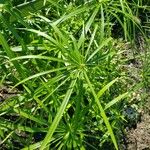
Cyperus alternifolius
نخل مرداب · وردة الشرطي · Umbrella sedge · Umbrella papyrus · Umbrella palm
Description
Source: leafsnapCyperus alternifolius, commonly known as the umbrella plant or umbrella sedge, is a perennial belonging to the Cyperaceae family. Native to Madagascar and other parts of Africa, it has become a popular ornamental plant worldwide. This plant features a distinctive appearance with long, slender stems that can reach up to 1 meter in height. The stems are topped with an arrangement of leaves that resemble an umbrella. The dark green, glossy leaves have a slightly curved shape, contributing to their unique look. Umbrella plants thrive in moist soil and can withstand both full sun and partial shade. While they are often grown indoors as houseplants, they can also be cultivated outdoors in warmer climates. Besides its decorative appeal, Cyperus alternifolius possesses medicinal properties. Traditionally, its roots have been used to treat various ailments, including fever, diarrhea, dysentery, and respiratory infections. Overall, Cyperus alternifolius is an attractive plant that enhances any garden or indoor space while offering some medicinal benefits.
💡 Umbrella Sedge is occasionally grown as a houseplant, but it needs a lot of water because it naturally thrives in bogs and aquatic environments. A specific variety, Umbrella Sedge 'Variegatus', is popular for its smaller, variegated leaves.
🎭 Triumph, power
Care Guide
💧 Water Every 7 days
Umbrella Sedge flourishes in environments with high humidity and consistently moist soil. To maintain the necessary moisture levels, water the plant twice a week. As an ornamental indoor plant, it thrives when placed in well-lit, humid areas such as bathrooms.
☀️ Light Full sun
Umbrella Sedge does best when bathed in direct sunlight for much of the day, though it can tolerate a shadier setting. Its original habitat had abundant sunshine. Both excessive light and too little light can harm its vigor.
What are the sunlight requirements for growing Umbrella Sedge?
Umbrella Sedge thrives best when it receives full sun for a substantial part of the day, which means above 6 hours of sunlight. It can also tolerate partial sun, about 3-6 hours of sunlight, although its native habitat was abundant in sunshine. Ensuring the right balance of light and shade is crucial for the plant's health, as both overexposure and insufficient light can negatively affect its vigor.
How does artificial lighting support the growth of indoor Umbrella Sedge plants?
For Umbrella Sedge plants indoors where natural sunlight may be insufficient, particularly during winter or in less sunny spaces, artificial lighting serves as a crucial substitute to promote optimal growth. LED lights, customizable for specific wavelengths, are recommended. Full sun plants require 30-50W/sq ft, partial sun plants 20-30W/sq ft, and full shade plants 10-20W/sq ft of artificial light. The light should be placed 12-36 inches above the plant, mimicking natural daylight for 8-12 hours per day to ensure healthier growth.
What are the symptoms of light deficiency in Umbrella Sedge?
Symptoms of light deficiency in Umbrella Sedge include smaller new leaves, leggy or sparse growth, faster leaf drop, slower or no new growth, lighter-colored or pale new leaves, chlorosis or yellowing of leaves, sunscald damage, leaf curling as a defense against extreme sunlight, wilting due to loss of turgor pressure, and leaf scorching characterized by brown, crispy edges on leaves. These symptoms indicate either too much or too little light exposure.
How can I enhance sunlight access for my outdoor and indoor Umbrella Sedge?
To optimize sunlight for Umbrella Sedge, gradually move plants to sunnier locations, ensuring at least 6 hours of sunlight daily for outdoor plants, and use a south-facing window or invest in grow lights for indoor ones. Avoid sudden light intensity changes to prevent sunburn. If blocked by trees, consider pruning to improve light access. For smaller plants, transplanting during the dormant season to a location with ample sunlight and good drainage can also be beneficial. Note that parts of the plant already affected by insufficient sunlight may not recover, but new growth should be healthy with improved light exposure.
🌡️ Temperature 15–37.8°C
Umbrella Sedge originates from areas with warm, humid growing conditions, where temperatures range from 70 to 95 ℉ (21 to 35 ℃). The plant prefers a temperature range of 59 to 100 ℉ (15 to 38 ℃). It can tolerate lower temperatures, but it is recommended to keep it above 50 ℉ (10 ℃) and to reduce watering during cooler seasons.
What is the native environment of Umbrella Sedge?
Umbrella Sedge, botanically known as Cyperus alternifolius, is native to warm and humid environments. It thrives in temperatures ranging from 70 to 95°F (21 to 35°C), but can also tolerate a broader temperature range of 59 to 100°F (15 to 38°C). The optimal growth temperature is within this range, and although the plant can adjust to cooler temperatures, it is advisable to keep it above 50°F (10°C) and reduce watering during cooler seasons.
How does Umbrella Sedge handle cold temperatures?
Umbrella Sedge possesses some degree of cold tolerance and usually does not require special care when temperatures are above -5°C. However, when temperatures are expected to drop below this threshold, it is necessary to take temporary cold protection measures. Wrapping the plant with materials like plastic film, fabric, or similar options can help safeguard it against cold damage. Once the temperature rises, these protective measures should be removed to avoid any potential adverse effects.
What should I do if my Umbrella Sedge is exposed to low temperatures?
If your Umbrella Sedge experiences temperatures below its moderate tolerance of 15°C, especially during winter, it should ideally be kept above -5°C to prevent damage. Exposure to temperatures below -10°C may cause the leaves to droop, and in severe cases, they will wilt and fall off. In such situations, it's recommended to trim off the frost-damaged parts of the plant and, to prevent future occurrences, wrap the plant with non-woven fabric or cloth. Additionally, constructing a wind barrier can protect the plant from cold winds.
How should I care for Umbrella Sedge during high temperatures?
During summer, it's crucial to ensure that temperatures around the Umbrella Sedge do not exceed 38°C to prevent heat stress. High temperatures above 43°C can cause the leaves to lighten in color, tips to dry and wither, leaves to curl, and increase susceptibility to sunburn. To manage these conditions, trim away any sunburned and dried parts of the plant, relocate it to a shaded area during peak sun exposure, or use a shade cloth. Additionally, keeping the soil moist with morning and evening watering can help mitigate the effects of high temperatures.
💨 Humidity normal (40-60%)
This plant will thrive in moderate humidity, which is probably the level in your home. However, misting it a few times a week can be very beneficial. Make sure the room has good ventilation.
🪴 Soil
🌱 Fertilizer
Umbrella Sedge is a low-maintenance plant that requires minimal fertilization. During its active growth period, it benefits from small doses of standard-strength fertilizer applied monthly. Unlike similar-sized plants, it has lower nutrient requirements, making it an easy choice for gardeners.
🪴 Pot & Repot
Umbrella Sedge thrives best when planted in pots with excellent drainage. Good drainage is essential to prevent root rot and promote healthy growth.
✂️ Pruning
In the fall, make sure to trim back the dead stems of umbrella sedge to help prevent diseases. Be careful not to cut the leaflets during pruning, as this can lead to brown tips, which are part of the plant's natural defense mechanism. Instead of removing the brown tips, let them outgrow naturally as new growth emerges.
🌿 Propagating
🐛 Diseases & pets
☠️ Toxicity
Characteristics
- Plant Type
- Grass
- Life Cycle
- Perennial
- Genus
- Cyperus
- Family
- Cyperaceae
- Hardiness Zone
- 8-11
- Mature Height
- 0.49 m to 1.52 m
- Mature Spread
- 61 cm to 91 cm
- Leaf Color
- Green
- Leaf Type
- Evergreen
- Flower Color
- Yellow, Green
- Flower Size
- 0.25 cm to 2.03 cm
- Bloom Time
- Early summer, Mid summer
- Planting Time
- Spring, Summer
- Harvest Time
- Mid summer, Late summer
- Native Area
- Africa