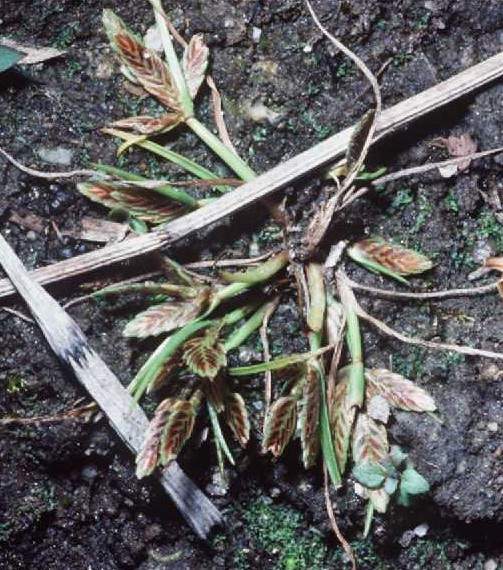
Cyperus bipartitus
Shining Flat Sedge · Slender flatsedge · Shining Flatsedge · Brook Flatsedge · River Cyperus
Description
Source: leafsnapCyperus bipartitus, commonly known as slender flatsedge, river cyperus, or the shining flatsedge, is a common species of sedge. The name "slender flatsedge" also applies to Cyperus gracilis.
Care Guide
💧 Water
Slender flatsedge flourishes in environments that are consistently moist, needing soil that remains evenly wet to avoid both drought and waterlogging. To keep it healthy, watering once a week is recommended. While it is usually cultivated outdoors, slender flatsedge also benefits from seasonal rains in wetland regions.
What do I do if I give my Slender flatsedge too much or too little water?
Proper watering is essential for the health of this beautiful ornamental grass. When planted in the ground, watering issues can be resolved. However, in a container, excessive or insufficient water can quickly kill Slender flatsedge. Inadequate water can cause the grass to stop growing, with symptoms such as yellow leaves with brown tips indicating overwatering, and drooping leaves, weak seed head production, and browned leaves indicating underwatering. If you suspect improper watering, first determine whether the problem is too much or too little water. If overwatering is the issue, immediately stop watering and wait for the heavy soils to dry out, which may take weeks. Once you observe new growth, test the soil for moisture and decide if more water is necessary. Conversely, if the grass is not receiving enough water, simply give it a deep drink and observe for any improvement. In all cases, it is important to prioritize long, deep watering over frequent shallow waterings. Deep watering encourages the growth of deep roots, making the grass more resistant to drought and less susceptible to watering-related problems.
How many times should I give water to my Slender flatsedge?
The watering needs of Slender flatsedge vary depending on its location. Generally, it should be watered every week. In hot climates, watering once or twice a week during the summer may be necessary. In moderate climates, watering once every seven days or more may be sufficient. Grass in containers generally requires more frequent watering than grass in the ground. However, the location also plays a role, as shaded grasses require less frequent watering than those planted in the ground. Water Slender flatsedge only when the soil is dry, which can be determined by pressing your finger a couple of inches into the soil or by weighing the pot to check its weight. When the roots lack sufficient water, the grass may show signs such as folded blades and thinner appearance. Despite its drought tolerance, regular, deep waterings will result in a beautiful color. Although Slender flatsedge is drought resistant, it still requires care and attention. Consistent watering is recommended for optimal growth. When newly planted, Slender flatsedge needs more frequent watering until it develops deep roots. For potted Slender flatsedge, the soil tends to dry out quickly, especially in hot, direct sunlight. Test the soil every 3 to 4 days and water only when it feels dry. Slender flatsedge planted in the ground generally requires less watering, but this can vary depending on the soil type. Clay soil holds water for a longer time, so it may feel dry at the surface while still retaining moisture below ground. Sandy soils that drain quickly will need more frequent watering.
What do I need to be careful about when watering my Slender flatsedge in different seasons, climates, or while it is growing?
To determine if you are watering enough, pay attention to the growth rate of your grass. Slender flatsedge is known to double in size within a year, especially during the hottest months. If the weather is hot but the grass growth is slow, you may need to adjust your watering schedule. In winter, you can probably get away with watering once a month, but make sure to check the soil for moisture. During the warmest months, the grass will require more water than usual due to its growth cycle. However, during winter and colder months, the need for water will significantly decrease. Remember to let the soil dry out completely before watering Slender flatsedge.
☀️ Light Full sun
The slender flatsedge predominantly flourishes under full sunlight but can also withstand a range of light conditions, including partial shade. Its origins lie in sunlit environments, making it adept to such settings. However, its growth can be impeded by light exposure that is too intense or insufficient, potentially causing stress and even death.
How many hours of sunlight does Slender flatsedge need each day to grow well?
In order to ensure the health of the plants, it is important to provide them with a minimum of 6 to 8 hours of sunlight each day. Preferably, they should receive more morning light, especially during the summer. The Slender flatsedge specifically thrives in full sun and benefits from as much sunlight as possible. Increased light enables these species to generate more food, produce stunning blooms, and improve their chances of survival.
What kind of sunlight does Slender flatsedge require?
To ensure optimal growth of the Slender flatsedge, it is important to provide it with full sunlight. Avoid overcrowding the plants, as this can hinder even sun exposure. In pots, place the herbaceous flowers in windows that receive direct sun all year round to guarantee full sunlight. Partial or filtered light is not suitable for the Slender flatsedge, as it may result in weak stems and unhealthy flowers. It is recommended to keep the plant consistently exposed to sunlight.
Can the sun harm plants? How can I protect Slender flatsedge from damage caused by sun and heat?
When the temperature rises above 90℉(32℃), the Slender flatsedge can be damaged by extreme temperatures, especially if exposed to many hours of sunlight. To prevent damage, it's recommended to provide shade in the afternoon during the summer, as sunlight is stronger and exposure is 50% longer than in winter. If the Slender flatsedge is stressed by sunlight, ensure it remains well-hydrated by watering when the top of the soil is about 2 inches dry. If it's too hot outside, consider moving container-planted flatsedge plants indoors. The plant's leaves may wilt during the day but should recover at night. However, if the leaves continue to droop, it indicates fast water loss and requires immediate watering.
Should I keep Slender flatsedge out of the sun?
The Slender flatsedge thrives in the sun and doesn't require any protection from it. In fact, some species are heliotropic, meaning they are attracted to the sun. Ideally, plant them in south-facing gardens so they can enjoy the sun exposure from morning to afternoon. However, it's important to note that excessive sun can cause sunburn in some species. If necessary, you can provide protection from the afternoon and midday sun using a shade from a tree or a wall. Growing the Slender flatsedge in shady areas is not possible as the larger flowers would require too much energy to grow and produce. For optimal growth, ensure the plants are placed in an area with full sun and provide the right lighting conditions.
What will happen if Slender flatsedge doesn't get enough sunlight?
If the Slender flatsedge doesn't receive enough sunlight, its photosynthetic process will slow down. It will also become leggy, with thin and long stems that seek more sunlight. In the shade, it won't bloom or produce seeds. Insufficient sunlight can also cause the older leaves to die, the new ones to be lighter in color, and the new growth to be smaller. Although this plant loves the sun, it can wilt when exposed to excessive heat and ultraviolet light in extreme summer months. Consider covering it with a green shade net to prevent scorching, especially during summer. When indoors, use a fan to reduce heat.
🌡️ Temperature 20–35°C
The Slender flatsedge is native to climates where the temperature stays between 68 and 95°F (20 to 35°C). It has an affinity for heat and flourishes under warm conditions. Depending on the time of year, additional heating might be necessary to recreate the conditions it is accustomed to in its natural habitat.
What temperature is best for Slender flatsedge?
To help your tropical plants thrive, it's best to maintain a temperature range of 75℉ to 90℉ (25-32℃). While different species can tolerate temperatures outside this range, sticking within a few degrees of these limits will ensure optimal growth. However, there are extreme temperature limits to be aware of. Anything below 50℉ (10℃) or above 95℉ (35℃) can hinder growth and cause issues with the leaves and stems. Low temperatures are particularly damaging, as even a light frost can lead to the death of your tropical plants. In fact, cellular death can occur rapidly, with some species dying within 12 to 24 hours.
Does Slender flatsedge need varying temperatures during different stages of growth?
Slender flatsedge does not need temperature changes to grow, but it's important to keep the temperature consistent. Any wild swings in temperature can slow down its growth, regardless of its current phase. It's better to keep it in a controlled environment with an optimal temperature range of 75℉-90℉ (25-32℃), making sure to stay above the lower limit. While going above 90℉ (32℃) is not ideal, this tropical plant can tolerate it. However, going below 50℉ (10℃), especially 40℉ (5℃), will start to directly damage this heat-loving plant species.
Does Slender flatsedge require different temperatures depending on the season?
Slender flatsedge is a plant that doesn't require different temperatures for different seasons. The key to taking care of it throughout the year is to maintain an optimal temperature in its environment. To achieve this, it's recommended to keep the plant indoors. This way, you have control over the temperature, regardless of the weather outside. In terms of light, it's important to provide partial side-level sun exposure for tropical species like slender flatsedge. This means the light they receive should be dappled or filtered, and bright but indirect light is the ideal option for indoor growth. Exposing the plant to too much direct sunlight can harm its leaves and hinder its growth.
What temperature is best for keeping your Slender flatsedge healthy?
Here are three tips to help you take care of your plants: 1. Keep your plants away from windows during colder months: Cold air can leak into your home through cracks in the windows, and any plants placed near them will be affected. Move tropical plants to an area with bright but indirect light, while avoiding potential drafts. 2. Watch out for dry patches, which may indicate too much sunlight or heat: If you notice white or scorched leaves, your plant may be getting too much heat or sunlight. This can lead to dehydration and hinder growth. Dry spots can spread and eventually cause your plants to die if left unaddressed. 3. Be cautious of frost: Colder temperatures and frost can damage plants by disrupting their water circulation. This can lead to a lack of moisture in the stems and leaves. Look out for signs of hydrosis (a water-soaked appearance) and if the issue persists, the plant may shrivel and turn dark brown or black, eventually leading to death.
How can I keep my Slender flatsedge at the correct temperature?
To maintain the proper temperature for Slender flatsedge, it's important to monitor the climate and humidity. Ideally, you should have access to climate control in the room where the plant is located, so you can keep the temperature within its natural habitat range. Monitoring the humidity is also crucial since it affects the temperature. To increase humidity, you can use a humidifier or lightly mist the plant's leaves. If you plan to grow this species outdoors, it may be challenging to maintain the right temperature and humidity balance. In such cases, it's best to bring the plant indoors where you have more control over the climate. This will help the plant thrive and reach its fullest potential.
💨 Humidity
🪴 Soil 6-7
🌱 Fertilizer
🪴 Pot & Repot
✂️ Pruning
Slender flatsedge benefits from regular pruning, especially during its growth phase from early to late spring. By trimming away dead or diseased stems and spent flower stalks, you can encourage healthy growth, maintain the plant's shape, and enhance its vigor. This practice also helps prevent overcrowding and reduces the risk of disease.
🌿 Propagating
🐛 Diseases & pets
☠️ Toxicity
Characteristics
- Plant Type
- Grass
- Life Cycle
- Annual
- Genus
- Cyperus
- Family
- Cyperaceae
- Hardiness Zone
- 10
- Mature Height
- 3 cm to 25 cm
- Mature Spread
- 0.3 m to 1.22 m
- Leaf Color
- Light Green
- Leaf Type
- Evergreen
- Flower Color
- Yellow, Green, Red, Brown
- Flower Size
- 0.20 cm to 0.51 cm
- Bloom Time
- Summer, Early fall
- Planting Time
- Spring, Summer, Autumn
- Harvest Time
- Late summer, Fall
- Native Area
- Colombia, Honduras, Mexico, Guatemala, Bolivia, Venezuela, El Salvador, Nicaragua, Ecuador, Costa Rica, Panama